
Keir Starmer Regrets 'Island of Strangers' Speech Amid Immigration Debate
In This Article
HIGHLIGHTS
- Prime Minister Keir Starmer expressed regret over using the phrase "island of strangers" in a May speech on immigration.
- The phrase drew criticism for echoing Enoch Powell's 1968 "rivers of blood" speech, which warned of Britons becoming "strangers in their own country."
- Starmer clarified that neither he nor his speechwriters intended to evoke Powell's rhetoric, and he deeply regrets the language used.
- The speech was delivered shortly after an alleged arson attack on Starmer's family home, which he said affected his state of mind.
- Critics, including Labour MPs, argue that Starmer's language risks fueling racism and divisiveness in the UK immigration debate.
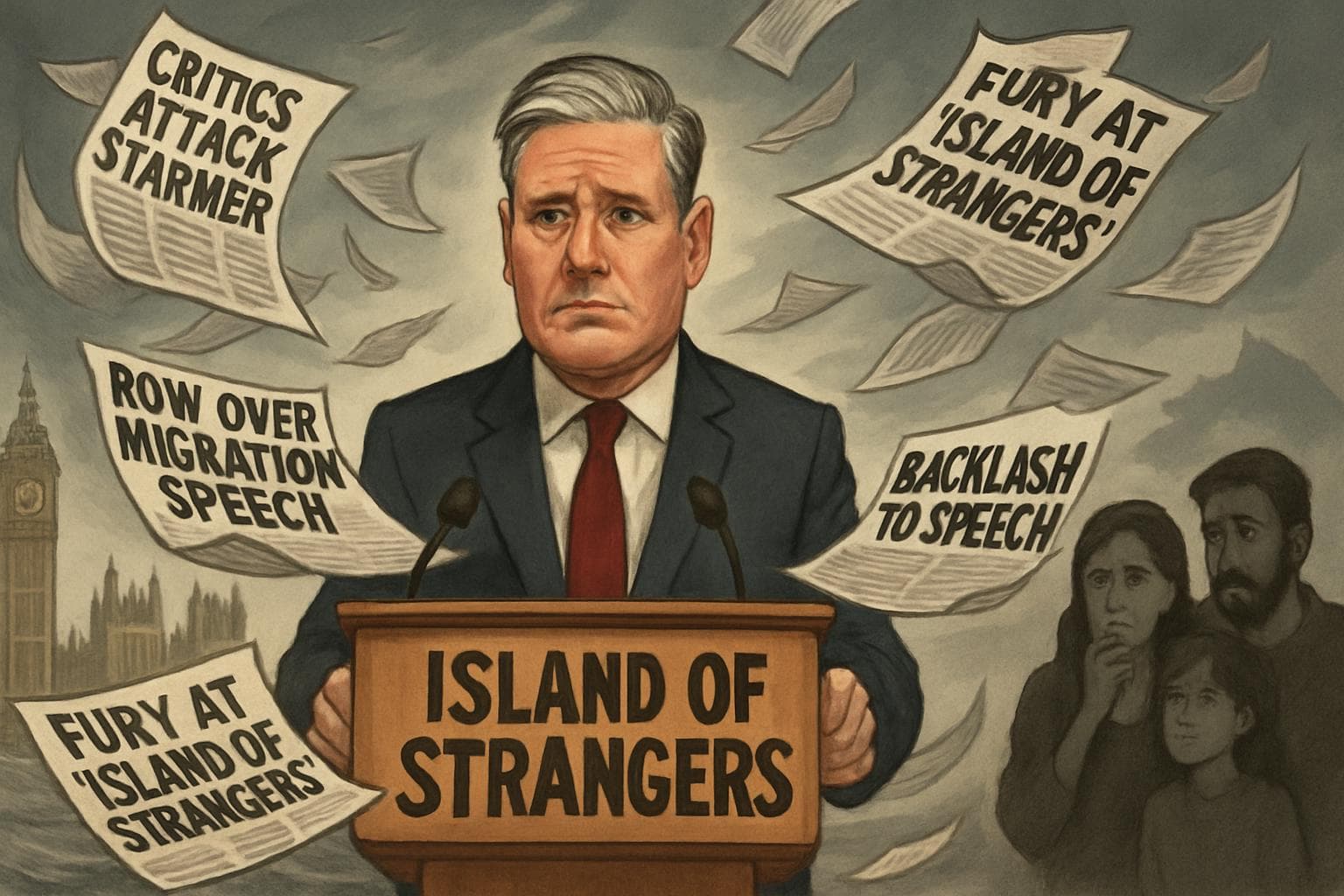
Prime Minister Keir Starmer has publicly expressed his regret over using the phrase "island of strangers" in a speech addressing the UK's immigration policy. Delivered in May, the speech was intended to outline Labour's stance on immigration but instead sparked controversy for its perceived similarity to Enoch Powell's infamous 1968 "rivers of blood" speech.
In an interview with his biographer, Tom Baldwin, published in the Observer, Starmer admitted that he would not have used the contentious phrase had he known it would be interpreted as an echo of Powell's rhetoric. "I had no idea—and my speechwriters didn't know either," Starmer stated, adding, "I deeply regret using it."
The timing of the speech coincided with a distressing personal event for Starmer—a firebomb attack on his family home in London. He acknowledged that this incident affected his mental state, though he refrained from using it as an excuse for the language used in his speech. "I was really, really worried," he confessed, noting that his wife was also deeply shaken by the attack.
The speech drew criticism from various quarters, including Labour MPs who feared that such language could exacerbate racial tensions. Sarah Owen, chair of the women and equalities committee, warned against "chasing the tail of the right," while MP Nadia Whittome described the rhetoric as "shameful and dangerous."
Despite the backlash, Starmer's spokesperson initially defended the speech, asserting that the Prime Minister stood by his words. However, the recent interview marks a shift in Starmer's stance, as he acknowledges the need for more careful consideration of language in political discourse.
WHAT THIS MIGHT MEAN
The fallout from Starmer's speech highlights the delicate balance political leaders must maintain when discussing immigration—a topic that remains highly sensitive in the UK. Moving forward, Starmer may face increased scrutiny from both his party and the public, potentially impacting his leadership and Labour's policy direction.
Politically, Starmer's admission of regret could be seen as a step towards mending relations with critics within his party who advocate for more inclusive rhetoric. However, it may also embolden opponents who view his retraction as a sign of weakness.
As the UK continues to grapple with immigration challenges, the debate over language and policy is likely to intensify. Starmer's experience underscores the importance of thoughtful communication in shaping public perception and policy outcomes.
Related Articles

Labour MP's Husband Arrested in UK-China Espionage Probe

Global Counsel Faces Collapse Amidst Epstein Scandal Fallout

UK Faces Dilemmas Amid Iran Conflict and China Spying Allegations

UK-Iran Tensions: Starmer Defends Cautious Approach Amid Trump Criticism

Diplomatic Tensions Rise as Trump Criticizes Starmer's Iran Policy
Nottingham Attacks Inquiry: Families Demand Accountability and Truth
Keir Starmer Regrets 'Island of Strangers' Speech Amid Immigration Debate
In This Article
 Ethan Brooks| Published
 HIGHLIGHTS
- Prime Minister Keir Starmer expressed regret over using the phrase "island of strangers" in a May speech on immigration.
- The phrase drew criticism for echoing Enoch Powell's 1968 "rivers of blood" speech, which warned of Britons becoming "strangers in their own country."
- Starmer clarified that neither he nor his speechwriters intended to evoke Powell's rhetoric, and he deeply regrets the language used.
- The speech was delivered shortly after an alleged arson attack on Starmer's family home, which he said affected his state of mind.
- Critics, including Labour MPs, argue that Starmer's language risks fueling racism and divisiveness in the UK immigration debate.
Prime Minister Keir Starmer has publicly expressed his regret over using the phrase "island of strangers" in a speech addressing the UK's immigration policy. Delivered in May, the speech was intended to outline Labour's stance on immigration but instead sparked controversy for its perceived similarity to Enoch Powell's infamous 1968 "rivers of blood" speech.
In an interview with his biographer, Tom Baldwin, published in the Observer, Starmer admitted that he would not have used the contentious phrase had he known it would be interpreted as an echo of Powell's rhetoric. "I had no idea—and my speechwriters didn't know either," Starmer stated, adding, "I deeply regret using it."
The timing of the speech coincided with a distressing personal event for Starmer—a firebomb attack on his family home in London. He acknowledged that this incident affected his mental state, though he refrained from using it as an excuse for the language used in his speech. "I was really, really worried," he confessed, noting that his wife was also deeply shaken by the attack.
The speech drew criticism from various quarters, including Labour MPs who feared that such language could exacerbate racial tensions. Sarah Owen, chair of the women and equalities committee, warned against "chasing the tail of the right," while MP Nadia Whittome described the rhetoric as "shameful and dangerous."
Despite the backlash, Starmer's spokesperson initially defended the speech, asserting that the Prime Minister stood by his words. However, the recent interview marks a shift in Starmer's stance, as he acknowledges the need for more careful consideration of language in political discourse.
WHAT THIS MIGHT MEAN
The fallout from Starmer's speech highlights the delicate balance political leaders must maintain when discussing immigration—a topic that remains highly sensitive in the UK. Moving forward, Starmer may face increased scrutiny from both his party and the public, potentially impacting his leadership and Labour's policy direction.
Politically, Starmer's admission of regret could be seen as a step towards mending relations with critics within his party who advocate for more inclusive rhetoric. However, it may also embolden opponents who view his retraction as a sign of weakness.
As the UK continues to grapple with immigration challenges, the debate over language and policy is likely to intensify. Starmer's experience underscores the importance of thoughtful communication in shaping public perception and policy outcomes.
Related Articles
Labour MP's Husband Arrested in UK-China Espionage Probe
Global Counsel Faces Collapse Amidst Epstein Scandal Fallout
UK Faces Dilemmas Amid Iran Conflict and China Spying Allegations
UK-Iran Tensions: Starmer Defends Cautious Approach Amid Trump Criticism
Diplomatic Tensions Rise as Trump Criticizes Starmer's Iran Policy
Nottingham Attacks Inquiry: Families Demand Accountability and Truth