
Labour's Policing Reforms Spark Debate Over Centralisation and Devolution
In This Article
HIGHLIGHTS
- The UK Home Secretary, Shabana Mahmood, has rejected calls to devolve policing powers to the Welsh Parliament amid major policing reforms.
- Labour's proposed overhaul includes merging police forces and creating a National Police Service, sparking concerns over centralisation.
- The reforms aim to replace police and crime commissioners by 2028, with local councils and English mayors assuming their responsibilities.
- Critics warn that the centralisation of policing powers could undermine police independence and increase political interference.
- The Welsh government and Plaid Cymru advocate for devolved policing to align with Wales' health and education systems.
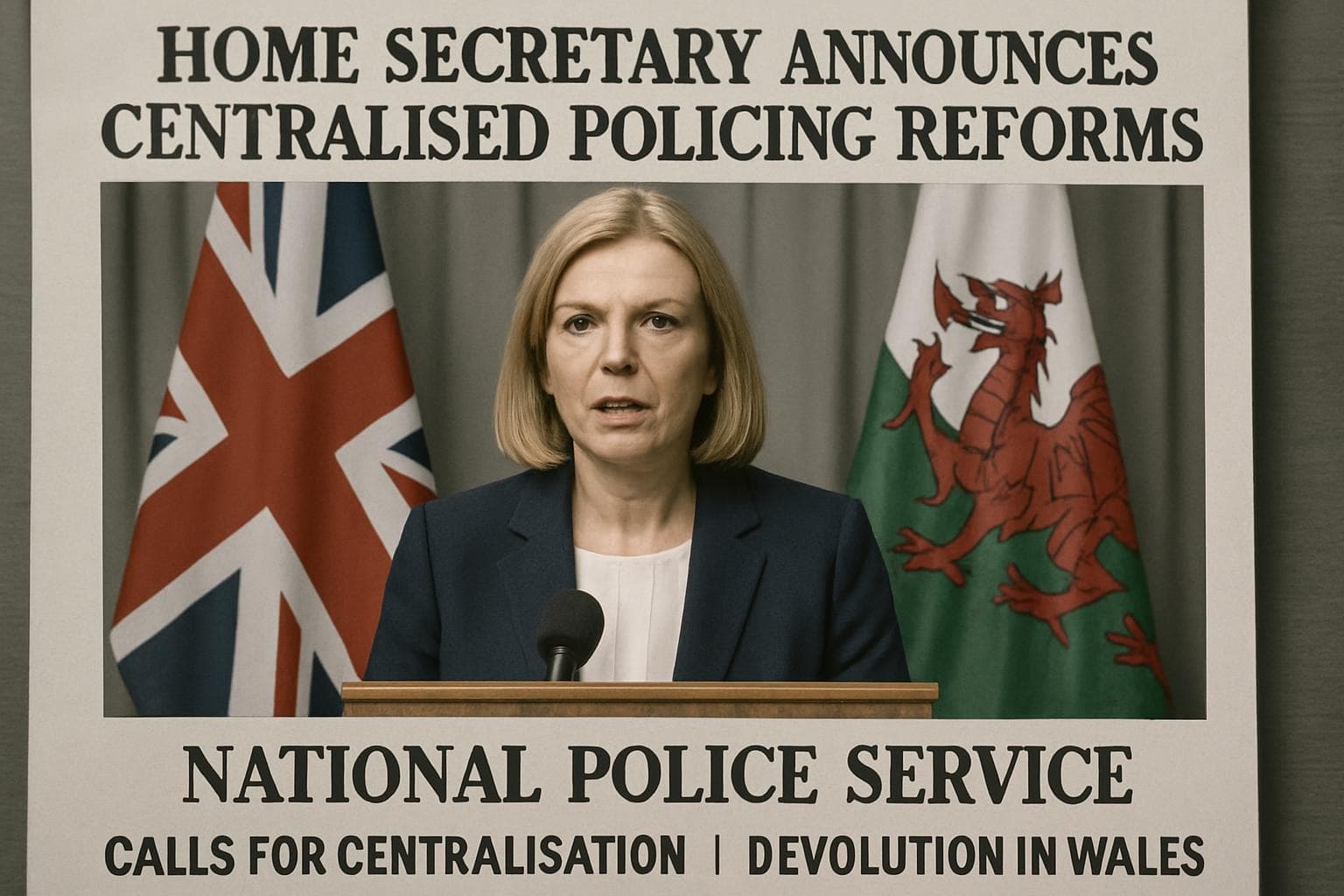
In a significant move, the UK Home Secretary, Shabana Mahmood, has announced sweeping reforms to the policing system in England and Wales, while firmly rejecting calls to devolve policing powers to the Welsh Parliament. The Labour-led initiative aims to streamline the current structure, which has remained largely unchanged for five decades, by merging local police forces and establishing a National Police Service (NPS), often dubbed the "British FBI."
Reform Details and Concerns
The proposed reforms, detailed in a white paper, include the controversial plan to replace police and crime commissioners by 2028, transferring their responsibilities to local councils and English mayors. In Wales, the Home Office plans to engage with Welsh ministers to determine the future governance of policing. However, the prospect of centralising power has raised alarms among critics who fear it could undermine the operational independence of policing.
Emily Spurrell, chair of the Association of Police and Crime Commissioners, expressed concerns, stating, "This planned structure will place unprecedented power in the hands of just two people at the centre – the home secretary and the commissioner of the new National Police Service." The group Spotlight on Corruption echoed these sentiments, warning that the reforms could lead to political interference in national policing.
Welsh Perspective and Calls for Devolution
In Wales, the debate over devolving policing powers continues to simmer. First Minister Eluned Morgan has called for the devolution of policing to align with Wales' existing health and education systems, a sentiment echoed by Plaid Cymru. The Welsh government commission on justice previously argued that there is "no rational basis" for treating Wales differently from Northern Ireland and Scotland, where policing is already devolved.
Despite these calls, Mahmood remains steadfast in her opposition. During a House of Commons exchange, she succinctly dismissed the idea, stating, "No, I do not," in response to a question about devolving policing powers to Wales.
Future Implications and Political Dynamics
The Labour party's internal divisions over the issue have been laid bare, with some Welsh Labour MPs expressing skepticism about the feasibility of devolving policing powers. Meanwhile, the proposed reforms are set to unfold over the next decade, with the NPS expected to assume counter-terrorism responsibilities by 2029.
WHAT THIS MIGHT MEAN
As Labour's policing reforms progress, the political landscape in Wales and the broader UK could shift significantly. If the centralisation of police powers proceeds as planned, it may lead to increased scrutiny over the balance between national oversight and local autonomy. The potential for political interference remains a critical concern, particularly if future governments seek to leverage policing for political ends.
In Wales, the ongoing debate over devolution could influence future elections, especially if pro-independence parties like Plaid Cymru gain traction. The outcome of these reforms may also impact the broader conversation about devolution across the UK, potentially setting precedents for other regions seeking greater autonomy.
Related Articles
UK Government to Reform Asylum Seeker Support and Employment Policies

Labour MP's Husband Arrested in UK-China Espionage Probe

Saharan Dust to Illuminate UK Skies with Vivid Sunrises and Sunsets

Reform UK Aims to Reshape Welsh Politics with New Manifesto

Sisters Tragically Drown at Eryri National Park's Watkin Path

Diplomatic Tensions Rise as Trump Criticizes Starmer's Iran Policy
Labour's Policing Reforms Spark Debate Over Centralisation and Devolution
In This Article
 Ethan Brooks| Published
 HIGHLIGHTS
- The UK Home Secretary, Shabana Mahmood, has rejected calls to devolve policing powers to the Welsh Parliament amid major policing reforms.
- Labour's proposed overhaul includes merging police forces and creating a National Police Service, sparking concerns over centralisation.
- The reforms aim to replace police and crime commissioners by 2028, with local councils and English mayors assuming their responsibilities.
- Critics warn that the centralisation of policing powers could undermine police independence and increase political interference.
- The Welsh government and Plaid Cymru advocate for devolved policing to align with Wales' health and education systems.
In a significant move, the UK Home Secretary, Shabana Mahmood, has announced sweeping reforms to the policing system in England and Wales, while firmly rejecting calls to devolve policing powers to the Welsh Parliament. The Labour-led initiative aims to streamline the current structure, which has remained largely unchanged for five decades, by merging local police forces and establishing a National Police Service (NPS), often dubbed the "British FBI."
Reform Details and Concerns
The proposed reforms, detailed in a white paper, include the controversial plan to replace police and crime commissioners by 2028, transferring their responsibilities to local councils and English mayors. In Wales, the Home Office plans to engage with Welsh ministers to determine the future governance of policing. However, the prospect of centralising power has raised alarms among critics who fear it could undermine the operational independence of policing.
Emily Spurrell, chair of the Association of Police and Crime Commissioners, expressed concerns, stating, "This planned structure will place unprecedented power in the hands of just two people at the centre – the home secretary and the commissioner of the new National Police Service." The group Spotlight on Corruption echoed these sentiments, warning that the reforms could lead to political interference in national policing.
Welsh Perspective and Calls for Devolution
In Wales, the debate over devolving policing powers continues to simmer. First Minister Eluned Morgan has called for the devolution of policing to align with Wales' existing health and education systems, a sentiment echoed by Plaid Cymru. The Welsh government commission on justice previously argued that there is "no rational basis" for treating Wales differently from Northern Ireland and Scotland, where policing is already devolved.
Despite these calls, Mahmood remains steadfast in her opposition. During a House of Commons exchange, she succinctly dismissed the idea, stating, "No, I do not," in response to a question about devolving policing powers to Wales.
Future Implications and Political Dynamics
The Labour party's internal divisions over the issue have been laid bare, with some Welsh Labour MPs expressing skepticism about the feasibility of devolving policing powers. Meanwhile, the proposed reforms are set to unfold over the next decade, with the NPS expected to assume counter-terrorism responsibilities by 2029.
WHAT THIS MIGHT MEAN
As Labour's policing reforms progress, the political landscape in Wales and the broader UK could shift significantly. If the centralisation of police powers proceeds as planned, it may lead to increased scrutiny over the balance between national oversight and local autonomy. The potential for political interference remains a critical concern, particularly if future governments seek to leverage policing for political ends.
In Wales, the ongoing debate over devolution could influence future elections, especially if pro-independence parties like Plaid Cymru gain traction. The outcome of these reforms may also impact the broader conversation about devolution across the UK, potentially setting precedents for other regions seeking greater autonomy.
Related Articles
UK Government to Reform Asylum Seeker Support and Employment Policies
Labour MP's Husband Arrested in UK-China Espionage Probe
Saharan Dust to Illuminate UK Skies with Vivid Sunrises and Sunsets
Reform UK Aims to Reshape Welsh Politics with New Manifesto
Sisters Tragically Drown at Eryri National Park's Watkin Path
Diplomatic Tensions Rise as Trump Criticizes Starmer's Iran Policy