
Leon Faces Major Restructuring with Restaurant Closures and Job Cuts
In This Article
HIGHLIGHTS
- Leon plans to close approximately 20 restaurants and cut jobs as part of a major restructuring effort led by co-founder John Vincent.
- The company has appointed Quantuma as administrators to manage the restructuring and potential administration process.
- Leon's financial struggles are attributed to a £10 million annual loss, exacerbated by changing work patterns and increased taxes.
- The fast food chain aims to close its most unprofitable locations while exploring options with landlords and other brands.
- Vincent criticizes the tax burden on the hospitality sector, noting that 36% of revenue goes to taxes, impacting profitability.
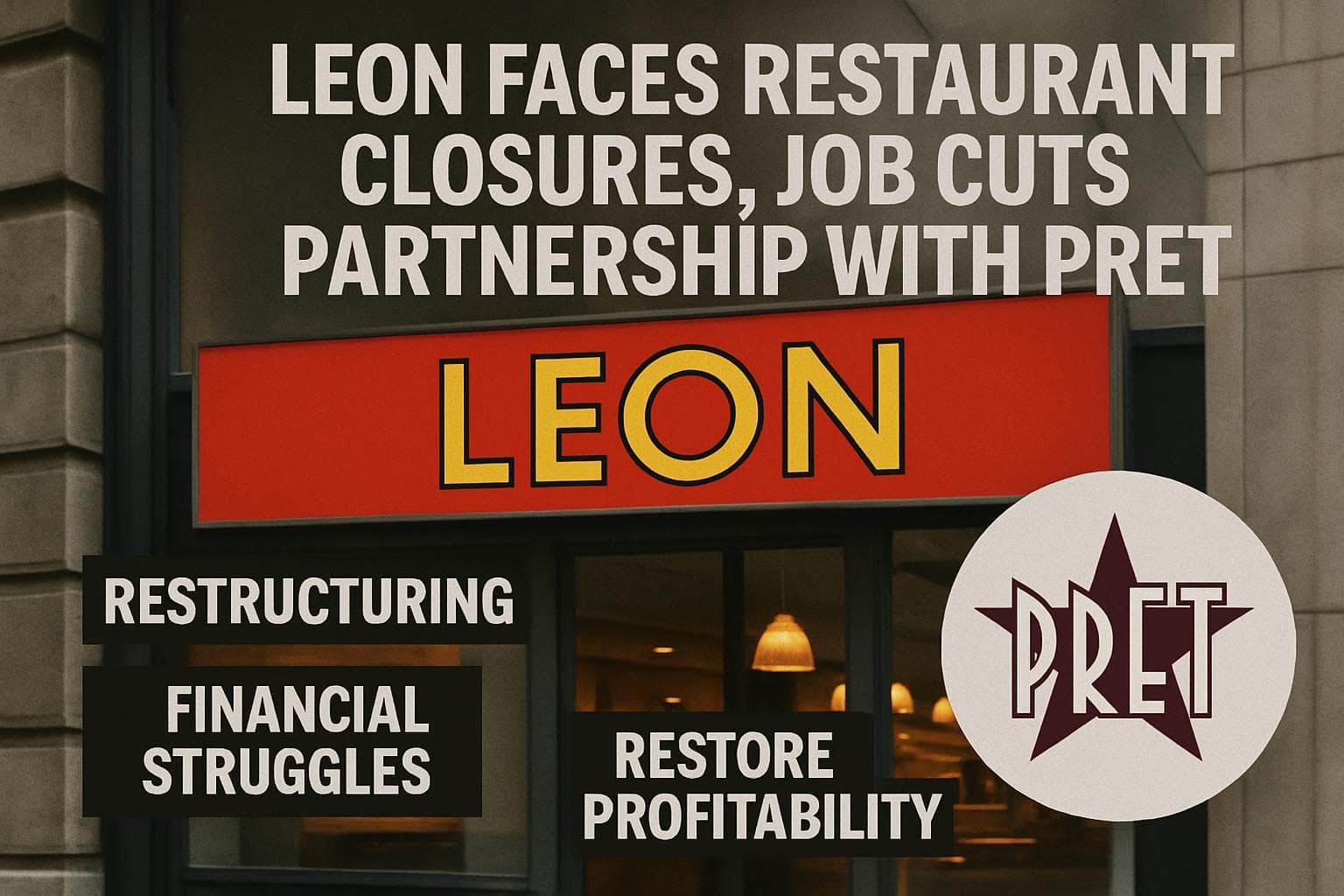
Leon, the fast food chain known for its healthier menu options, is set to undergo significant restructuring, which includes the closure of around 20 restaurants and job cuts. This move comes shortly after co-founder John Vincent reacquired the company from Asda, aiming to steer it back to its core values.
Financial Struggles and Administration
The company has appointed Quantuma as administrators to oversee the restructuring process. Leon is grappling with a £10 million annual loss, prompting the need to close its least profitable outlets. Vincent, who originally founded Leon in 2004, stated that the immediate priority is to address these financial challenges by shutting down underperforming locations.
Impact on Employees and Future Plans
Leon employs approximately 1,000 staff, and while the exact number of job cuts remains unclear, the company is committed to finding alternative positions for affected employees within its remaining outlets. Additionally, Leon has partnered with Pret A Manger to facilitate job placements for those unable to be retained.
Broader Industry Challenges
Vincent highlighted the broader challenges facing the hospitality sector, including the shift to remote work and increased tax burdens. He noted that 36% of Leon's revenue is consumed by taxes, leaving only a small margin for the company. This financial strain is not unique to Leon, as many of its peers are experiencing similar difficulties.
Strategic Adjustments
In response to these challenges, Leon plans to make significant changes to its menu by next spring. The company is also exploring options with landlords to either find new operators for its leases or release Leon from its commitments. Vincent remains optimistic about rebuilding the brand and hopes to expand once profitability is restored.
WHAT THIS MIGHT MEAN
The restructuring of Leon could set a precedent for other fast food chains facing similar financial pressures. If successful, Vincent's strategy of focusing on core values and streamlining operations might inspire other companies to adopt similar approaches. However, the outcome largely depends on the company's ability to navigate the current economic climate and adapt to changing consumer behaviors.
The broader implications for the hospitality sector could include increased lobbying for tax reforms, as businesses continue to struggle with the current fiscal policies. Should the government respond with favorable adjustments, it might alleviate some of the financial burdens faced by the industry, potentially stabilizing the market and encouraging growth.
Related Articles
Tesco and M&S Report Robust Christmas Food Sales Amid Economic Challenges

Rising Knife Crime Sparks Concern After Stabbings in Derby and Birmingham

Tesco Meal Deal Price Hike Reflects Rising UK Food Costs
Supermarkets Suspend Supplies from Lincolnshire Pig Farm Amid Animal Cruelty Allegations

Euro 2025: Record-Breaking Attendance and Economic Boost as England Faces Spain in Historic Final
Leon Faces Major Restructuring with Restaurant Closures and Job Cuts
In This Article
 Daniel Rivera| Published
 HIGHLIGHTS
- Leon plans to close approximately 20 restaurants and cut jobs as part of a major restructuring effort led by co-founder John Vincent.
- The company has appointed Quantuma as administrators to manage the restructuring and potential administration process.
- Leon's financial struggles are attributed to a £10 million annual loss, exacerbated by changing work patterns and increased taxes.
- The fast food chain aims to close its most unprofitable locations while exploring options with landlords and other brands.
- Vincent criticizes the tax burden on the hospitality sector, noting that 36% of revenue goes to taxes, impacting profitability.
Leon, the fast food chain known for its healthier menu options, is set to undergo significant restructuring, which includes the closure of around 20 restaurants and job cuts. This move comes shortly after co-founder John Vincent reacquired the company from Asda, aiming to steer it back to its core values.
Financial Struggles and Administration
The company has appointed Quantuma as administrators to oversee the restructuring process. Leon is grappling with a £10 million annual loss, prompting the need to close its least profitable outlets. Vincent, who originally founded Leon in 2004, stated that the immediate priority is to address these financial challenges by shutting down underperforming locations.
Impact on Employees and Future Plans
Leon employs approximately 1,000 staff, and while the exact number of job cuts remains unclear, the company is committed to finding alternative positions for affected employees within its remaining outlets. Additionally, Leon has partnered with Pret A Manger to facilitate job placements for those unable to be retained.
Broader Industry Challenges
Vincent highlighted the broader challenges facing the hospitality sector, including the shift to remote work and increased tax burdens. He noted that 36% of Leon's revenue is consumed by taxes, leaving only a small margin for the company. This financial strain is not unique to Leon, as many of its peers are experiencing similar difficulties.
Strategic Adjustments
In response to these challenges, Leon plans to make significant changes to its menu by next spring. The company is also exploring options with landlords to either find new operators for its leases or release Leon from its commitments. Vincent remains optimistic about rebuilding the brand and hopes to expand once profitability is restored.
WHAT THIS MIGHT MEAN
The restructuring of Leon could set a precedent for other fast food chains facing similar financial pressures. If successful, Vincent's strategy of focusing on core values and streamlining operations might inspire other companies to adopt similar approaches. However, the outcome largely depends on the company's ability to navigate the current economic climate and adapt to changing consumer behaviors.
The broader implications for the hospitality sector could include increased lobbying for tax reforms, as businesses continue to struggle with the current fiscal policies. Should the government respond with favorable adjustments, it might alleviate some of the financial burdens faced by the industry, potentially stabilizing the market and encouraging growth.
Related Articles
Tesco and M&S Report Robust Christmas Food Sales Amid Economic Challenges
Rising Knife Crime Sparks Concern After Stabbings in Derby and Birmingham
Tesco Meal Deal Price Hike Reflects Rising UK Food Costs
Supermarkets Suspend Supplies from Lincolnshire Pig Farm Amid Animal Cruelty Allegations
Euro 2025: Record-Breaking Attendance and Economic Boost as England Faces Spain in Historic Final