
Tesco Meal Deal Price Hike Reflects Rising UK Food Costs
In This Article
HIGHLIGHTS
- Tesco has increased the price of its meal deal by 25p, now costing £3.85 for Clubcard holders and £4.25 for others.
- This marks the third price hike since 2022, reflecting ongoing food inflation in the UK, which saw a 4.9% rise in July.
- Loyalty cards are increasingly used by supermarkets like Tesco and Sainsbury's to offer competitive pricing amidst rising costs.
- Other retailers, including Boots and Asda, have not yet raised their meal deal prices, maintaining a range between £3.75 and £5.35.
- Retailers have warned the UK government that further tax increases could exacerbate food price inflation, potentially reaching 6% this year.
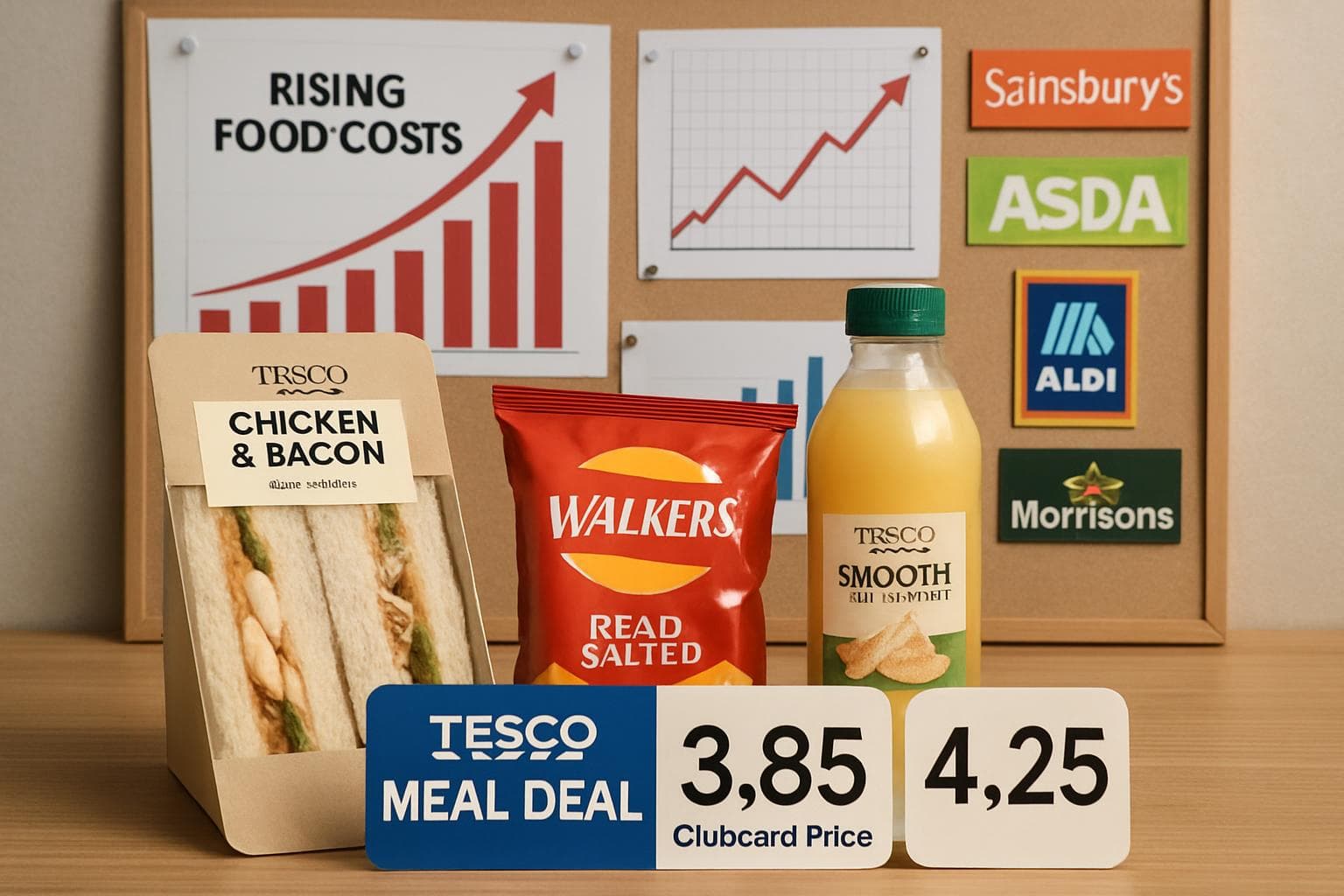
Tesco has announced a 25p increase in the price of its popular meal deal, marking the third such rise since 2022. As of Thursday, the deal, which includes a main, snack, and drink, will cost £3.85 for Clubcard holders and £4.25 for those without the loyalty card. This adjustment comes amid a broader trend of rising food prices across the UK, with the latest figures indicating a 4.9% increase in food and non-alcoholic beverage costs in July.
Loyalty Cards and Competitive Pricing
The price hike underscores the strategic use of loyalty cards by major supermarkets to attract and retain customers. Tesco's Clubcard, which is used by approximately 80% of its shoppers, offers significant savings on meal deals. For instance, a combination of a brie and smoked bacon sandwich, vegetable samosa, and Naked smoothie would cost £7.90 without the deal, but significantly less with a Clubcard. Similarly, Sainsbury's recently increased its meal deal price to £3.95, regardless of loyalty card status, highlighting the competitive landscape among UK retailers.
Consumer Reactions and Market Impact
The price increase has sparked mixed reactions among consumers. Kristina, a 19-year-old from Nottingham, expressed her disappointment on social media, noting that Tesco's meal deal, once a convenient option, now seems less appealing compared to alternatives like Poundland. Despite the backlash, Tesco maintains that its meal deal remains a valuable offering, especially when considering the potential savings on individual items.
Broader Economic Context
The rising cost of food is attributed to several factors, including adverse weather conditions in Southern Europe affecting supply chains. Retailers have expressed concerns over potential tax increases in the upcoming autumn budget, warning that such measures could further drive up food prices. In a letter to Chancellor Rachel Reeves, over 60 retail executives, including those from Tesco and Sainsbury's, cautioned that food price inflation could reach 6% this year if additional taxes are imposed.
WHAT THIS MIGHT MEAN
Looking ahead, the continued rise in food prices could lead to further adjustments in supermarket pricing strategies, potentially impacting consumer spending habits. If the UK government proceeds with additional tax hikes, retailers may be forced to pass these costs onto consumers, exacerbating the cost of living crisis. Experts suggest that supermarkets may increasingly rely on loyalty programs to offer competitive pricing, while consumers might seek alternative shopping options to mitigate the impact of inflation. As the economic landscape evolves, both retailers and consumers will need to adapt to the challenges posed by persistent inflationary pressures.
Related Articles
Middle East Conflict Drives UK Energy Prices to New Highs

Canada and Australia Forge Strategic Partnership Amid Global Uncertainty
UK Government to Reform Asylum Seeker Support and Employment Policies

UK Faces Dilemmas Amid Iran Conflict and China Spying Allegations
UK Reinforces Military Presence in Cyprus Amid Middle East Tensions

Police Federation Chief Arrested Amid Fraud Investigation
Tesco Meal Deal Price Hike Reflects Rising UK Food Costs
In This Article
 Aya Nakamura| Published
 HIGHLIGHTS
- Tesco has increased the price of its meal deal by 25p, now costing £3.85 for Clubcard holders and £4.25 for others.
- This marks the third price hike since 2022, reflecting ongoing food inflation in the UK, which saw a 4.9% rise in July.
- Loyalty cards are increasingly used by supermarkets like Tesco and Sainsbury's to offer competitive pricing amidst rising costs.
- Other retailers, including Boots and Asda, have not yet raised their meal deal prices, maintaining a range between £3.75 and £5.35.
- Retailers have warned the UK government that further tax increases could exacerbate food price inflation, potentially reaching 6% this year.
Tesco has announced a 25p increase in the price of its popular meal deal, marking the third such rise since 2022. As of Thursday, the deal, which includes a main, snack, and drink, will cost £3.85 for Clubcard holders and £4.25 for those without the loyalty card. This adjustment comes amid a broader trend of rising food prices across the UK, with the latest figures indicating a 4.9% increase in food and non-alcoholic beverage costs in July.
Loyalty Cards and Competitive Pricing
The price hike underscores the strategic use of loyalty cards by major supermarkets to attract and retain customers. Tesco's Clubcard, which is used by approximately 80% of its shoppers, offers significant savings on meal deals. For instance, a combination of a brie and smoked bacon sandwich, vegetable samosa, and Naked smoothie would cost £7.90 without the deal, but significantly less with a Clubcard. Similarly, Sainsbury's recently increased its meal deal price to £3.95, regardless of loyalty card status, highlighting the competitive landscape among UK retailers.
Consumer Reactions and Market Impact
The price increase has sparked mixed reactions among consumers. Kristina, a 19-year-old from Nottingham, expressed her disappointment on social media, noting that Tesco's meal deal, once a convenient option, now seems less appealing compared to alternatives like Poundland. Despite the backlash, Tesco maintains that its meal deal remains a valuable offering, especially when considering the potential savings on individual items.
Broader Economic Context
The rising cost of food is attributed to several factors, including adverse weather conditions in Southern Europe affecting supply chains. Retailers have expressed concerns over potential tax increases in the upcoming autumn budget, warning that such measures could further drive up food prices. In a letter to Chancellor Rachel Reeves, over 60 retail executives, including those from Tesco and Sainsbury's, cautioned that food price inflation could reach 6% this year if additional taxes are imposed.
WHAT THIS MIGHT MEAN
Looking ahead, the continued rise in food prices could lead to further adjustments in supermarket pricing strategies, potentially impacting consumer spending habits. If the UK government proceeds with additional tax hikes, retailers may be forced to pass these costs onto consumers, exacerbating the cost of living crisis. Experts suggest that supermarkets may increasingly rely on loyalty programs to offer competitive pricing, while consumers might seek alternative shopping options to mitigate the impact of inflation. As the economic landscape evolves, both retailers and consumers will need to adapt to the challenges posed by persistent inflationary pressures.
Related Articles
Middle East Conflict Drives UK Energy Prices to New Highs
Canada and Australia Forge Strategic Partnership Amid Global Uncertainty
UK Government to Reform Asylum Seeker Support and Employment Policies
UK Faces Dilemmas Amid Iran Conflict and China Spying Allegations
UK Reinforces Military Presence in Cyprus Amid Middle East Tensions
Police Federation Chief Arrested Amid Fraud Investigation