
London Underground Workers to Strike Over Pay and Working Conditions
In This Article
HIGHLIGHTS
- London Underground workers, represented by the RMT union, will strike for seven days starting 5 September over pay and working conditions.
- The dispute centers on issues like fatigue management, extreme shift patterns, and a demand for a reduced working week.
- Transport for London (TfL) has offered a 3.4% pay increase but claims a reduced working week is not feasible.
- Separate strikes by Docklands Light Railway workers are also planned for the week beginning 7 September.
- TfL urges the union to accept their pay offer to avoid disrupting Londoners, while the RMT seeks further negotiations.
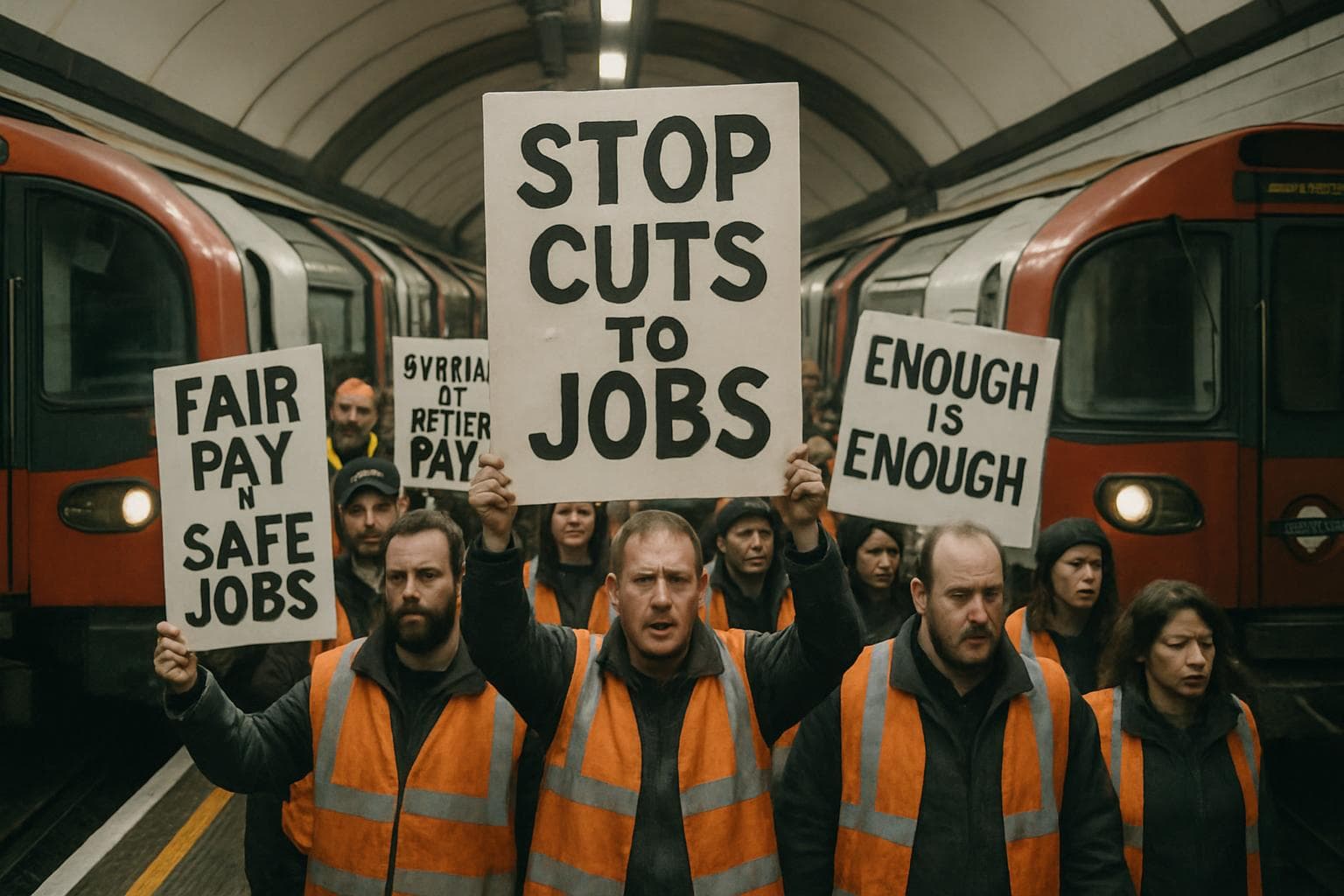
London Underground workers are set to stage a series of strikes starting 5 September, as tensions escalate between the Rail, Maritime and Transport (RMT) union and Transport for London (TfL) over pay and working conditions. The industrial action, which will last for seven days, highlights ongoing disputes over fatigue management, extreme shift patterns, and demands for a reduced working week.
Dispute Over Pay and Conditions
The RMT union has accused London Underground management of failing to adequately address long-standing concerns about worker fatigue and extreme shift rotations. "Our members are doing a fantastic job to keep our capital moving," said RMT General Secretary Eddie Dempsey. "Fatigue and extreme shift rotations are serious issues impacting on our members' health and wellbeing."
TfL, however, has proposed a 3.4% pay increase and insists that reducing the contractual 35-hour working week is neither practical nor affordable. A spokesperson for TfL stated, "We regularly meet with our trade unions to discuss any concerns and have made progress on several commitments."
Rolling Strike Action
The planned industrial action will see staff from various grades participating in rolling strikes. Engineers, station staff, and train operators will walk out from midnight on 8 September until 9 September and again after midnight on 10 September. Signallers and service control staff will strike on 9 September, with additional action planned for 11 September.
In a separate dispute, workers on the Docklands Light Railway will also strike during the week beginning 7 September, further complicating the capital's transport network.
Calls for Negotiation
Despite the looming strikes, both sides express a willingness to continue negotiations. "RMT will continue to engage LU management with a view to seeking a revised offer in order to reach a negotiated settlement," Dempsey added. TfL, on the other hand, urges the union to accept their pay offer to avoid unnecessary disruption to Londoners.
WHAT THIS MIGHT MEAN
As the strike dates approach, the potential for significant disruption to London's transport network looms large. If the RMT union and TfL fail to reach a compromise, commuters could face severe delays and cancellations. The strikes could also set a precedent for other unions, potentially leading to broader industrial action across the city's transport services.
Politically, the strikes may increase pressure on local government officials to intervene and mediate a resolution. Experts suggest that a prolonged dispute could damage public perception of both TfL and the RMT, emphasizing the need for a swift and amicable settlement.
Related Articles

Labour MP's Husband Arrested in UK-China Espionage Probe

Nottingham Attacks Inquiry: Families Demand Accountability and Truth

Global Counsel Faces Collapse Amidst Epstein Scandal Fallout
Rising Measles Cases in the UK Spark Urgent Vaccination Campaign

Bafta Film Awards 2026: A Night of Glamour and Identity Challenges

UK Police Intensify Investigation into Andrew Mountbatten-Windsor Amid Misconduct Allegations
London Underground Workers to Strike Over Pay and Working Conditions
In This Article
 Ethan Brooks| Published
 HIGHLIGHTS
- London Underground workers, represented by the RMT union, will strike for seven days starting 5 September over pay and working conditions.
- The dispute centers on issues like fatigue management, extreme shift patterns, and a demand for a reduced working week.
- Transport for London (TfL) has offered a 3.4% pay increase but claims a reduced working week is not feasible.
- Separate strikes by Docklands Light Railway workers are also planned for the week beginning 7 September.
- TfL urges the union to accept their pay offer to avoid disrupting Londoners, while the RMT seeks further negotiations.
London Underground workers are set to stage a series of strikes starting 5 September, as tensions escalate between the Rail, Maritime and Transport (RMT) union and Transport for London (TfL) over pay and working conditions. The industrial action, which will last for seven days, highlights ongoing disputes over fatigue management, extreme shift patterns, and demands for a reduced working week.
Dispute Over Pay and Conditions
The RMT union has accused London Underground management of failing to adequately address long-standing concerns about worker fatigue and extreme shift rotations. "Our members are doing a fantastic job to keep our capital moving," said RMT General Secretary Eddie Dempsey. "Fatigue and extreme shift rotations are serious issues impacting on our members' health and wellbeing."
TfL, however, has proposed a 3.4% pay increase and insists that reducing the contractual 35-hour working week is neither practical nor affordable. A spokesperson for TfL stated, "We regularly meet with our trade unions to discuss any concerns and have made progress on several commitments."
Rolling Strike Action
The planned industrial action will see staff from various grades participating in rolling strikes. Engineers, station staff, and train operators will walk out from midnight on 8 September until 9 September and again after midnight on 10 September. Signallers and service control staff will strike on 9 September, with additional action planned for 11 September.
In a separate dispute, workers on the Docklands Light Railway will also strike during the week beginning 7 September, further complicating the capital's transport network.
Calls for Negotiation
Despite the looming strikes, both sides express a willingness to continue negotiations. "RMT will continue to engage LU management with a view to seeking a revised offer in order to reach a negotiated settlement," Dempsey added. TfL, on the other hand, urges the union to accept their pay offer to avoid unnecessary disruption to Londoners.
WHAT THIS MIGHT MEAN
As the strike dates approach, the potential for significant disruption to London's transport network looms large. If the RMT union and TfL fail to reach a compromise, commuters could face severe delays and cancellations. The strikes could also set a precedent for other unions, potentially leading to broader industrial action across the city's transport services.
Politically, the strikes may increase pressure on local government officials to intervene and mediate a resolution. Experts suggest that a prolonged dispute could damage public perception of both TfL and the RMT, emphasizing the need for a swift and amicable settlement.
Related Articles
Labour MP's Husband Arrested in UK-China Espionage Probe
Nottingham Attacks Inquiry: Families Demand Accountability and Truth
Global Counsel Faces Collapse Amidst Epstein Scandal Fallout
Rising Measles Cases in the UK Spark Urgent Vaccination Campaign
Bafta Film Awards 2026: A Night of Glamour and Identity Challenges
UK Police Intensify Investigation into Andrew Mountbatten-Windsor Amid Misconduct Allegations