
Calls for Class Discrimination to be Illegal in the Arts Sector
In This Article
HIGHLIGHTS
- A report led by Nazir Afzal calls for class to be a protected characteristic under the 2010 Equalities Act to combat class discrimination in the arts.
- The Class Ceiling survey found over 50% of respondents experienced bias due to their social background, highlighting socioeconomic bias in creative industries.
- Recommendations include increasing apprenticeships in the arts, with Co-op aiming to raise £3 million to support 200 new apprenticeships in Greater Manchester.
- The report outlines 21 recommendations to improve working-class representation, including the appointment of a "Class Champion" to advocate for change.
- Many creatives reported financial struggles, with only 44% earning enough to live on, and some facing derogatory treatment due to their accents or backgrounds.
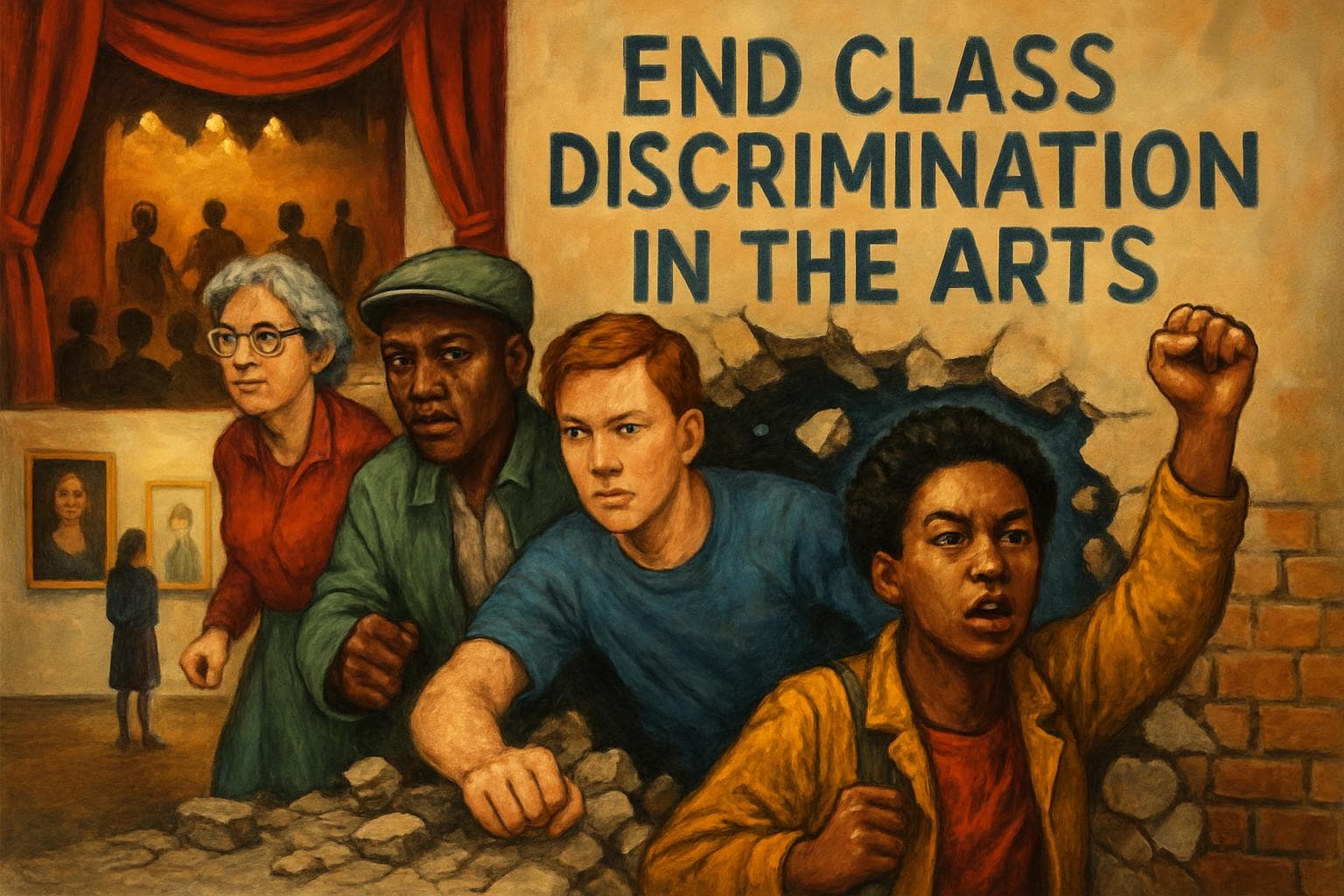
A groundbreaking report has urged that class discrimination be recognized as illegal, aiming to dismantle barriers faced by working-class individuals in the arts. The Class Ceiling report, spearheaded by Nazir Afzal, chancellor of the University of Manchester, and Avis Gilmore, former deputy general secretary of the National Education Union, highlights the pervasive socioeconomic bias within the creative industries.
Socioeconomic Bias in Creative Industries
The report, based on a survey of over 300 individuals primarily from Greater Manchester, reveals that more than half of the respondents have encountered bias or harassment due to their social background. This bias often manifests in the form of derogatory remarks about accents or assumptions based on one's upbringing. The survey, supported by the University of Manchester and the Co-op, underscores the need for systemic change to ensure equal opportunities in the cultural sector.
Recommendations for Change
Among the 21 recommendations, the report advocates for class to be added as a protected characteristic under the 2010 Equalities Act. This move, according to Afzal, would mirror previous groundbreaking protections for alternative subcultures in Greater Manchester. The report also calls for increased apprenticeships in the arts, with the Co-op leading a significant initiative to raise £3 million over three years to support 200 new apprenticeships in the region.
Financial Struggles and Cultural Barriers
The financial challenges faced by working-class creatives are stark, with only 44% of survey respondents earning enough to sustain themselves. Many reported being offered "exposure" instead of payment, a practice that fails to cover living expenses. Additionally, the report highlights a cultural disconnect, with many in the industry failing to understand or value working-class culture. As one TV professional noted, the industry often operates as a "mirror-tocracy," favoring those who resemble the decision-makers.
WHAT THIS MIGHT MEAN
The push to make class discrimination illegal could lead to significant shifts in the arts sector, fostering a more inclusive environment for working-class creatives. If class becomes a protected characteristic, it could pave the way for similar reforms in other sectors, potentially influencing national policy. Experts suggest that such changes could enhance diversity within the creative industries, enriching the cultural landscape with a broader range of voices and perspectives. However, the success of these initiatives will depend on widespread adoption and enforcement, as well as continued advocacy from industry leaders and organizations.
Images from the Web

Related Articles
Stockport Man Faces 48 Charges in Alleged Conspiracy to Rape Unconscious Wife

Jim Ratcliffe's Immigration Comments Spark Outrage and Apology

Keir Starmer Resolute Amid Calls for Resignation and Party Turmoil

Gorton and Denton By-Election: A Crucial Political Contest Unfolds
Homicide Rates in England and Wales Plummet to Historic Lows
Andy Burnham Criticizes Labour's Decision to Block His By-Election Bid
Calls for Class Discrimination to be Illegal in the Arts Sector
In This Article
 Maya Singh| Published
 HIGHLIGHTS
- A report led by Nazir Afzal calls for class to be a protected characteristic under the 2010 Equalities Act to combat class discrimination in the arts.
- The Class Ceiling survey found over 50% of respondents experienced bias due to their social background, highlighting socioeconomic bias in creative industries.
- Recommendations include increasing apprenticeships in the arts, with Co-op aiming to raise £3 million to support 200 new apprenticeships in Greater Manchester.
- The report outlines 21 recommendations to improve working-class representation, including the appointment of a "Class Champion" to advocate for change.
- Many creatives reported financial struggles, with only 44% earning enough to live on, and some facing derogatory treatment due to their accents or backgrounds.
A groundbreaking report has urged that class discrimination be recognized as illegal, aiming to dismantle barriers faced by working-class individuals in the arts. The Class Ceiling report, spearheaded by Nazir Afzal, chancellor of the University of Manchester, and Avis Gilmore, former deputy general secretary of the National Education Union, highlights the pervasive socioeconomic bias within the creative industries.
Socioeconomic Bias in Creative Industries
The report, based on a survey of over 300 individuals primarily from Greater Manchester, reveals that more than half of the respondents have encountered bias or harassment due to their social background. This bias often manifests in the form of derogatory remarks about accents or assumptions based on one's upbringing. The survey, supported by the University of Manchester and the Co-op, underscores the need for systemic change to ensure equal opportunities in the cultural sector.
Recommendations for Change
Among the 21 recommendations, the report advocates for class to be added as a protected characteristic under the 2010 Equalities Act. This move, according to Afzal, would mirror previous groundbreaking protections for alternative subcultures in Greater Manchester. The report also calls for increased apprenticeships in the arts, with the Co-op leading a significant initiative to raise £3 million over three years to support 200 new apprenticeships in the region.
Financial Struggles and Cultural Barriers
The financial challenges faced by working-class creatives are stark, with only 44% of survey respondents earning enough to sustain themselves. Many reported being offered "exposure" instead of payment, a practice that fails to cover living expenses. Additionally, the report highlights a cultural disconnect, with many in the industry failing to understand or value working-class culture. As one TV professional noted, the industry often operates as a "mirror-tocracy," favoring those who resemble the decision-makers.
WHAT THIS MIGHT MEAN
The push to make class discrimination illegal could lead to significant shifts in the arts sector, fostering a more inclusive environment for working-class creatives. If class becomes a protected characteristic, it could pave the way for similar reforms in other sectors, potentially influencing national policy. Experts suggest that such changes could enhance diversity within the creative industries, enriching the cultural landscape with a broader range of voices and perspectives. However, the success of these initiatives will depend on widespread adoption and enforcement, as well as continued advocacy from industry leaders and organizations.
Images from the Web
Related Articles
Stockport Man Faces 48 Charges in Alleged Conspiracy to Rape Unconscious Wife
Jim Ratcliffe's Immigration Comments Spark Outrage and Apology
Keir Starmer Resolute Amid Calls for Resignation and Party Turmoil
Gorton and Denton By-Election: A Crucial Political Contest Unfolds
Homicide Rates in England and Wales Plummet to Historic Lows
Andy Burnham Criticizes Labour's Decision to Block His By-Election Bid