
Marine Le Pen's Political Future Hangs in Balance as Appeal Trial Commences
In This Article
HIGHLIGHTS
- Marine Le Pen's appeal trial over embezzlement charges begins, potentially affecting her 2027 presidential bid.
- Le Pen was previously found guilty of misusing €4.8m in EU funds, resulting in a five-year ban from public office.
- The appeal trial, involving 11 other party members, will conclude on February 12, with a verdict expected by summer.
- National Rally president Jordan Bardella is seen as a potential successor if Le Pen's ban is upheld.
- Le Pen maintains her innocence, criticizing the judiciary as obstructive to her political ambitions.
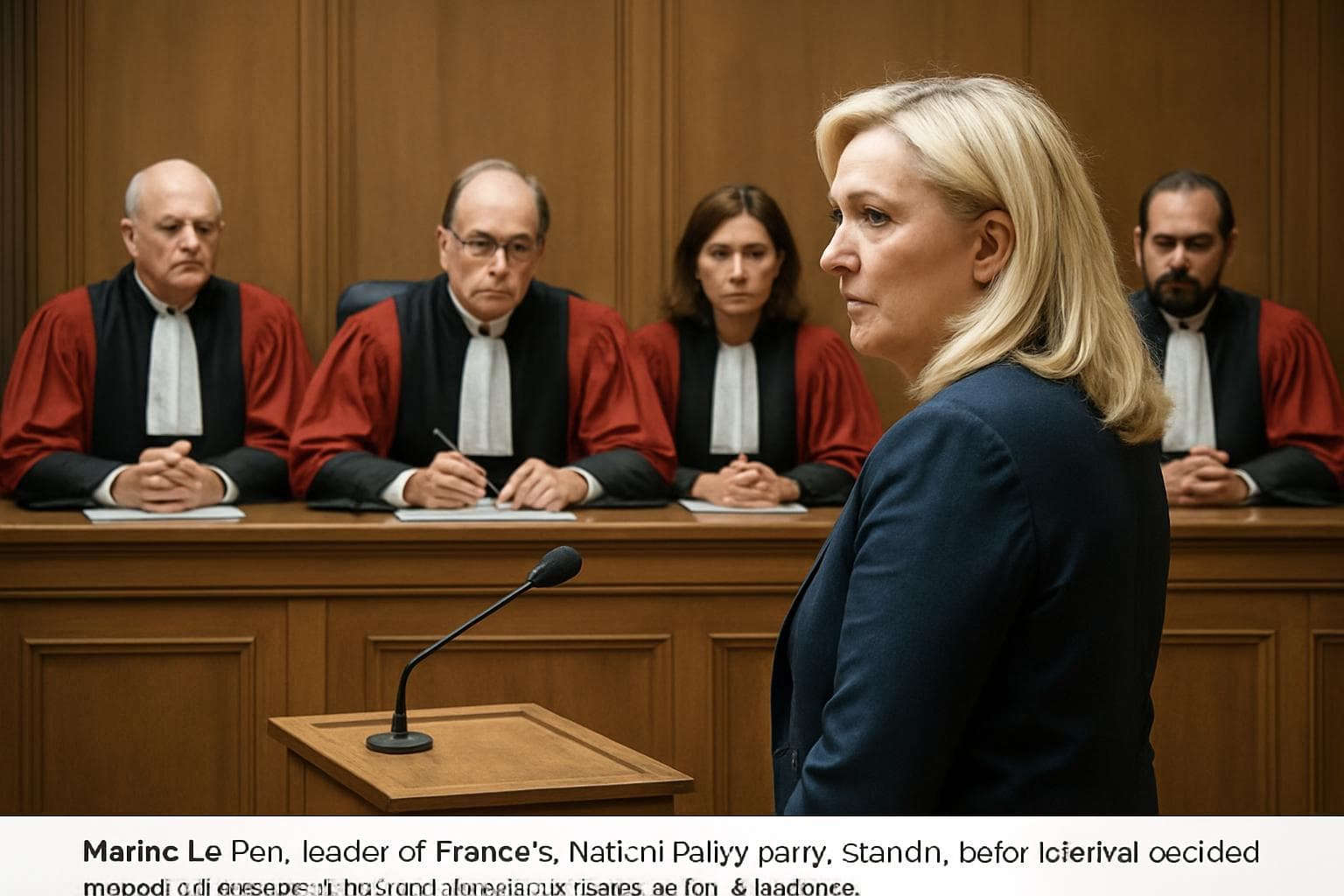
The political fate of Marine Le Pen, the prominent leader of France's far-right National Rally party, is under intense scrutiny as her appeal trial over embezzlement charges begins. The outcome of this trial will determine whether Le Pen can participate in the 2027 French presidential election, a race she has been a formidable contender in the past.
Background of the Case
Le Pen, 57, was found guilty last year of orchestrating a scheme that misappropriated €4.8 million of European Parliament funds. The funds, intended for parliamentary assistants, were allegedly diverted to pay party workers in France. As a result, she received a four-year prison sentence, with two years suspended, and a €100,000 fine. Additionally, she was banned from holding public office for five years, a decision she is now appealing.
The Appeal Process
The appeal trial, which began on Tuesday, involves Le Pen and 11 other National Rally members. It is set to run until February 12, with a verdict anticipated by summer. The Paris Court of Appeal will reassess the previous ruling, which could either uphold or alter the initial verdict. Le Pen's legal team hopes to overturn the ban, allowing her to run for president once more.
Political Implications and Reactions
The trial's outcome is pivotal not only for Le Pen but also for her party. Jordan Bardella, the 30-year-old president of the National Rally, has emerged as a potential successor should Le Pen be barred from running. Recent polls suggest Bardella could be a strong candidate, with some surveys indicating he might win the presidency regardless of his opponent.
Le Pen has consistently denied any wrongdoing, describing the charges as a "judicial bullet" aimed at derailing her political career. She has criticized the judiciary's role, suggesting it undermines democratic processes. Despite the legal challenges, Le Pen remains optimistic about her party's future, asserting that its ideas will continue to resonate with the French electorate.
WHAT THIS MIGHT MEAN
The appeal trial's outcome could significantly reshape the French political landscape. If Le Pen's conviction is overturned, she could re-enter the presidential race, potentially altering the dynamics of the 2027 election. Conversely, if the ban is upheld, Jordan Bardella may step into the spotlight, offering a fresh face for the National Rally. This scenario could lead to a shift in the party's strategy and voter base.
Legal experts suggest that the case highlights broader issues of accountability and transparency within political parties. The trial's conclusion could set a precedent for how similar cases are handled in the future, influencing both national and European political frameworks. As the trial unfolds, the implications for French democracy and the far-right's role within it remain a subject of keen interest and debate.
Related Articles

Arrests Over French Activist's Death Heighten Political Tensions
Gisèle Pelicot: A Journey from Horror to Advocacy in France's Largest Rape Trial

Swiss Bar Fire Death Toll Rises to 41 as Investigations Continue

UK and Allies Accuse Russia of Killing Navalny with Dart Frog Toxin

Trump's Board of Peace Pledges $7 Billion for Gaza Amidst International Skepticism
New UK Entry Rules for Dual Nationals Spark Outcry
Marine Le Pen's Political Future Hangs in Balance as Appeal Trial Commences
In This Article
 Sofia Romano| Published
 HIGHLIGHTS
- Marine Le Pen's appeal trial over embezzlement charges begins, potentially affecting her 2027 presidential bid.
- Le Pen was previously found guilty of misusing €4.8m in EU funds, resulting in a five-year ban from public office.
- The appeal trial, involving 11 other party members, will conclude on February 12, with a verdict expected by summer.
- National Rally president Jordan Bardella is seen as a potential successor if Le Pen's ban is upheld.
- Le Pen maintains her innocence, criticizing the judiciary as obstructive to her political ambitions.
The political fate of Marine Le Pen, the prominent leader of France's far-right National Rally party, is under intense scrutiny as her appeal trial over embezzlement charges begins. The outcome of this trial will determine whether Le Pen can participate in the 2027 French presidential election, a race she has been a formidable contender in the past.
Background of the Case
Le Pen, 57, was found guilty last year of orchestrating a scheme that misappropriated €4.8 million of European Parliament funds. The funds, intended for parliamentary assistants, were allegedly diverted to pay party workers in France. As a result, she received a four-year prison sentence, with two years suspended, and a €100,000 fine. Additionally, she was banned from holding public office for five years, a decision she is now appealing.
The Appeal Process
The appeal trial, which began on Tuesday, involves Le Pen and 11 other National Rally members. It is set to run until February 12, with a verdict anticipated by summer. The Paris Court of Appeal will reassess the previous ruling, which could either uphold or alter the initial verdict. Le Pen's legal team hopes to overturn the ban, allowing her to run for president once more.
Political Implications and Reactions
The trial's outcome is pivotal not only for Le Pen but also for her party. Jordan Bardella, the 30-year-old president of the National Rally, has emerged as a potential successor should Le Pen be barred from running. Recent polls suggest Bardella could be a strong candidate, with some surveys indicating he might win the presidency regardless of his opponent.
Le Pen has consistently denied any wrongdoing, describing the charges as a "judicial bullet" aimed at derailing her political career. She has criticized the judiciary's role, suggesting it undermines democratic processes. Despite the legal challenges, Le Pen remains optimistic about her party's future, asserting that its ideas will continue to resonate with the French electorate.
WHAT THIS MIGHT MEAN
The appeal trial's outcome could significantly reshape the French political landscape. If Le Pen's conviction is overturned, she could re-enter the presidential race, potentially altering the dynamics of the 2027 election. Conversely, if the ban is upheld, Jordan Bardella may step into the spotlight, offering a fresh face for the National Rally. This scenario could lead to a shift in the party's strategy and voter base.
Legal experts suggest that the case highlights broader issues of accountability and transparency within political parties. The trial's conclusion could set a precedent for how similar cases are handled in the future, influencing both national and European political frameworks. As the trial unfolds, the implications for French democracy and the far-right's role within it remain a subject of keen interest and debate.
Related Articles
Arrests Over French Activist's Death Heighten Political Tensions
Gisèle Pelicot: A Journey from Horror to Advocacy in France's Largest Rape Trial
Swiss Bar Fire Death Toll Rises to 41 as Investigations Continue
UK and Allies Accuse Russia of Killing Navalny with Dart Frog Toxin
Trump's Board of Peace Pledges $7 Billion for Gaza Amidst International Skepticism
New UK Entry Rules for Dual Nationals Spark Outcry