
Nepal's Election: A Clash Between Tradition and Youthful Change
In This Article
HIGHLIGHTS
- Approximately 800,000 Nepalis have left Kathmandu Valley to vote in their hometowns for the general election.
- The election follows youth-led protests that ousted the previous government in September 2025.
- Key candidates include former Prime Minister KP Sharma Oli and rapper-turned-politician Balendra Shah.
- The Jhapa-5 constituency is a critical battleground, with Oli facing a strong challenge from Shah.
- Nearly 19 million voters, including a significant number of first-time voters, are expected to participate.
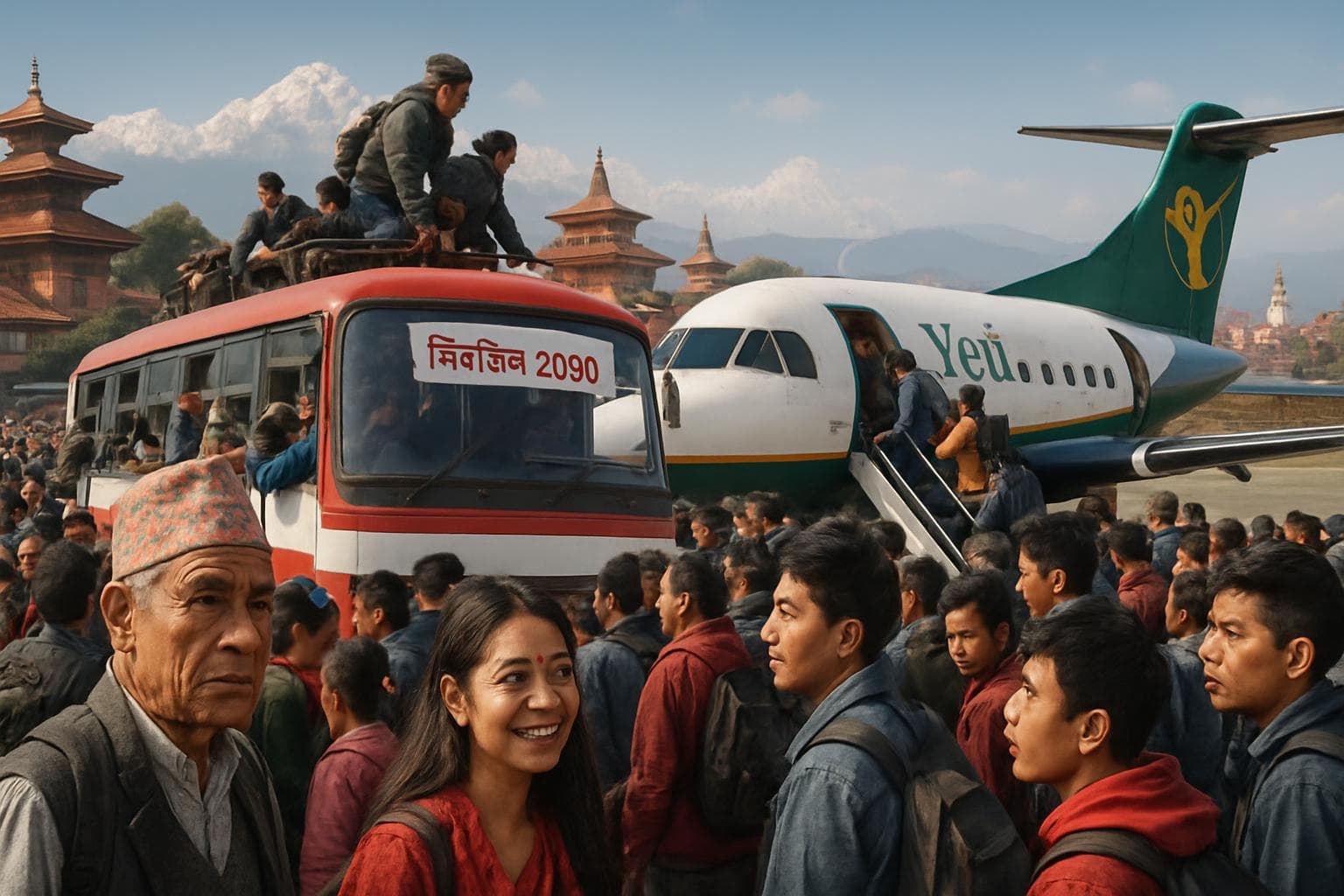
As Nepal gears up for its first general election since the youth-led protests of September 2025, the nation witnesses a mass exodus from the Kathmandu Valley. Approximately 800,000 Nepalis have returned to their hometowns to cast their votes, highlighting the significance of this pivotal election. The protests, which resulted in the ousting of the previous government, have set the stage for a high-stakes showdown between the entrenched political elite and a burgeoning youth movement.
The Exodus from Kathmandu
The Kathmandu Valley, home to about a tenth of Nepal's 30 million population, has seen a significant outflow of residents heading to their registered constituencies to vote. This movement underscores the importance of the election, as Nepali law mandates citizens to vote in their place of registration. The election commission has suspended most public and private transport services to facilitate the voting process, with flights being the exception.
Key Contenders and Constituencies
The election features prominent figures such as former Prime Minister KP Sharma Oli and Balendra Shah, a former rapper and mayor of Kathmandu. Shah, representing the Rastriya Swatantra Party, has become a symbol of the youth-driven political change, challenging Oli in the Jhapa-5 constituency. This area, traditionally a stronghold for Oli, has become a focal point in the election, with Shah's candidacy representing a potential seismic shift in Nepalese politics.
The Youth Movement's Impact
The protests that led to the fall of the previous government were sparked by a brief social media ban but quickly evolved into a broader movement against corruption and economic stagnation. The interim Prime Minister, Sushila Karki, has urged citizens to vote without fear, as thousands of soldiers and police officers ensure security at polling stations. With nearly 19 million voters, including a significant number of first-time participants, the election is poised to redefine Nepal's political landscape.
WHAT THIS MIGHT MEAN
The outcome of this election could significantly alter Nepal's political trajectory. If Balendra Shah manages to unseat KP Sharma Oli in Jhapa-5, it would signal a shift towards a more youth-oriented political agenda. Such a change could lead to increased focus on economic reforms and anti-corruption measures, aligning with the demands of the Gen Z movement. Conversely, a victory for Oli might reinforce the status quo, emphasizing stability and experience. Regardless of the outcome, the election underscores the growing influence of younger voters and their potential to reshape Nepal's future.
Images from the Web


Nepal's Election: A Clash Between Tradition and Youthful Change
In This Article
 Alex Carter| Published
 HIGHLIGHTS
- Approximately 800,000 Nepalis have left Kathmandu Valley to vote in their hometowns for the general election.
- The election follows youth-led protests that ousted the previous government in September 2025.
- Key candidates include former Prime Minister KP Sharma Oli and rapper-turned-politician Balendra Shah.
- The Jhapa-5 constituency is a critical battleground, with Oli facing a strong challenge from Shah.
- Nearly 19 million voters, including a significant number of first-time voters, are expected to participate.
As Nepal gears up for its first general election since the youth-led protests of September 2025, the nation witnesses a mass exodus from the Kathmandu Valley. Approximately 800,000 Nepalis have returned to their hometowns to cast their votes, highlighting the significance of this pivotal election. The protests, which resulted in the ousting of the previous government, have set the stage for a high-stakes showdown between the entrenched political elite and a burgeoning youth movement.
The Exodus from Kathmandu
The Kathmandu Valley, home to about a tenth of Nepal's 30 million population, has seen a significant outflow of residents heading to their registered constituencies to vote. This movement underscores the importance of the election, as Nepali law mandates citizens to vote in their place of registration. The election commission has suspended most public and private transport services to facilitate the voting process, with flights being the exception.
Key Contenders and Constituencies
The election features prominent figures such as former Prime Minister KP Sharma Oli and Balendra Shah, a former rapper and mayor of Kathmandu. Shah, representing the Rastriya Swatantra Party, has become a symbol of the youth-driven political change, challenging Oli in the Jhapa-5 constituency. This area, traditionally a stronghold for Oli, has become a focal point in the election, with Shah's candidacy representing a potential seismic shift in Nepalese politics.
The Youth Movement's Impact
The protests that led to the fall of the previous government were sparked by a brief social media ban but quickly evolved into a broader movement against corruption and economic stagnation. The interim Prime Minister, Sushila Karki, has urged citizens to vote without fear, as thousands of soldiers and police officers ensure security at polling stations. With nearly 19 million voters, including a significant number of first-time participants, the election is poised to redefine Nepal's political landscape.
WHAT THIS MIGHT MEAN
The outcome of this election could significantly alter Nepal's political trajectory. If Balendra Shah manages to unseat KP Sharma Oli in Jhapa-5, it would signal a shift towards a more youth-oriented political agenda. Such a change could lead to increased focus on economic reforms and anti-corruption measures, aligning with the demands of the Gen Z movement. Conversely, a victory for Oli might reinforce the status quo, emphasizing stability and experience. Regardless of the outcome, the election underscores the growing influence of younger voters and their potential to reshape Nepal's future.
Images from the Web