
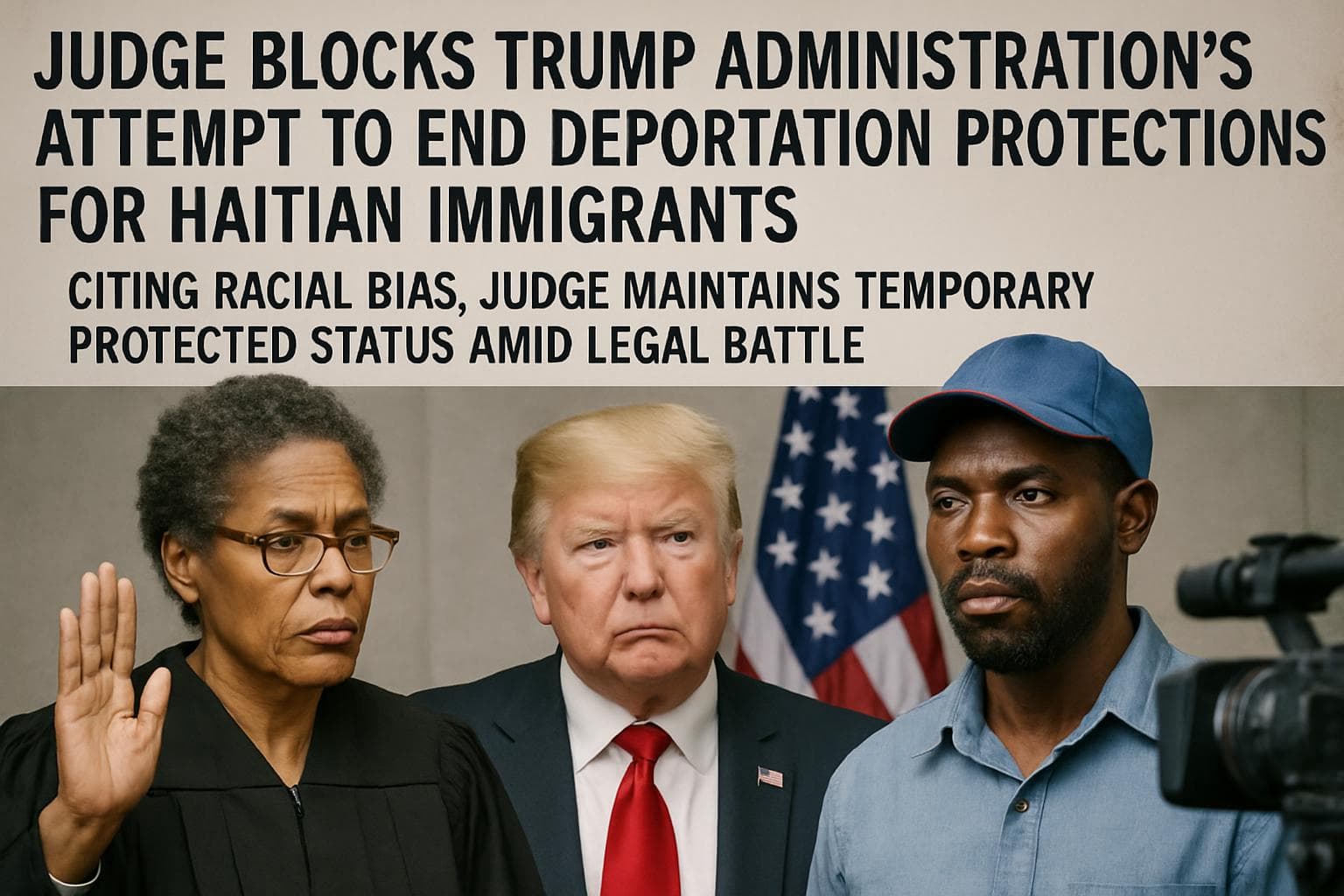
Judge Temporarily Blocks Trump Administration's Effort to End Haitian Deportation Protections
In This Article
HIGHLIGHTS
- A federal judge has temporarily blocked the Trump administration's attempt to end Temporary Protected Status (TPS) for over 350,000 Haitian immigrants.
- Judge Ana Reyes cited potential racial bias in the decision by Homeland Security Secretary Kristi Noem, describing it as "substantially likely."
- The ruling allows Haitian TPS holders to remain in the US while the case proceeds through the courts.
- TPS was initially granted to Haitians following the 2010 earthquake and has been extended multiple times due to ongoing instability.
- The Trump administration's broader effort to dismantle TPS could affect hundreds of thousands of migrants from various countries.
In a significant legal development, a federal judge has issued a temporary block on the Trump administration's plan to terminate Temporary Protected Status (TPS) for over 350,000 Haitian immigrants. This decision, handed down by US District Judge Ana Reyes, prevents Homeland Security Secretary Kristi Noem from implementing the termination, which was set to take effect imminently.
Legal Context and Rationale
Judge Reyes, in her detailed 83-page ruling, highlighted the likelihood of racial bias influencing the decision to end TPS for Haitians. She noted that Noem's comments, which referred to Haitian immigrants as "killers, leeches, or entitlement junkies," suggested a preordained decision rooted in hostility towards nonwhite immigrants. The judge's ruling allows the current protections to remain in place while the case is litigated further.
Background on Temporary Protected Status
TPS was initially granted to Haitian nationals following the devastating earthquake in 2010, which left the country in turmoil. The status has been extended multiple times, most recently under the Biden administration, due to ongoing instability and violence in Haiti. While TPS allows recipients to live and work in the US, it does not provide a pathway to citizenship.
Impact on Haitian Community
The plaintiffs in the case, five Haitian TPS holders, include professionals such as a neuroscientist and a registered nurse, who have built lives in the US. Their legal team argues that returning to Haiti would pose significant risks, citing the country's dire conditions. "If the termination stands, people will almost certainly die," the attorneys warned in court filings.
Broader Implications of the Trump Administration's Policy
The Trump administration has pursued a broader agenda to dismantle TPS, affecting migrants from countries like Venezuela, Honduras, and Nepal. This policy shift could potentially lead to the deportation of hundreds of thousands of individuals who have sought refuge in the US due to unsafe conditions in their home countries.
WHAT THIS MIGHT MEAN
The temporary block on ending TPS for Haitian immigrants sets the stage for a prolonged legal battle that could have far-reaching implications for US immigration policy. If the court ultimately rules against the Trump administration, it could reinforce the legal protections for TPS holders and challenge the administration's broader deportation efforts. Conversely, a ruling in favor of the administration could lead to increased deportations and heightened scrutiny of TPS as a humanitarian tool. Legal experts suggest that this case could influence future policy decisions and shape the discourse around immigration reform in the US.
Related Articles

US Military Strikes on Alleged Drug Boats Raise Legal Concerns

Geneva Peace Talks: Russia and Ukraine Seek Resolution Amid Ongoing Conflict

Clintons to Testify as Epstein Files Spark Allegations of Cover-Up

Don Lemon Pleads Not Guilty in Minnesota Church Protest Case
Judge Blocks Demotion of Senator Mark Kelly Over 'Illegal Orders' Video

Trump Administration Ends Controversial Immigration Enforcement Surge in Minnesota
Judge Temporarily Blocks Trump Administration's Effort to End Haitian Deportation Protections
In This Article
 Ethan Brooks| Published
 HIGHLIGHTS
- A federal judge has temporarily blocked the Trump administration's attempt to end Temporary Protected Status (TPS) for over 350,000 Haitian immigrants.
- Judge Ana Reyes cited potential racial bias in the decision by Homeland Security Secretary Kristi Noem, describing it as "substantially likely."
- The ruling allows Haitian TPS holders to remain in the US while the case proceeds through the courts.
- TPS was initially granted to Haitians following the 2010 earthquake and has been extended multiple times due to ongoing instability.
- The Trump administration's broader effort to dismantle TPS could affect hundreds of thousands of migrants from various countries.
In a significant legal development, a federal judge has issued a temporary block on the Trump administration's plan to terminate Temporary Protected Status (TPS) for over 350,000 Haitian immigrants. This decision, handed down by US District Judge Ana Reyes, prevents Homeland Security Secretary Kristi Noem from implementing the termination, which was set to take effect imminently.
Legal Context and Rationale
Judge Reyes, in her detailed 83-page ruling, highlighted the likelihood of racial bias influencing the decision to end TPS for Haitians. She noted that Noem's comments, which referred to Haitian immigrants as "killers, leeches, or entitlement junkies," suggested a preordained decision rooted in hostility towards nonwhite immigrants. The judge's ruling allows the current protections to remain in place while the case is litigated further.
Background on Temporary Protected Status
TPS was initially granted to Haitian nationals following the devastating earthquake in 2010, which left the country in turmoil. The status has been extended multiple times, most recently under the Biden administration, due to ongoing instability and violence in Haiti. While TPS allows recipients to live and work in the US, it does not provide a pathway to citizenship.
Impact on Haitian Community
The plaintiffs in the case, five Haitian TPS holders, include professionals such as a neuroscientist and a registered nurse, who have built lives in the US. Their legal team argues that returning to Haiti would pose significant risks, citing the country's dire conditions. "If the termination stands, people will almost certainly die," the attorneys warned in court filings.
Broader Implications of the Trump Administration's Policy
The Trump administration has pursued a broader agenda to dismantle TPS, affecting migrants from countries like Venezuela, Honduras, and Nepal. This policy shift could potentially lead to the deportation of hundreds of thousands of individuals who have sought refuge in the US due to unsafe conditions in their home countries.
WHAT THIS MIGHT MEAN
The temporary block on ending TPS for Haitian immigrants sets the stage for a prolonged legal battle that could have far-reaching implications for US immigration policy. If the court ultimately rules against the Trump administration, it could reinforce the legal protections for TPS holders and challenge the administration's broader deportation efforts. Conversely, a ruling in favor of the administration could lead to increased deportations and heightened scrutiny of TPS as a humanitarian tool. Legal experts suggest that this case could influence future policy decisions and shape the discourse around immigration reform in the US.
Related Articles
US Military Strikes on Alleged Drug Boats Raise Legal Concerns
Geneva Peace Talks: Russia and Ukraine Seek Resolution Amid Ongoing Conflict
Clintons to Testify as Epstein Files Spark Allegations of Cover-Up
Don Lemon Pleads Not Guilty in Minnesota Church Protest Case
Judge Blocks Demotion of Senator Mark Kelly Over 'Illegal Orders' Video
Trump Administration Ends Controversial Immigration Enforcement Surge in Minnesota