
New Zealand Prepares for Closely Contested General Election on 7 November
In This Article
HIGHLIGHTS
- New Zealand's general election is set for 7 November, as announced by Prime Minister Christopher Luxon.
- Luxon's National Party faces a tight race against the Labour-led coalition, with economic recovery as a central campaign theme.
- The ruling coalition, formed in 2023, has faced challenges, including public protests over policy changes affecting Māori rights and environmental regulations.
- New Zealand operates under a mixed member proportional (MMP) voting system, requiring coalitions to form a government.
- Polls indicate a close contest, with Labour leader Chris Hipkins often leading in preferred prime minister ratings.
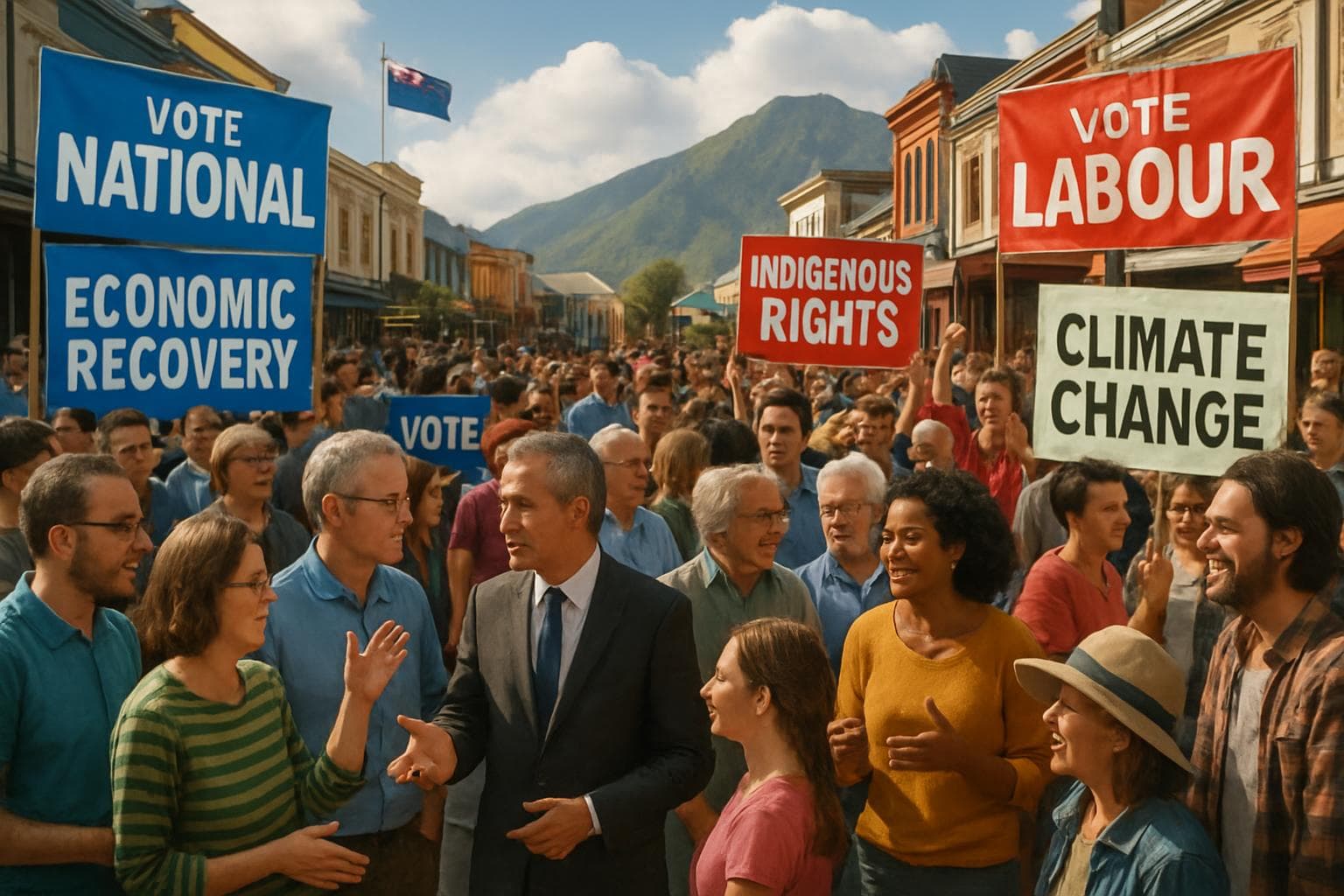
New Zealand is gearing up for a pivotal general election on 7 November, as announced by Prime Minister Christopher Luxon. This election is poised to be one of the most contested in recent years, with the National Party, led by Luxon, facing stiff competition from a Labour-led coalition.
Economic Challenges and Campaign Promises
At a press conference on Wednesday, Luxon emphasized the importance of choosing a government capable of providing stability in a volatile world. The National Party's campaign is heavily focused on economic recovery, promising responsible spending, lower taxes, and increased opportunities for New Zealanders. Luxon acknowledged the difficulties faced since taking office in 2023, citing high living costs and a sluggish economy as major challenges.
Coalition Dynamics and Policy Controversies
The current coalition government, formed by the National Party with the ACT and New Zealand First parties, has implemented significant policy changes. These include reforms to public services, infrastructure, and environmental regulations, aimed at revitalizing the economy. However, some policies have sparked controversy, notably those affecting Māori rights and climate change goals, leading to widespread public protests.
Electoral System and Political Landscape
New Zealand's mixed member proportional (MMP) voting system necessitates coalition-building to secure a parliamentary majority. The National Party's coalition faces competition from the left bloc, comprising Labour, the Green Party, and Te Pāti Māori. Recent polls suggest a close race, with Labour leader Chris Hipkins often leading in preferred prime minister ratings.
Public Sentiment and Future Prospects
Political scientist Dr. Claire Robinson noted that Labour has consistently polled slightly ahead of National in recent surveys. As the election approaches, both major parties will need to address pressing issues such as economic recovery and public sector demands to sway voters.
WHAT THIS MIGHT MEAN
As New Zealand approaches its general election, the outcome remains uncertain, with both major political blocs vying for public support. The National Party's focus on economic recovery will be crucial in swaying undecided voters, but it must also address the controversies surrounding its policy changes. Meanwhile, the Labour-led coalition will aim to capitalize on public dissatisfaction with the current government's performance. The election's result could significantly impact New Zealand's domestic policies and international standing, particularly in areas like climate change and indigenous rights. Political analysts will be closely watching how these dynamics unfold in the coming months.
Related Articles
Angus Taylor Takes Helm of Liberal Party Amidst Leadership Turmoil
Anas Sarwar Denies Plot Against Starmer Amid Labour Party Turmoil
Keir Starmer Faces Pressure Over Appointments and Calls for Cultural Change

UK Government to Reform Asylum Seeker Support and Employment Policies
Government U-turn on Local Election Delays Sparks Political Fallout

Canada and Australia Forge Strategic Partnership Amid Global Uncertainty
New Zealand Prepares for Closely Contested General Election on 7 November
In This Article
 Alex Carter| Published
 HIGHLIGHTS
- New Zealand's general election is set for 7 November, as announced by Prime Minister Christopher Luxon.
- Luxon's National Party faces a tight race against the Labour-led coalition, with economic recovery as a central campaign theme.
- The ruling coalition, formed in 2023, has faced challenges, including public protests over policy changes affecting Māori rights and environmental regulations.
- New Zealand operates under a mixed member proportional (MMP) voting system, requiring coalitions to form a government.
- Polls indicate a close contest, with Labour leader Chris Hipkins often leading in preferred prime minister ratings.
New Zealand is gearing up for a pivotal general election on 7 November, as announced by Prime Minister Christopher Luxon. This election is poised to be one of the most contested in recent years, with the National Party, led by Luxon, facing stiff competition from a Labour-led coalition.
Economic Challenges and Campaign Promises
At a press conference on Wednesday, Luxon emphasized the importance of choosing a government capable of providing stability in a volatile world. The National Party's campaign is heavily focused on economic recovery, promising responsible spending, lower taxes, and increased opportunities for New Zealanders. Luxon acknowledged the difficulties faced since taking office in 2023, citing high living costs and a sluggish economy as major challenges.
Coalition Dynamics and Policy Controversies
The current coalition government, formed by the National Party with the ACT and New Zealand First parties, has implemented significant policy changes. These include reforms to public services, infrastructure, and environmental regulations, aimed at revitalizing the economy. However, some policies have sparked controversy, notably those affecting Māori rights and climate change goals, leading to widespread public protests.
Electoral System and Political Landscape
New Zealand's mixed member proportional (MMP) voting system necessitates coalition-building to secure a parliamentary majority. The National Party's coalition faces competition from the left bloc, comprising Labour, the Green Party, and Te Pāti Māori. Recent polls suggest a close race, with Labour leader Chris Hipkins often leading in preferred prime minister ratings.
Public Sentiment and Future Prospects
Political scientist Dr. Claire Robinson noted that Labour has consistently polled slightly ahead of National in recent surveys. As the election approaches, both major parties will need to address pressing issues such as economic recovery and public sector demands to sway voters.
WHAT THIS MIGHT MEAN
As New Zealand approaches its general election, the outcome remains uncertain, with both major political blocs vying for public support. The National Party's focus on economic recovery will be crucial in swaying undecided voters, but it must also address the controversies surrounding its policy changes. Meanwhile, the Labour-led coalition will aim to capitalize on public dissatisfaction with the current government's performance. The election's result could significantly impact New Zealand's domestic policies and international standing, particularly in areas like climate change and indigenous rights. Political analysts will be closely watching how these dynamics unfold in the coming months.
Related Articles
Angus Taylor Takes Helm of Liberal Party Amidst Leadership Turmoil
Anas Sarwar Denies Plot Against Starmer Amid Labour Party Turmoil
Keir Starmer Faces Pressure Over Appointments and Calls for Cultural Change
UK Government to Reform Asylum Seeker Support and Employment Policies
Government U-turn on Local Election Delays Sparks Political Fallout
Canada and Australia Forge Strategic Partnership Amid Global Uncertainty