
NHS to Introduce Free Chickenpox Vaccine Amidst Concerns Over Low Immunization Rates
In This Article
HIGHLIGHTS
- The NHS will offer a free chickenpox vaccine to children in England, Wales, and Northern Ireland starting January, integrated with the MMR vaccine.
- Vaccine uptake in England is below the 95% target, with only 83.7% of five-year-olds receiving both MMR doses.
- Health Minister Stephen Kinnock emphasizes combating vaccine hesitancy, citing a decade-long decline in vaccination rates.
- Chickenpox causes significant economic impact, with £24m lost annually in income and productivity due to parental leave.
- Regional disparities in vaccine uptake persist, with London showing notably lower rates compared to other areas.
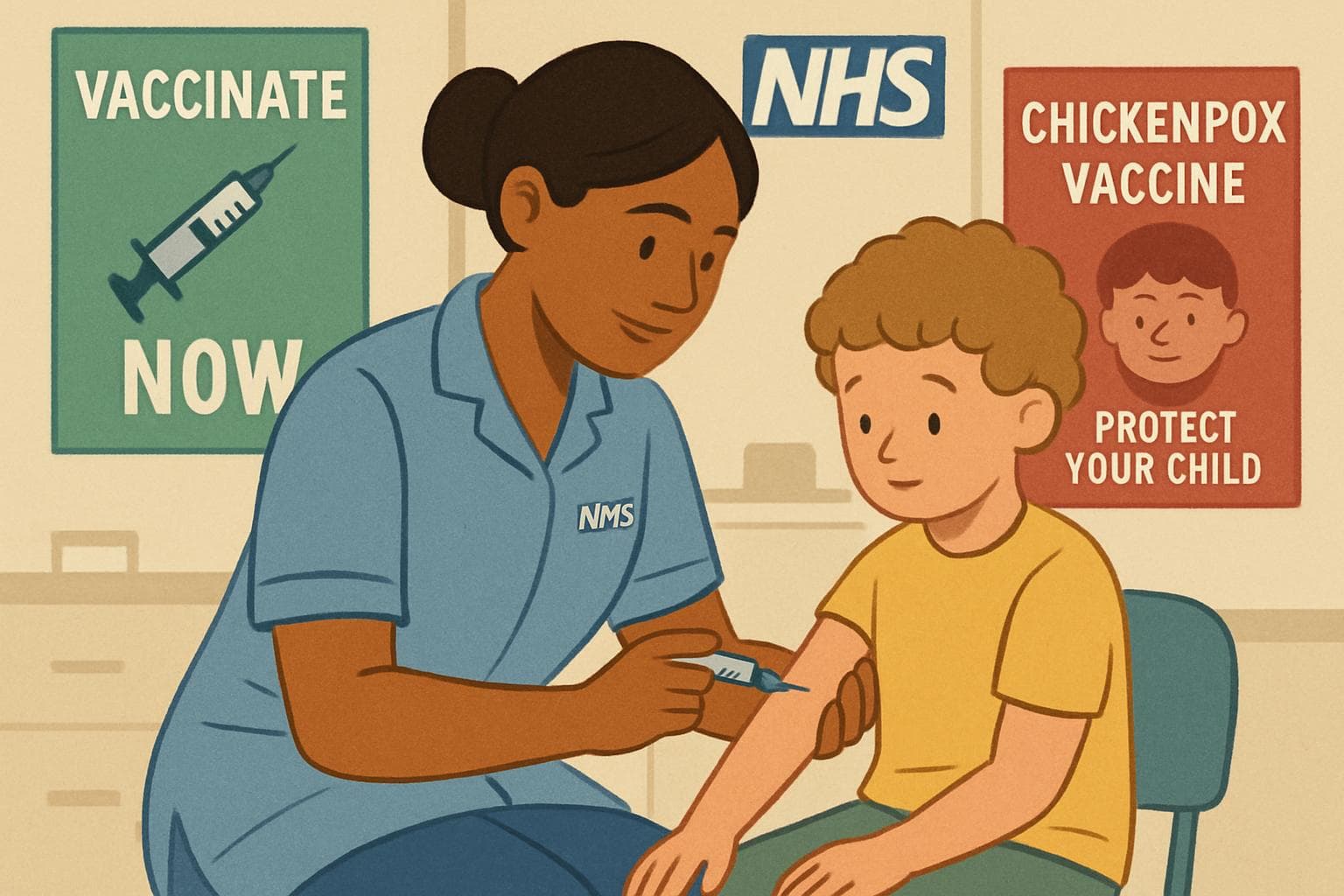
In a significant public health initiative, the NHS will begin offering a free chickenpox vaccine to young children in England, Wales, and Northern Ireland from January. This move aims to integrate the chickenpox vaccine with the existing measles, mumps, and rubella (MMR) vaccine, administered in two doses at 12 and 18 months. The decision follows recommendations from the Joint Committee on Vaccination and Immunisation (JCVI) and aims to curb the spread of chickenpox, which, while generally mild, can lead to severe complications in some cases.
Addressing Vaccine Uptake Challenges
The introduction of the chickenpox vaccine comes amid concerns over declining childhood immunization rates in England. Recent data from the UK Health Security Agency (UKHSA) reveals that none of the main childhood vaccines have met the 95% uptake target necessary for herd immunity. Only 83.7% of five-year-olds have received both doses of the MMR vaccine, raising fears of increased vulnerability to infectious diseases as children enter school.
Health Minister Stephen Kinnock has highlighted the need to combat vaccine hesitancy, which has been exacerbated by the COVID-19 pandemic. "We must defeat the conspiracy theories and misinformation that undermine public confidence in vaccines," Kinnock stated, emphasizing the importance of protecting children from preventable diseases.
Economic and Health Implications
Chickenpox not only poses health risks but also has economic repercussions, costing the UK an estimated £24 million annually in lost income and productivity as parents take time off work to care for sick children. The new vaccination program is expected to alleviate this burden, potentially saving the NHS £15 million a year in treatment costs.
Regional Disparities and Public Health Efforts
Despite the national rollout, regional disparities in vaccine uptake remain a challenge. London, in particular, has lower vaccination rates, attributed to its mobile population and barriers to accessing healthcare. Efforts are underway to address these disparities through local and national public health campaigns, involving GPs, schools, and community organizations.
Experts like Dr. Gayatri Amirthalingam from the UKHSA stress the importance of vaccination in preventing severe cases of chickenpox, which can lead to hospitalization and, in rare instances, be fatal. The NHS's initiative is seen as a crucial step in safeguarding children's health and supporting working families.
WHAT THIS MIGHT MEAN
The introduction of the chickenpox vaccine could significantly reduce the incidence of the disease and its complications, aligning the UK with other countries that have long included it in their immunization schedules. However, the success of this initiative hinges on overcoming vaccine hesitancy and ensuring equitable access across regions. If uptake improves, it could set a precedent for addressing other vaccination gaps, potentially revitalizing the UK's overall childhood immunization program. Experts warn that failure to increase uptake could lead to outbreaks of preventable diseases, underscoring the need for sustained public health efforts and community engagement.
Related Articles
UK Government to Reform Asylum Seeker Support and Employment Policies

Labour MP's Husband Arrested in UK-China Espionage Probe

Saharan Dust to Illuminate UK Skies with Vivid Sunrises and Sunsets
Persistent Safety Concerns in Nottingham Maternity Services Amidst Calls for Systemic Reform

Sisters Tragically Drown at Eryri National Park's Watkin Path

UK Faces Dilemmas Amid Iran Conflict and China Spying Allegations
NHS to Introduce Free Chickenpox Vaccine Amidst Concerns Over Low Immunization Rates
In This Article
 Ethan Brooks| Published
 HIGHLIGHTS
- The NHS will offer a free chickenpox vaccine to children in England, Wales, and Northern Ireland starting January, integrated with the MMR vaccine.
- Vaccine uptake in England is below the 95% target, with only 83.7% of five-year-olds receiving both MMR doses.
- Health Minister Stephen Kinnock emphasizes combating vaccine hesitancy, citing a decade-long decline in vaccination rates.
- Chickenpox causes significant economic impact, with £24m lost annually in income and productivity due to parental leave.
- Regional disparities in vaccine uptake persist, with London showing notably lower rates compared to other areas.
In a significant public health initiative, the NHS will begin offering a free chickenpox vaccine to young children in England, Wales, and Northern Ireland from January. This move aims to integrate the chickenpox vaccine with the existing measles, mumps, and rubella (MMR) vaccine, administered in two doses at 12 and 18 months. The decision follows recommendations from the Joint Committee on Vaccination and Immunisation (JCVI) and aims to curb the spread of chickenpox, which, while generally mild, can lead to severe complications in some cases.
Addressing Vaccine Uptake Challenges
The introduction of the chickenpox vaccine comes amid concerns over declining childhood immunization rates in England. Recent data from the UK Health Security Agency (UKHSA) reveals that none of the main childhood vaccines have met the 95% uptake target necessary for herd immunity. Only 83.7% of five-year-olds have received both doses of the MMR vaccine, raising fears of increased vulnerability to infectious diseases as children enter school.
Health Minister Stephen Kinnock has highlighted the need to combat vaccine hesitancy, which has been exacerbated by the COVID-19 pandemic. "We must defeat the conspiracy theories and misinformation that undermine public confidence in vaccines," Kinnock stated, emphasizing the importance of protecting children from preventable diseases.
Economic and Health Implications
Chickenpox not only poses health risks but also has economic repercussions, costing the UK an estimated £24 million annually in lost income and productivity as parents take time off work to care for sick children. The new vaccination program is expected to alleviate this burden, potentially saving the NHS £15 million a year in treatment costs.
Regional Disparities and Public Health Efforts
Despite the national rollout, regional disparities in vaccine uptake remain a challenge. London, in particular, has lower vaccination rates, attributed to its mobile population and barriers to accessing healthcare. Efforts are underway to address these disparities through local and national public health campaigns, involving GPs, schools, and community organizations.
Experts like Dr. Gayatri Amirthalingam from the UKHSA stress the importance of vaccination in preventing severe cases of chickenpox, which can lead to hospitalization and, in rare instances, be fatal. The NHS's initiative is seen as a crucial step in safeguarding children's health and supporting working families.
WHAT THIS MIGHT MEAN
The introduction of the chickenpox vaccine could significantly reduce the incidence of the disease and its complications, aligning the UK with other countries that have long included it in their immunization schedules. However, the success of this initiative hinges on overcoming vaccine hesitancy and ensuring equitable access across regions. If uptake improves, it could set a precedent for addressing other vaccination gaps, potentially revitalizing the UK's overall childhood immunization program. Experts warn that failure to increase uptake could lead to outbreaks of preventable diseases, underscoring the need for sustained public health efforts and community engagement.
Related Articles
UK Government to Reform Asylum Seeker Support and Employment Policies
Labour MP's Husband Arrested in UK-China Espionage Probe
Saharan Dust to Illuminate UK Skies with Vivid Sunrises and Sunsets
Persistent Safety Concerns in Nottingham Maternity Services Amidst Calls for Systemic Reform
Sisters Tragically Drown at Eryri National Park's Watkin Path
UK Faces Dilemmas Amid Iran Conflict and China Spying Allegations