
Screenwriter Paul Laverty Arrested at Edinburgh Protest Under Terrorism Act
In This Article
HIGHLIGHTS
- Screenwriter Paul Laverty was arrested in Edinburgh for allegedly supporting a proscribed organization during a pro-Palestine protest.
- Laverty, known for his work with Ken Loach, was charged under the Terrorism Act for wearing a T-shirt referencing Palestine Action.
- The protest was held outside St Leonard’s police station to support Moira McFarlane, who faced similar charges.
- The UK has seen numerous arrests related to Palestine Action protests since the group was banned in July.
- Critics, including former Labour minister Peter Hain, argue the ban equates peaceful protest with terrorism, stifling democratic debate.
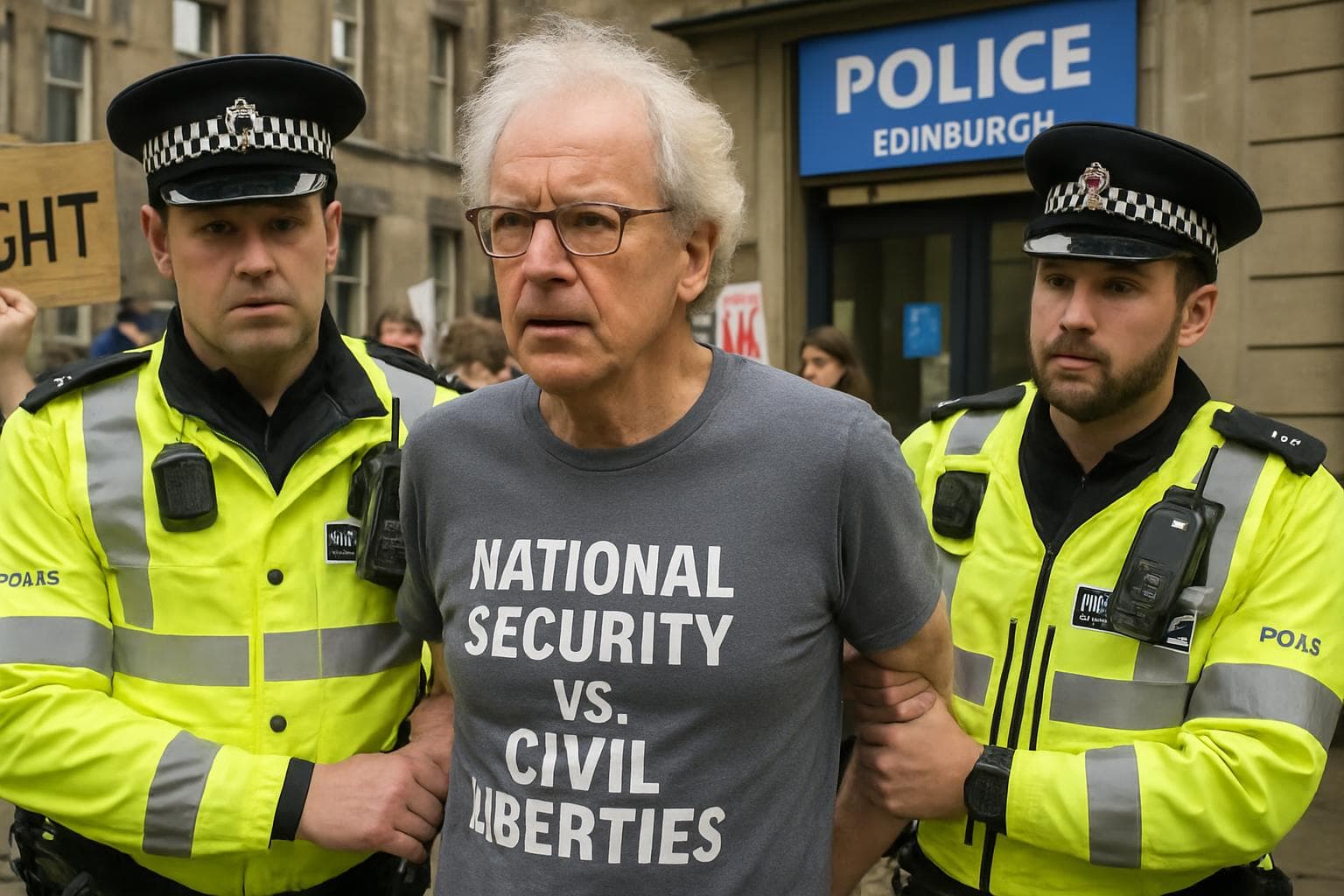
Award-winning screenwriter Paul Laverty, renowned for his collaborations with filmmaker Ken Loach, was arrested in Edinburgh during a pro-Palestine protest. The 68-year-old was charged under the Terrorism Act for allegedly showing support for a proscribed organization, Palestine Action, by wearing a T-shirt at the demonstration outside St Leonard’s police station.
Laverty's arrest occurred as he attended the protest to support Moira McFarlane, a member of the Scottish Palestine Solidarity Campaign, who was also facing charges under the same act. The protest highlighted the ongoing controversy surrounding the ban on Palestine Action, a group that has been at the center of numerous protests across the UK since its proscription in July.
The ban followed a high-profile incident in which activists from Palestine Action defaced military aircraft at RAF Brize Norton. Despite the ban, protests have continued, leading to hundreds of arrests, including 532 individuals at a recent demonstration. The pressure group Defend Our Juries has called for further protests, with a significant demonstration planned in London.
Critics of the ban, including former Labour cabinet minister Peter Hain, have expressed concerns that equating peaceful protest with terrorism undermines democratic freedoms. In a joint article with Labour MP Stella Creasy, Hain argued that the current approach is unsustainable and stifles essential democratic debate.
WHAT THIS MIGHT MEAN
The arrest of Paul Laverty and others at pro-Palestine protests raises significant questions about the balance between national security and civil liberties in the UK. As protests continue, the government may face increasing pressure to reconsider the ban on Palestine Action, especially if public opinion shifts towards supporting the right to peaceful protest.
Legal challenges to the ban could also emerge, potentially leading to a judicial review that might redefine the boundaries of lawful protest. Meanwhile, political figures and activists are likely to continue debating the implications of equating protest with terrorism, which could influence future legislative changes.
Related Articles

UK Government to Reform Asylum Seeker Support and Employment Policies

UK Faces Dilemmas Amid Iran Conflict and China Spying Allegations
UK Reinforces Military Presence in Cyprus Amid Middle East Tensions
Labour MP's Husband Arrested in UK-China Espionage Probe

UK-Iran Tensions: Starmer Defends Cautious Approach Amid Trump Criticism
Persistent Safety Concerns in Nottingham Maternity Services Amidst Calls for Systemic Reform
Screenwriter Paul Laverty Arrested at Edinburgh Protest Under Terrorism Act
In This Article
 Ethan Brooks| Published
 HIGHLIGHTS
- Screenwriter Paul Laverty was arrested in Edinburgh for allegedly supporting a proscribed organization during a pro-Palestine protest.
- Laverty, known for his work with Ken Loach, was charged under the Terrorism Act for wearing a T-shirt referencing Palestine Action.
- The protest was held outside St Leonard’s police station to support Moira McFarlane, who faced similar charges.
- The UK has seen numerous arrests related to Palestine Action protests since the group was banned in July.
- Critics, including former Labour minister Peter Hain, argue the ban equates peaceful protest with terrorism, stifling democratic debate.
Award-winning screenwriter Paul Laverty, renowned for his collaborations with filmmaker Ken Loach, was arrested in Edinburgh during a pro-Palestine protest. The 68-year-old was charged under the Terrorism Act for allegedly showing support for a proscribed organization, Palestine Action, by wearing a T-shirt at the demonstration outside St Leonard’s police station.
Laverty's arrest occurred as he attended the protest to support Moira McFarlane, a member of the Scottish Palestine Solidarity Campaign, who was also facing charges under the same act. The protest highlighted the ongoing controversy surrounding the ban on Palestine Action, a group that has been at the center of numerous protests across the UK since its proscription in July.
The ban followed a high-profile incident in which activists from Palestine Action defaced military aircraft at RAF Brize Norton. Despite the ban, protests have continued, leading to hundreds of arrests, including 532 individuals at a recent demonstration. The pressure group Defend Our Juries has called for further protests, with a significant demonstration planned in London.
Critics of the ban, including former Labour cabinet minister Peter Hain, have expressed concerns that equating peaceful protest with terrorism undermines democratic freedoms. In a joint article with Labour MP Stella Creasy, Hain argued that the current approach is unsustainable and stifles essential democratic debate.
WHAT THIS MIGHT MEAN
The arrest of Paul Laverty and others at pro-Palestine protests raises significant questions about the balance between national security and civil liberties in the UK. As protests continue, the government may face increasing pressure to reconsider the ban on Palestine Action, especially if public opinion shifts towards supporting the right to peaceful protest.
Legal challenges to the ban could also emerge, potentially leading to a judicial review that might redefine the boundaries of lawful protest. Meanwhile, political figures and activists are likely to continue debating the implications of equating protest with terrorism, which could influence future legislative changes.
Related Articles
UK Government to Reform Asylum Seeker Support and Employment Policies
UK Faces Dilemmas Amid Iran Conflict and China Spying Allegations
UK Reinforces Military Presence in Cyprus Amid Middle East Tensions
Labour MP's Husband Arrested in UK-China Espionage Probe
UK-Iran Tensions: Starmer Defends Cautious Approach Amid Trump Criticism
Persistent Safety Concerns in Nottingham Maternity Services Amidst Calls for Systemic Reform