
Pierre Poilievre Reclaims Parliamentary Seat in Alberta Byelection
In This Article
HIGHLIGHTS
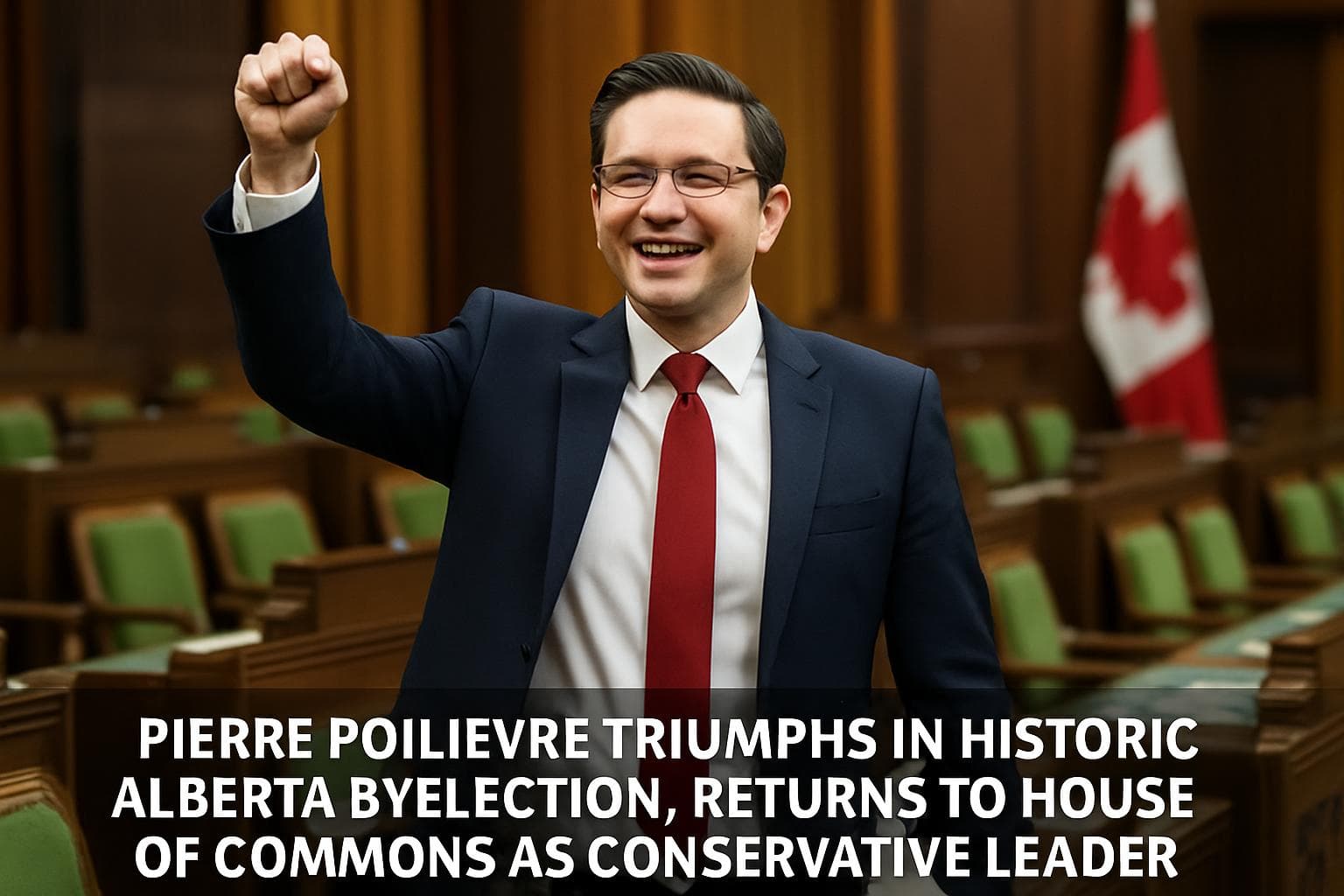
- Pierre Poilievre wins the Battle River-Crowfoot byelection with 80.4% of the vote, regaining a seat in the Canadian Parliament.
- The byelection saw a record 214 candidates, driven by a protest group advocating for electoral reform.
- Poilievre's victory allows him to resume his role as leader of the official opposition in the House of Commons.
- The byelection was necessitated by the resignation of former MP Damian Kurek, who stepped aside for Poilievre.
- Poilievre faces a mandatory leadership review in January, where his tenure as Conservative leader will be evaluated.
Pierre Poilievre, leader of Canada's Conservative Party, has successfully reclaimed a seat in the Canadian Parliament following a decisive victory in the Battle River-Crowfoot byelection. Poilievre secured 80.4% of the vote in the rural Alberta riding, according to preliminary results from Elections Canada. This victory marks a significant comeback for Poilievre, who lost his long-held Ottawa-area seat in April's federal election to Liberal candidate Bruce Fanjoy.
A Crowded Field and Electoral Reform
The byelection, held on Monday, was notable for its unprecedented number of candidates. A total of 214 individuals contested the seat, largely due to the efforts of the Longest Ballot Committee, a group advocating for electoral reform. This unusual situation led to the use of write-in ballots, a first in Canadian federal elections, and required additional staff to manage the vote count.
Return to the House of Commons
Poilievre's victory allows him to return to the House of Commons as the leader of the official opposition, a role he has been unable to fully perform without a parliamentary seat. In his victory speech, Poilievre expressed gratitude to the residents of Battle River-Crowfoot, stating, "Getting to know the people in this region has been the privilege of my life." He also thanked Damian Kurek, the former MP who resigned to facilitate Poilievre's return, for his "gracious sacrifice."
Challenges Ahead for Poilievre
Despite the win, Poilievre's margin of victory was narrower than that of his predecessor, Damian Kurek, who secured 83% of the vote in the last election. This could influence the upcoming mandatory leadership review in January, where Conservative Party members will decide whether Poilievre should continue as leader. The House of Commons is set to reconvene on September 15, providing Poilievre with an opportunity to reassert his leadership on the national stage.
WHAT THIS MIGHT MEAN
Looking ahead, Poilievre's return to Parliament could reinvigorate the Conservative Party's efforts to challenge Prime Minister Mark Carney's Liberal government. However, the narrower victory margin in a traditionally Conservative stronghold may signal potential challenges within his party. The upcoming leadership review in January will be a critical test of Poilievre's standing among party members. Additionally, the push for electoral reform, highlighted by the Longest Ballot Committee's actions, may continue to influence Canadian political discourse, potentially impacting future elections and party strategies.
Related Articles
Canada and Australia Forge Strategic Partnership Amid Global Uncertainty
Canada Calls for De-escalation Amid US-Israel Strikes on Iran
UK Government to Reform Asylum Seeker Support and Employment Policies
Labour MP's Husband Arrested in UK-China Espionage Probe

UK-Iran Tensions: Starmer Defends Cautious Approach Amid Trump Criticism

Diplomatic Tensions Rise as Trump Criticizes Starmer's Iran Policy
Pierre Poilievre Reclaims Parliamentary Seat in Alberta Byelection
In This Article
 Alex Carter| Published
 HIGHLIGHTS
- Pierre Poilievre wins the Battle River-Crowfoot byelection with 80.4% of the vote, regaining a seat in the Canadian Parliament.
- The byelection saw a record 214 candidates, driven by a protest group advocating for electoral reform.
- Poilievre's victory allows him to resume his role as leader of the official opposition in the House of Commons.
- The byelection was necessitated by the resignation of former MP Damian Kurek, who stepped aside for Poilievre.
- Poilievre faces a mandatory leadership review in January, where his tenure as Conservative leader will be evaluated.
Pierre Poilievre, leader of Canada's Conservative Party, has successfully reclaimed a seat in the Canadian Parliament following a decisive victory in the Battle River-Crowfoot byelection. Poilievre secured 80.4% of the vote in the rural Alberta riding, according to preliminary results from Elections Canada. This victory marks a significant comeback for Poilievre, who lost his long-held Ottawa-area seat in April's federal election to Liberal candidate Bruce Fanjoy.
A Crowded Field and Electoral Reform
The byelection, held on Monday, was notable for its unprecedented number of candidates. A total of 214 individuals contested the seat, largely due to the efforts of the Longest Ballot Committee, a group advocating for electoral reform. This unusual situation led to the use of write-in ballots, a first in Canadian federal elections, and required additional staff to manage the vote count.
Return to the House of Commons
Poilievre's victory allows him to return to the House of Commons as the leader of the official opposition, a role he has been unable to fully perform without a parliamentary seat. In his victory speech, Poilievre expressed gratitude to the residents of Battle River-Crowfoot, stating, "Getting to know the people in this region has been the privilege of my life." He also thanked Damian Kurek, the former MP who resigned to facilitate Poilievre's return, for his "gracious sacrifice."
Challenges Ahead for Poilievre
Despite the win, Poilievre's margin of victory was narrower than that of his predecessor, Damian Kurek, who secured 83% of the vote in the last election. This could influence the upcoming mandatory leadership review in January, where Conservative Party members will decide whether Poilievre should continue as leader. The House of Commons is set to reconvene on September 15, providing Poilievre with an opportunity to reassert his leadership on the national stage.
WHAT THIS MIGHT MEAN
Looking ahead, Poilievre's return to Parliament could reinvigorate the Conservative Party's efforts to challenge Prime Minister Mark Carney's Liberal government. However, the narrower victory margin in a traditionally Conservative stronghold may signal potential challenges within his party. The upcoming leadership review in January will be a critical test of Poilievre's standing among party members. Additionally, the push for electoral reform, highlighted by the Longest Ballot Committee's actions, may continue to influence Canadian political discourse, potentially impacting future elections and party strategies.
Related Articles
Canada and Australia Forge Strategic Partnership Amid Global Uncertainty
Canada Calls for De-escalation Amid US-Israel Strikes on Iran
UK Government to Reform Asylum Seeker Support and Employment Policies
Labour MP's Husband Arrested in UK-China Espionage Probe
UK-Iran Tensions: Starmer Defends Cautious Approach Amid Trump Criticism
Diplomatic Tensions Rise as Trump Criticizes Starmer's Iran Policy