
Quebec Tightens Secularism Laws with New Public Prayer Ban
In This Article
HIGHLIGHTS
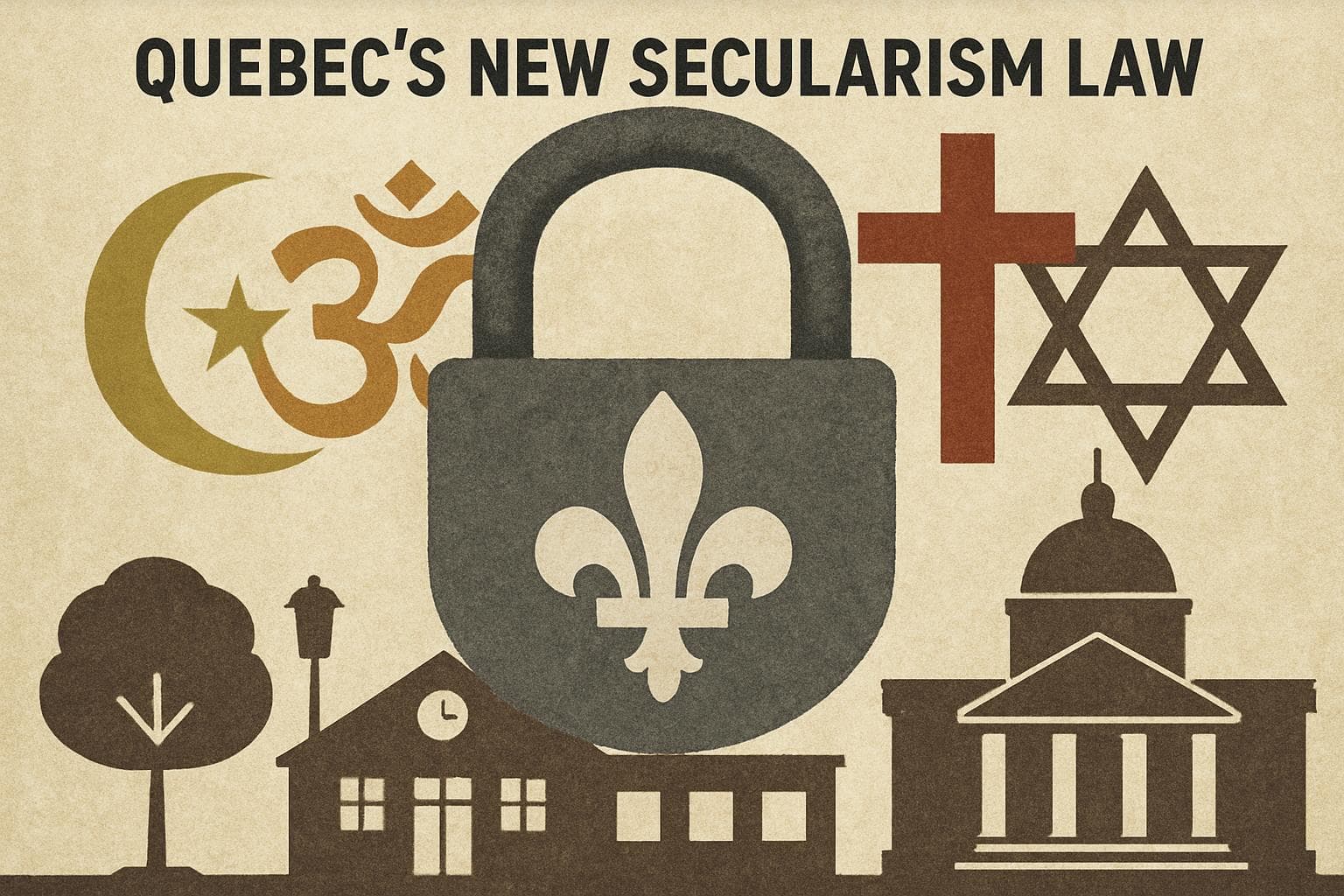
- Quebec's new Bill 9 aims to expand secularism by banning public prayer and limiting religious symbols in public institutions.
- The legislation extends the 2019 Bill 21, which already prohibits religious symbols for certain public sector employees.
- Critics argue the law disproportionately affects religious minorities, particularly Muslims, and fuels identity politics.
- The bill includes fines for unauthorized public prayer and restricts religious meal offerings in public institutions.
- Quebec's Supreme Court is set to hear a legal challenge against the existing secularism laws next year.
Quebec is set to intensify its secularism policies with the introduction of Bill 9, a new law that seeks to ban public prayer and further restrict religious symbols in public institutions. The legislation, introduced by the Coalition Avenir Quebec (CAQ) on Thursday, aims to build on the controversial Bill 21, which was passed in 2019.
Expansion of Secularism Measures
Bill 9 proposes a comprehensive ban on public prayer in spaces such as parks and roads, with fines of up to C$1,125 for violations. The law also extends the prohibition of religious symbols to staff in subsidized daycares, colleges, universities, and private schools. Full face coverings will be banned for both students and staff in these institutions. Jean-François Roberge, Quebec's minister responsible for secularism, emphasized that these measures are part of a broader effort to ensure state neutrality.
Criticism and Controversy
The proposed law has sparked significant backlash, with critics arguing that it disproportionately targets religious minorities, particularly Muslims. Ines Rarrbo, a Muslim student, expressed concern, stating that the new rules feel like a personal attack on her community. The National Council of Canadian Muslims has accused the CAQ of exploiting identity politics to regain public trust. The Assembly of Quebec Catholic Bishops also criticized the bill, calling it a "radical infringement" on rights and freedoms.
Legal and Social Implications
The secularism laws have been contentious since their inception, with Bill 21 already facing legal challenges for allegedly violating freedoms of expression and religion. Quebec's superior court upheld the statute in 2021, despite acknowledging these breaches. The Supreme Court of Canada is scheduled to hear a challenge to the existing laws next year, which could have significant implications for the province's secularism policies.
WHAT THIS MIGHT MEAN
The introduction of Bill 9 could lead to further polarization in Quebec, as debates over secularism and religious freedom intensify. If the Supreme Court rules against the existing laws, it could force the provincial government to reconsider its approach to secularism. Conversely, a ruling in favor of the laws might embolden the CAQ to pursue even stricter measures. Experts suggest that the ongoing legal battles and public discourse could shape the future of religious freedom and identity politics in Quebec and beyond.
Related Articles
Canada's Carney Calls for Unity Amid Global Challenges
Former Olympic Snowboarder Charged in Witness Murder Amidst Drug Trafficking Allegations
Historic Orkney Shipwreck Identified as 18th-Century Royal Navy Vessel
Canadian Police Uncover Largest Weapons Cache in Alleged Militia Plot
Heatwave Sweeps North America, Triggering Emergencies and Hospitalizations
Quebec Tightens Secularism Laws with New Public Prayer Ban
In This Article
 Sofia Romano| Published
 HIGHLIGHTS
- Quebec's new Bill 9 aims to expand secularism by banning public prayer and limiting religious symbols in public institutions.
- The legislation extends the 2019 Bill 21, which already prohibits religious symbols for certain public sector employees.
- Critics argue the law disproportionately affects religious minorities, particularly Muslims, and fuels identity politics.
- The bill includes fines for unauthorized public prayer and restricts religious meal offerings in public institutions.
- Quebec's Supreme Court is set to hear a legal challenge against the existing secularism laws next year.
Quebec is set to intensify its secularism policies with the introduction of Bill 9, a new law that seeks to ban public prayer and further restrict religious symbols in public institutions. The legislation, introduced by the Coalition Avenir Quebec (CAQ) on Thursday, aims to build on the controversial Bill 21, which was passed in 2019.
Expansion of Secularism Measures
Bill 9 proposes a comprehensive ban on public prayer in spaces such as parks and roads, with fines of up to C$1,125 for violations. The law also extends the prohibition of religious symbols to staff in subsidized daycares, colleges, universities, and private schools. Full face coverings will be banned for both students and staff in these institutions. Jean-François Roberge, Quebec's minister responsible for secularism, emphasized that these measures are part of a broader effort to ensure state neutrality.
Criticism and Controversy
The proposed law has sparked significant backlash, with critics arguing that it disproportionately targets religious minorities, particularly Muslims. Ines Rarrbo, a Muslim student, expressed concern, stating that the new rules feel like a personal attack on her community. The National Council of Canadian Muslims has accused the CAQ of exploiting identity politics to regain public trust. The Assembly of Quebec Catholic Bishops also criticized the bill, calling it a "radical infringement" on rights and freedoms.
Legal and Social Implications
The secularism laws have been contentious since their inception, with Bill 21 already facing legal challenges for allegedly violating freedoms of expression and religion. Quebec's superior court upheld the statute in 2021, despite acknowledging these breaches. The Supreme Court of Canada is scheduled to hear a challenge to the existing laws next year, which could have significant implications for the province's secularism policies.
WHAT THIS MIGHT MEAN
The introduction of Bill 9 could lead to further polarization in Quebec, as debates over secularism and religious freedom intensify. If the Supreme Court rules against the existing laws, it could force the provincial government to reconsider its approach to secularism. Conversely, a ruling in favor of the laws might embolden the CAQ to pursue even stricter measures. Experts suggest that the ongoing legal battles and public discourse could shape the future of religious freedom and identity politics in Quebec and beyond.
Related Articles
Canada's Carney Calls for Unity Amid Global Challenges
Former Olympic Snowboarder Charged in Witness Murder Amidst Drug Trafficking Allegations
Historic Orkney Shipwreck Identified as 18th-Century Royal Navy Vessel
Canadian Police Uncover Largest Weapons Cache in Alleged Militia Plot
Heatwave Sweeps North America, Triggering Emergencies and Hospitalizations