
Historic Orkney Shipwreck Identified as 18th-Century Royal Navy Vessel
In This Article
HIGHLIGHTS
- Archaeologists identified a 250-year-old shipwreck on Sanday, Orkney, as the Earl of Chatham, formerly HMS Hind.
- The ship, a 24-gun Royal Navy frigate, was active in the 1750s and 1770s, including the sieges of Louisbourg and Quebec.
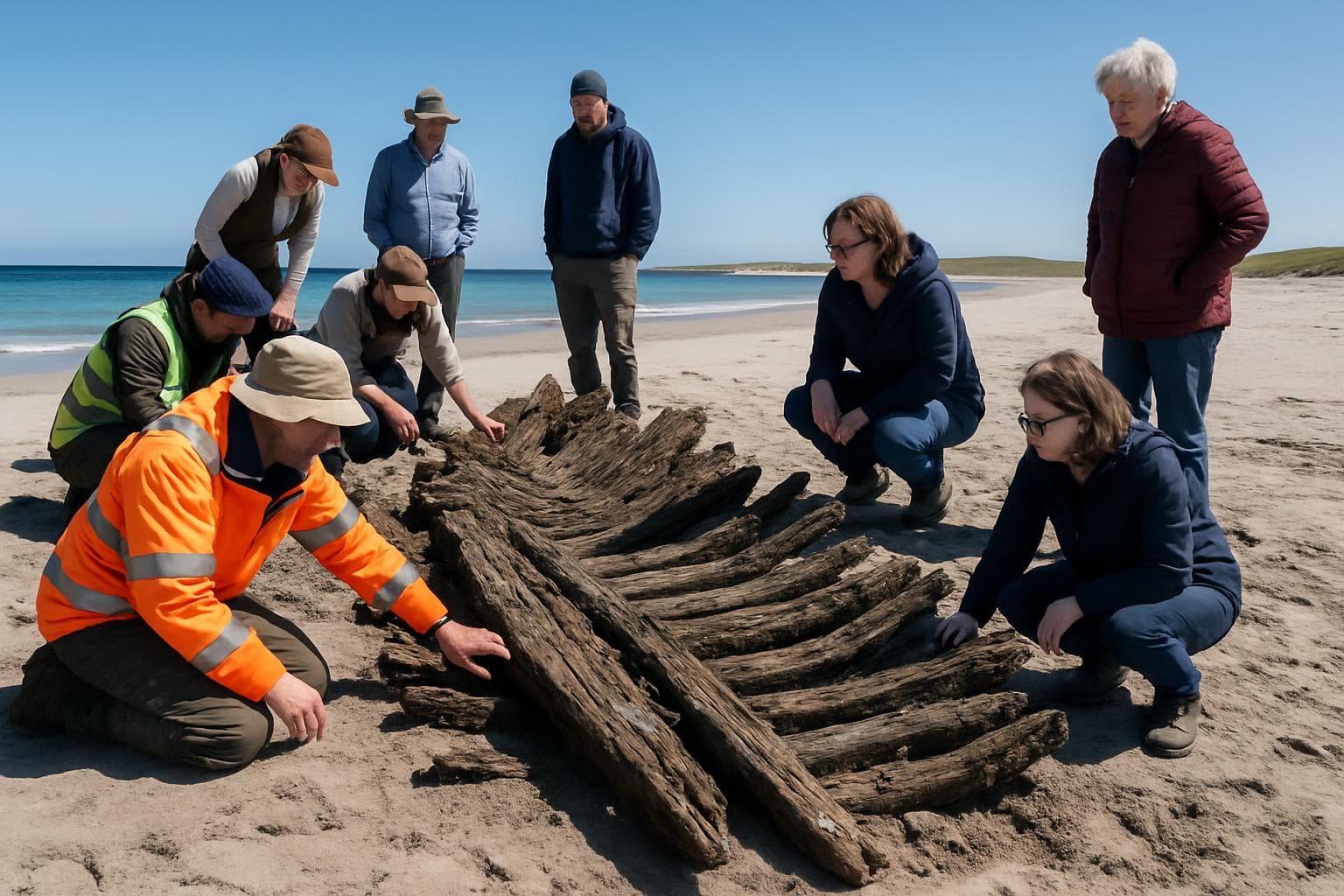
- The wreck was discovered in February 2024 after a storm exposed the timbers, initially found by a schoolboy.
- Dendrochronological analysis confirmed the ship's wood originated from southern England, dating back to 1748.
- The shipwreck's identification involved collaboration between archaeologists, local volunteers, and Wessex Archaeology.
Archaeologists have successfully identified a 250-year-old shipwreck discovered on Sanday, Orkney, as the Earl of Chatham, a vessel with a storied past as HMS Hind, a Royal Navy frigate. The identification process, which involved scientific analysis and community-led historical research, has shed light on the ship's remarkable history and its final resting place in the Bay of Lopness.
Discovery and Identification
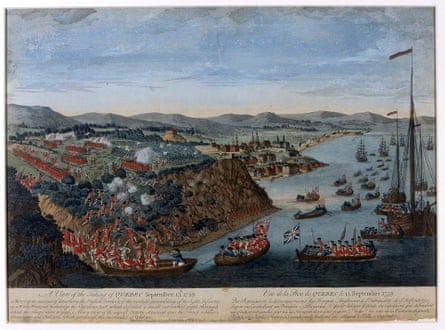
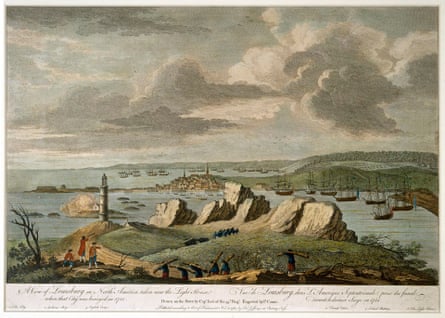
The shipwreck was initially uncovered in February 2024 after a storm exposed its timbers on the island's beach. A local schoolboy stumbled upon the remains, sparking interest among residents and experts alike. The vessel, originally built in Chichester in 1749, was a 24-gun frigate that played significant roles in the sieges of Louisbourg and Quebec during the 1750s. It later participated in the American Revolutionary War before being decommissioned and repurposed as a whaling ship.
From Warship to Whaler
Known for its robust construction, HMS Hind was sold and renamed the Earl of Chatham, embarking on whaling expeditions in the Arctic. Despite its eventual wreck in March 1788, the ship's luck held as all 56 crew members survived the ordeal. The ship's transformation from a naval frigate to a whaling vessel was common practice, given the durability required for icy waters.
Scientific and Community Efforts
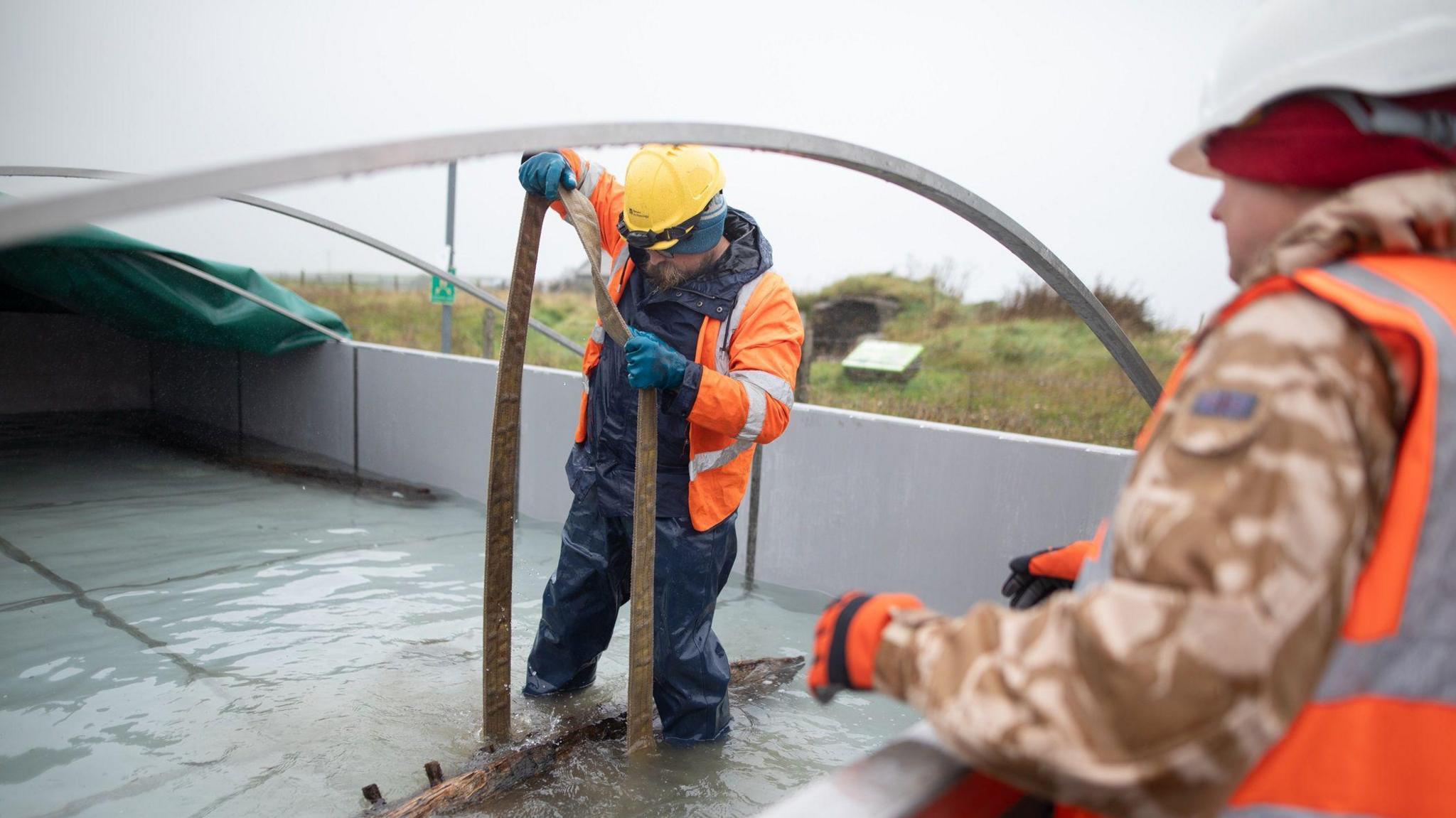
The identification of the shipwreck was a collaborative effort involving Wessex Archaeology, Dendrochronicle, and local volunteers. Dendrochronological analysis, or tree-ring dating, revealed that the ship's wood originated from southern England, with the earliest sample felled in 1748. This scientific approach, combined with extensive archival research, confirmed the vessel's identity.
Ben Saunders, a senior marine archaeologist at Wessex Archaeology, highlighted the project's dual focus on uncovering the ship's history and understanding the Sanday community's role in maritime events of the 1780s. Clive Struver, chair of the Sanday Development Trust, expressed excitement about the discovery and the potential for further exploration of the community's maritime heritage.
WHAT THIS MIGHT MEAN
The identification of the Earl of Chatham opens new avenues for historical and archaeological research in Orkney. As coastal changes continue to expose more shipwrecks, experts anticipate further discoveries that could enhance understanding of maritime history. The collaboration between archaeologists and local communities sets a precedent for future projects, emphasizing the importance of preserving and studying these underwater cultural heritages.
The findings also underscore the potential for educational and tourism opportunities in the region, as interest in historic shipwrecks grows. As the Sanday community considers the next steps, the shipwreck's story may become a focal point for cultural and historical engagement, drawing visitors and researchers alike to Orkney's shores.
Images from the Web
Related Articles
UK Reinforces Military Presence in Cyprus Amid Middle East Tensions

UK Military Sexual Abuse Investigation Expands Amidst Rising Reports
New Epstein Files Reveal Emails Between Ghislaine Maxwell and 'A' from Balmoral

US and UK Forces Collaborate to Seize Sanction-Busting Russian Tanker

UK Braces for Severe Weather as Snow and Ice Warnings Disrupt Travel and Close Schools

UK PM Keir Starmer Calls for Stronger European Defence Ties at Munich Conference
Historic Orkney Shipwreck Identified as 18th-Century Royal Navy Vessel
In This Article
 Ethan Brooks| Published
 HIGHLIGHTS
- Archaeologists identified a 250-year-old shipwreck on Sanday, Orkney, as the Earl of Chatham, formerly HMS Hind.
- The ship, a 24-gun Royal Navy frigate, was active in the 1750s and 1770s, including the sieges of Louisbourg and Quebec.
- The wreck was discovered in February 2024 after a storm exposed the timbers, initially found by a schoolboy.
- Dendrochronological analysis confirmed the ship's wood originated from southern England, dating back to 1748.
- The shipwreck's identification involved collaboration between archaeologists, local volunteers, and Wessex Archaeology.
Archaeologists have successfully identified a 250-year-old shipwreck discovered on Sanday, Orkney, as the Earl of Chatham, a vessel with a storied past as HMS Hind, a Royal Navy frigate. The identification process, which involved scientific analysis and community-led historical research, has shed light on the ship's remarkable history and its final resting place in the Bay of Lopness.
Discovery and Identification
The shipwreck was initially uncovered in February 2024 after a storm exposed its timbers on the island's beach. A local schoolboy stumbled upon the remains, sparking interest among residents and experts alike. The vessel, originally built in Chichester in 1749, was a 24-gun frigate that played significant roles in the sieges of Louisbourg and Quebec during the 1750s. It later participated in the American Revolutionary War before being decommissioned and repurposed as a whaling ship.
From Warship to Whaler
Known for its robust construction, HMS Hind was sold and renamed the Earl of Chatham, embarking on whaling expeditions in the Arctic. Despite its eventual wreck in March 1788, the ship's luck held as all 56 crew members survived the ordeal. The ship's transformation from a naval frigate to a whaling vessel was common practice, given the durability required for icy waters.
Scientific and Community Efforts
The identification of the shipwreck was a collaborative effort involving Wessex Archaeology, Dendrochronicle, and local volunteers. Dendrochronological analysis, or tree-ring dating, revealed that the ship's wood originated from southern England, with the earliest sample felled in 1748. This scientific approach, combined with extensive archival research, confirmed the vessel's identity.
Ben Saunders, a senior marine archaeologist at Wessex Archaeology, highlighted the project's dual focus on uncovering the ship's history and understanding the Sanday community's role in maritime events of the 1780s. Clive Struver, chair of the Sanday Development Trust, expressed excitement about the discovery and the potential for further exploration of the community's maritime heritage.
WHAT THIS MIGHT MEAN
The identification of the Earl of Chatham opens new avenues for historical and archaeological research in Orkney. As coastal changes continue to expose more shipwrecks, experts anticipate further discoveries that could enhance understanding of maritime history. The collaboration between archaeologists and local communities sets a precedent for future projects, emphasizing the importance of preserving and studying these underwater cultural heritages.
The findings also underscore the potential for educational and tourism opportunities in the region, as interest in historic shipwrecks grows. As the Sanday community considers the next steps, the shipwreck's story may become a focal point for cultural and historical engagement, drawing visitors and researchers alike to Orkney's shores.
Images from the Web
Related Articles
UK Reinforces Military Presence in Cyprus Amid Middle East Tensions
UK Military Sexual Abuse Investigation Expands Amidst Rising Reports
New Epstein Files Reveal Emails Between Ghislaine Maxwell and 'A' from Balmoral
US and UK Forces Collaborate to Seize Sanction-Busting Russian Tanker
UK Braces for Severe Weather as Snow and Ice Warnings Disrupt Travel and Close Schools
UK PM Keir Starmer Calls for Stronger European Defence Ties at Munich Conference