
UK PM Keir Starmer Calls for Stronger European Defence Ties at Munich Conference
In This Article
HIGHLIGHTS
- UK Prime Minister Keir Starmer emphasized the need for Europe to strengthen its defence capabilities at the Munich Security Conference.
- Starmer announced the UK's plans to deploy its carrier strike group to the Arctic and High North to counter Russian threats.
- The Prime Minister called for closer UK-EU defence ties, highlighting the urgency of joint procurement and manufacturing.
- EU Commission President Ursula von der Leyen supported Starmer's stance, urging Europe to take more responsibility for its defence.
- Starmer acknowledged the political complexities of closer EU alignment post-Brexit but insisted the current status quo is inadequate.
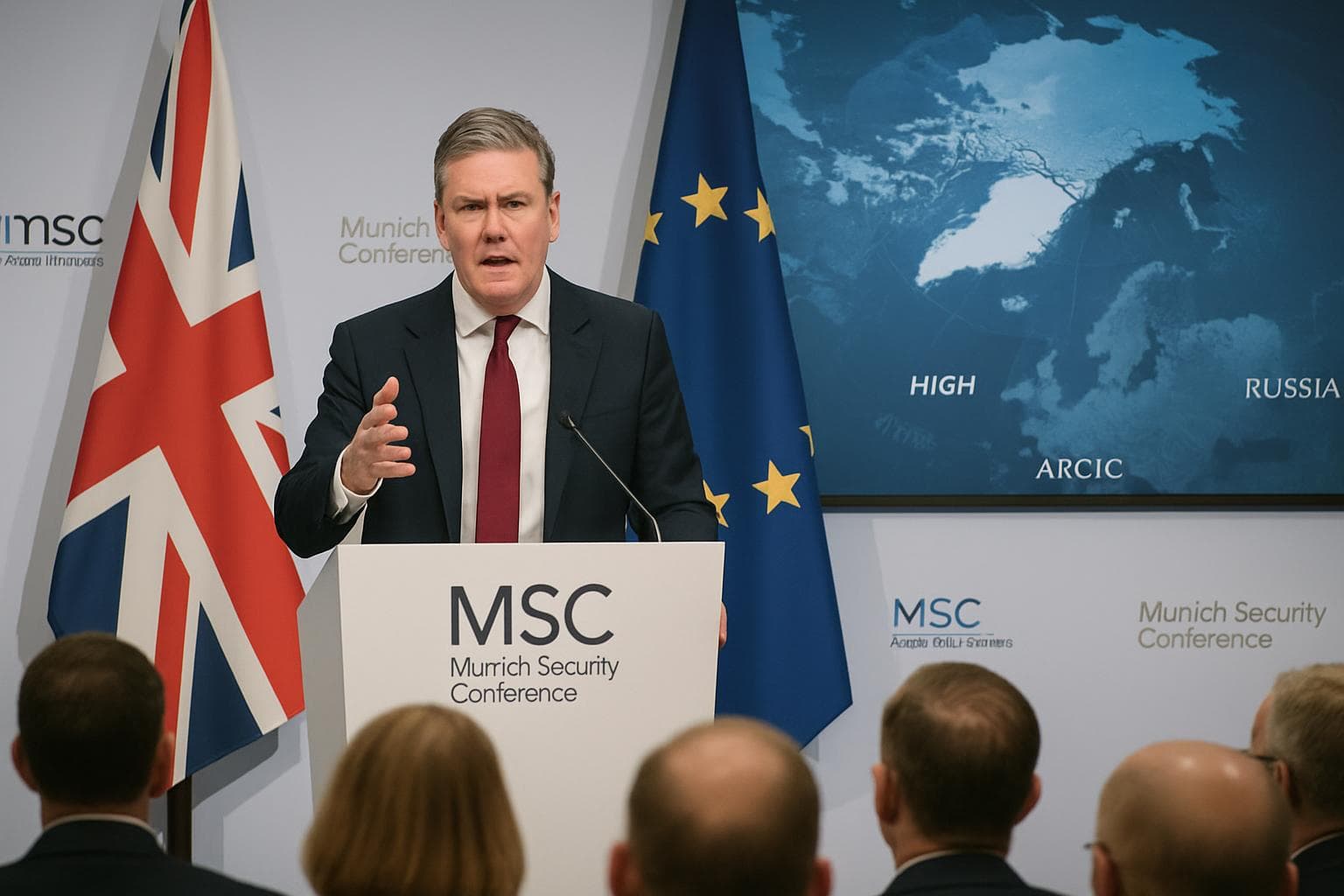
At the Munich Security Conference, UK Prime Minister Keir Starmer underscored the urgency for Europe to bolster its defence capabilities in response to growing threats, particularly from Russia. Addressing world leaders, Starmer stressed the importance of Europe standing independently in its defence commitments, while also advocating for deeper economic and security ties between the UK and the European Union.
Strengthening Defence in the High North
Starmer announced the UK's strategic decision to deploy its carrier strike group to the Arctic and High North, a move aimed at enhancing security against Russian aggression. This initiative will see collaboration with NATO allies, including the US and Canada, to fortify the region. "We must build our hard power, because that is the currency of the age," Starmer asserted, emphasizing the need for Europe to be prepared to deter aggression.
Closer UK-EU Defence Cooperation
The Prime Minister highlighted the necessity for a closer UK-EU defence relationship, focusing on joint procurement and manufacturing. He argued that fragmented industrial planning has led to inefficiencies, urging Europe to take primary responsibility for its defence. Starmer's vision includes the potential establishment of a European Defence Mechanism, an intergovernmental instrument for joint procurement, open to all European democracies.
Political and Economic Implications
Starmer acknowledged the political and economic trade-offs involved in moving closer to the EU single market post-Brexit. Despite these challenges, he insisted that the current status quo is "not fit for purpose" and emphasized the national interest in closer alignment. EU Commission President Ursula von der Leyen echoed Starmer's sentiments, describing him as an "unflinching ally" and calling for increased pressure on Russia.
WHAT THIS MIGHT MEAN
The call for enhanced European defence cooperation marks a significant shift in UK-EU relations post-Brexit. If successful, this could lead to a more unified European defence strategy, potentially reducing reliance on the US security umbrella. However, the political complexities of closer EU alignment may pose challenges, particularly in balancing national interests with collective security goals. As Europe navigates these dynamics, the outcome could redefine its role on the global stage, particularly in countering Russian threats and ensuring regional stability.
Related Articles
UK-Iran Tensions: Starmer Defends Cautious Approach Amid Trump Criticism
Canada and Australia Forge Strategic Partnership Amid Global Uncertainty
Russian LNG Tanker Sinks in Mediterranean Amid Accusations of Ukrainian Drone Attack
Spain's Sánchez Stands Firm Against Trump's Trade Threat Over Iran Stance
Diplomatic Tensions Rise as Trump Criticizes Starmer's Iran Policy
Violence Erupts Across Mexico Following Death of Drug Lord El Mencho
UK PM Keir Starmer Calls for Stronger European Defence Ties at Munich Conference
In This Article
 Alex Carter| Published
 HIGHLIGHTS
- UK Prime Minister Keir Starmer emphasized the need for Europe to strengthen its defence capabilities at the Munich Security Conference.
- Starmer announced the UK's plans to deploy its carrier strike group to the Arctic and High North to counter Russian threats.
- The Prime Minister called for closer UK-EU defence ties, highlighting the urgency of joint procurement and manufacturing.
- EU Commission President Ursula von der Leyen supported Starmer's stance, urging Europe to take more responsibility for its defence.
- Starmer acknowledged the political complexities of closer EU alignment post-Brexit but insisted the current status quo is inadequate.
At the Munich Security Conference, UK Prime Minister Keir Starmer underscored the urgency for Europe to bolster its defence capabilities in response to growing threats, particularly from Russia. Addressing world leaders, Starmer stressed the importance of Europe standing independently in its defence commitments, while also advocating for deeper economic and security ties between the UK and the European Union.
Strengthening Defence in the High North
Starmer announced the UK's strategic decision to deploy its carrier strike group to the Arctic and High North, a move aimed at enhancing security against Russian aggression. This initiative will see collaboration with NATO allies, including the US and Canada, to fortify the region. "We must build our hard power, because that is the currency of the age," Starmer asserted, emphasizing the need for Europe to be prepared to deter aggression.
Closer UK-EU Defence Cooperation
The Prime Minister highlighted the necessity for a closer UK-EU defence relationship, focusing on joint procurement and manufacturing. He argued that fragmented industrial planning has led to inefficiencies, urging Europe to take primary responsibility for its defence. Starmer's vision includes the potential establishment of a European Defence Mechanism, an intergovernmental instrument for joint procurement, open to all European democracies.
Political and Economic Implications
Starmer acknowledged the political and economic trade-offs involved in moving closer to the EU single market post-Brexit. Despite these challenges, he insisted that the current status quo is "not fit for purpose" and emphasized the national interest in closer alignment. EU Commission President Ursula von der Leyen echoed Starmer's sentiments, describing him as an "unflinching ally" and calling for increased pressure on Russia.
WHAT THIS MIGHT MEAN
The call for enhanced European defence cooperation marks a significant shift in UK-EU relations post-Brexit. If successful, this could lead to a more unified European defence strategy, potentially reducing reliance on the US security umbrella. However, the political complexities of closer EU alignment may pose challenges, particularly in balancing national interests with collective security goals. As Europe navigates these dynamics, the outcome could redefine its role on the global stage, particularly in countering Russian threats and ensuring regional stability.
Related Articles
UK-Iran Tensions: Starmer Defends Cautious Approach Amid Trump Criticism
Canada and Australia Forge Strategic Partnership Amid Global Uncertainty
Russian LNG Tanker Sinks in Mediterranean Amid Accusations of Ukrainian Drone Attack
Spain's Sánchez Stands Firm Against Trump's Trade Threat Over Iran Stance
Diplomatic Tensions Rise as Trump Criticizes Starmer's Iran Policy
Violence Erupts Across Mexico Following Death of Drug Lord El Mencho