
Rachel Reeves Faces Calls for Resignation Amid Allegations of Misleading Budget Forecasts
In This Article
HIGHLIGHTS
- Chancellor Rachel Reeves is under scrutiny for allegedly misleading the public about the UK's financial state before the Budget announcement.
- The Office for Budget Responsibility (OBR) had informed Reeves of better-than-expected tax receipts, which she did not disclose at a pre-Budget news conference.
- First Minister John Swinney and other political figures have called for Reeves' resignation, citing a breach of public trust.
- The controversy centers on whether Reeves used pessimistic forecasts as a "smokescreen" for tax hikes.
- Prime Minister Keir Starmer and others have defended Reeves, denying any intentional misinformation.
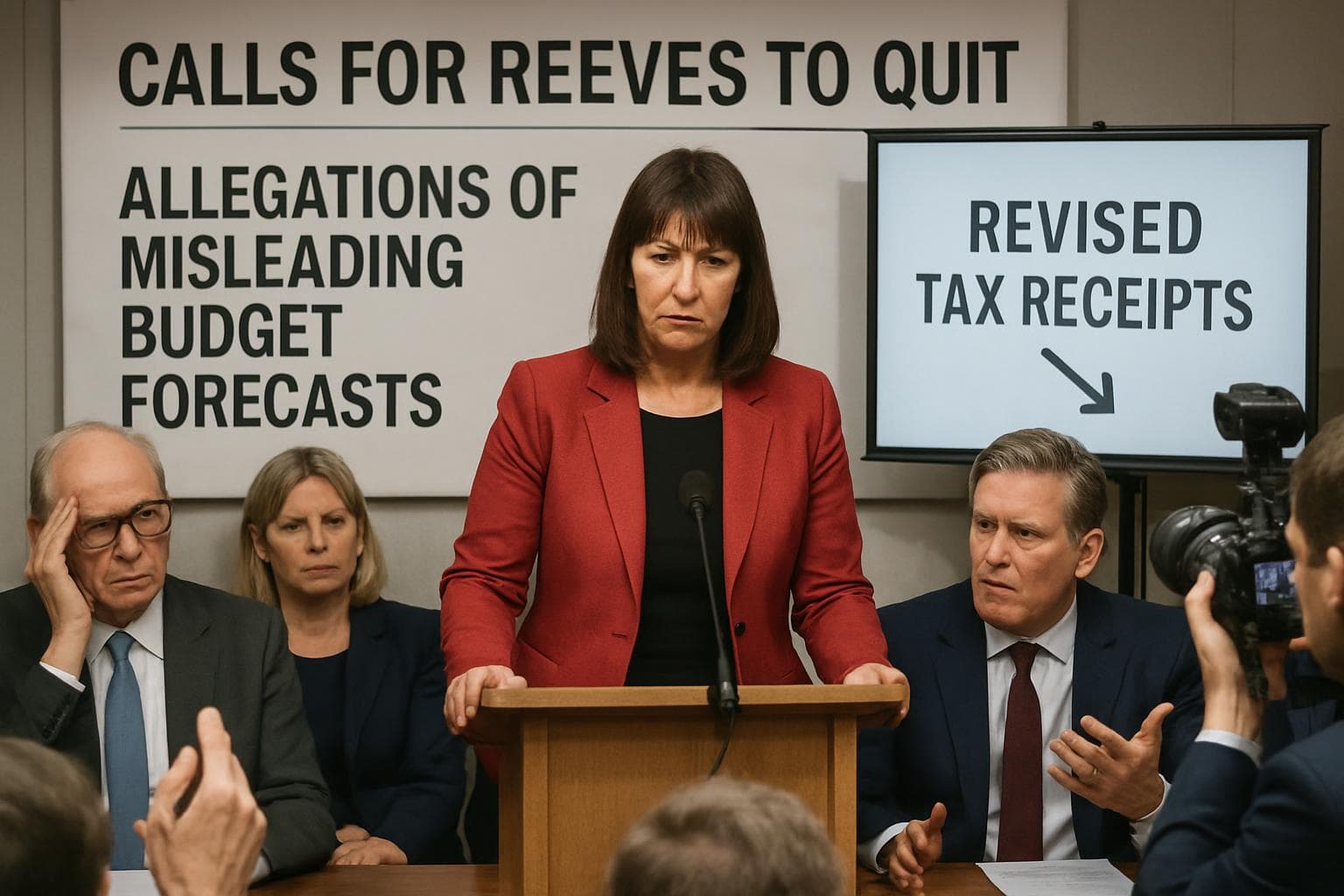
Chancellor Rachel Reeves is facing mounting pressure to resign following accusations of misleading the public and financial markets about the state of the UK's public finances. The controversy stems from a pre-Budget news conference on November 4, where Reeves hinted at impending tax increases, citing weaker-than-expected productivity growth. However, it has since emerged that the Office for Budget Responsibility (OBR) had informed her of stronger-than-anticipated tax receipts, which she did not disclose at the time.
Allegations of Misinformation
The OBR's revised forecasts, which were shared with Reeves in mid-September, indicated that public finances were in better shape than previously thought. This revelation has led to accusations that Reeves presented an overly pessimistic view to justify tax hikes. First Minister John Swinney has been vocal in his criticism, stating that Reeves "misled the public and financial markets" and should "face the consequences" by resigning. Conservative leader Kemi Badenoch and Reform UK leader Nigel Farage have echoed these sentiments, calling for an investigation into whether Reeves breached the ministerial code.
Political Reactions and Defenses
Despite the backlash, Prime Minister Keir Starmer has defended Reeves, asserting that she did not intentionally mislead the public. The Chancellor herself has denied any wrongdoing, maintaining that her statements were based on the information available at the time. The situation has sparked a broader debate on the transparency and accountability of government officials, with calls for an inquiry by the Prime Minister's ethics adviser.
Timeline of Events
The unfolding drama began in June when the Guardian reported that the OBR's revised forecasts would significantly impact Reeves' tax and spending plans. By August, the National Institute of Economic and Social Research had painted a grim picture of the economic situation, further complicating the Chancellor's position. As the Budget announcement approached, Reeves faced increasing pressure to balance the need for economic growth with fiscal responsibility.
WHAT THIS MIGHT MEAN
The ongoing controversy surrounding Rachel Reeves could have significant political and economic implications. If an investigation finds that she deliberately withheld information, it could lead to her resignation and a potential reshuffle within the government. Such a development might also impact public trust in the current administration, influencing future policy decisions and electoral outcomes.
Economically, the situation highlights the delicate balance between transparency and strategic communication in fiscal policy. As the UK grapples with economic challenges, the government may need to reassess its approach to public communication to maintain credibility and stability in financial markets.
Images from the Web
Related Articles
Starmer Condemns Reform UK's Plan to Repeal Equality Act as Un-British

UK-Iran Tensions: Starmer Defends Cautious Approach Amid Trump Criticism

UK Government to Reform Asylum Seeker Support and Employment Policies
Reform UK Aims to Reshape Welsh Politics with New Manifesto

UK Faces Dilemmas Amid Iran Conflict and China Spying Allegations
Labour MP's Husband Arrested in UK-China Espionage Probe
Rachel Reeves Faces Calls for Resignation Amid Allegations of Misleading Budget Forecasts
In This Article
 Ethan Brooks| Published
 HIGHLIGHTS
- Chancellor Rachel Reeves is under scrutiny for allegedly misleading the public about the UK's financial state before the Budget announcement.
- The Office for Budget Responsibility (OBR) had informed Reeves of better-than-expected tax receipts, which she did not disclose at a pre-Budget news conference.
- First Minister John Swinney and other political figures have called for Reeves' resignation, citing a breach of public trust.
- The controversy centers on whether Reeves used pessimistic forecasts as a "smokescreen" for tax hikes.
- Prime Minister Keir Starmer and others have defended Reeves, denying any intentional misinformation.
Chancellor Rachel Reeves is facing mounting pressure to resign following accusations of misleading the public and financial markets about the state of the UK's public finances. The controversy stems from a pre-Budget news conference on November 4, where Reeves hinted at impending tax increases, citing weaker-than-expected productivity growth. However, it has since emerged that the Office for Budget Responsibility (OBR) had informed her of stronger-than-anticipated tax receipts, which she did not disclose at the time.
Allegations of Misinformation
The OBR's revised forecasts, which were shared with Reeves in mid-September, indicated that public finances were in better shape than previously thought. This revelation has led to accusations that Reeves presented an overly pessimistic view to justify tax hikes. First Minister John Swinney has been vocal in his criticism, stating that Reeves "misled the public and financial markets" and should "face the consequences" by resigning. Conservative leader Kemi Badenoch and Reform UK leader Nigel Farage have echoed these sentiments, calling for an investigation into whether Reeves breached the ministerial code.
Political Reactions and Defenses
Despite the backlash, Prime Minister Keir Starmer has defended Reeves, asserting that she did not intentionally mislead the public. The Chancellor herself has denied any wrongdoing, maintaining that her statements were based on the information available at the time. The situation has sparked a broader debate on the transparency and accountability of government officials, with calls for an inquiry by the Prime Minister's ethics adviser.
Timeline of Events
The unfolding drama began in June when the Guardian reported that the OBR's revised forecasts would significantly impact Reeves' tax and spending plans. By August, the National Institute of Economic and Social Research had painted a grim picture of the economic situation, further complicating the Chancellor's position. As the Budget announcement approached, Reeves faced increasing pressure to balance the need for economic growth with fiscal responsibility.
WHAT THIS MIGHT MEAN
The ongoing controversy surrounding Rachel Reeves could have significant political and economic implications. If an investigation finds that she deliberately withheld information, it could lead to her resignation and a potential reshuffle within the government. Such a development might also impact public trust in the current administration, influencing future policy decisions and electoral outcomes.
Economically, the situation highlights the delicate balance between transparency and strategic communication in fiscal policy. As the UK grapples with economic challenges, the government may need to reassess its approach to public communication to maintain credibility and stability in financial markets.
Images from the Web
Related Articles
Starmer Condemns Reform UK's Plan to Repeal Equality Act as Un-British
UK-Iran Tensions: Starmer Defends Cautious Approach Amid Trump Criticism
UK Government to Reform Asylum Seeker Support and Employment Policies
Reform UK Aims to Reshape Welsh Politics with New Manifesto
UK Faces Dilemmas Amid Iran Conflict and China Spying Allegations
Labour MP's Husband Arrested in UK-China Espionage Probe