
Severe Snowstorm Causes Travel Chaos Across Western Europe
In This Article
HIGHLIGHTS
- Severe winter weather has caused widespread travel disruptions across western Europe, affecting flights, rail services, and road travel.
- Schiphol Airport in Amsterdam cancelled over 800 flights due to snow and ice, with KLM warning of de-icing fluid shortages.
- France's civil aviation authority requested a 40% reduction in flights at Paris's main airports, with public transport also impacted.
- At least six fatalities have been reported due to weather-related incidents, including five in France and one in Bosnia.
- Authorities across Europe are urging residents to avoid unnecessary travel and work from home as the cold snap continues.
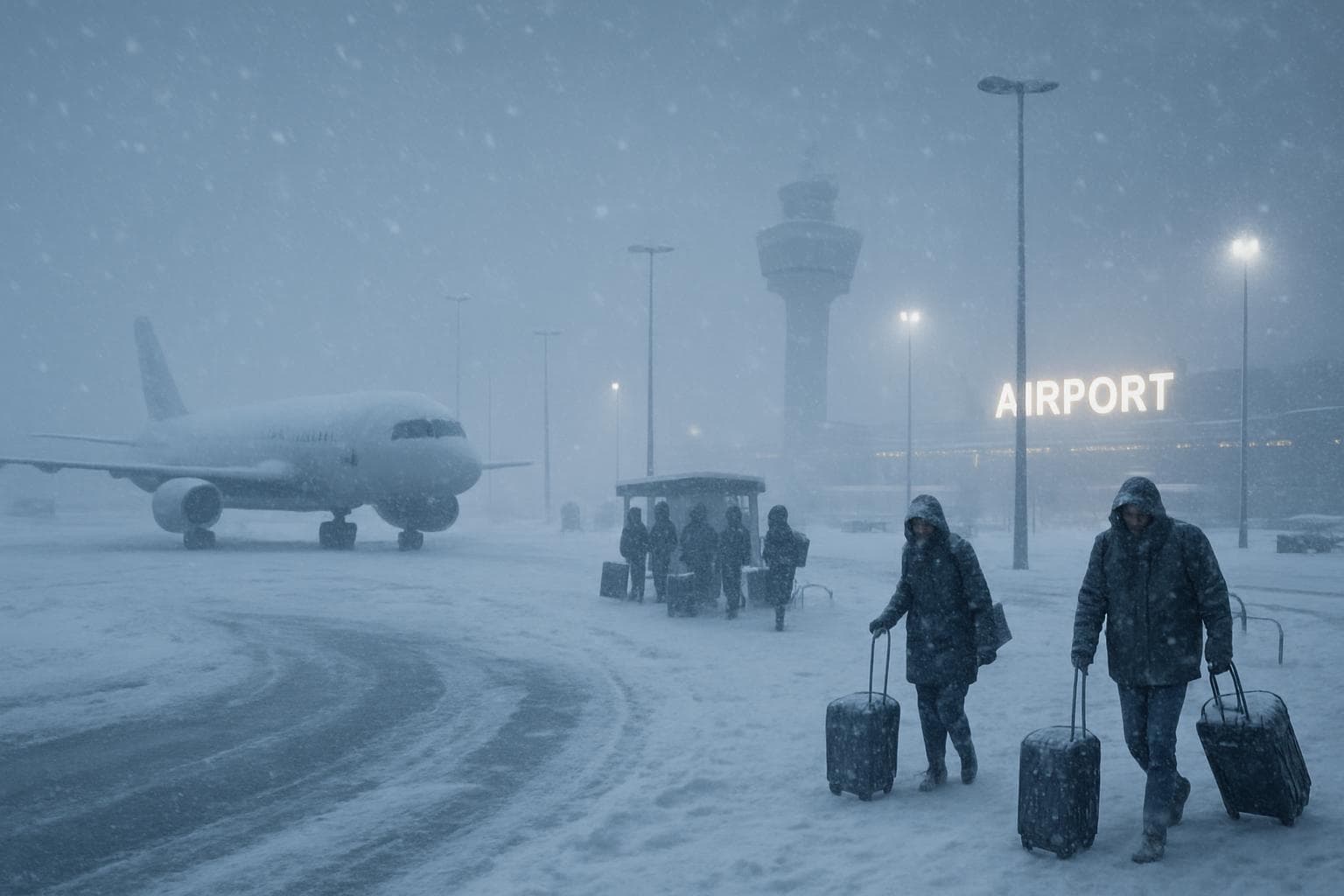
A severe snowstorm has swept across western Europe, causing significant travel disruptions and grounding hundreds of flights. The adverse weather conditions have affected major transport hubs, including Amsterdam's Schiphol Airport and Paris's Charles de Gaulle Airport, as well as rail services and road travel.
Flight Cancellations and Airport Disruptions
Schiphol Airport, one of Europe's busiest aviation hubs, has been particularly hard-hit, with over 800 flights cancelled on Wednesday alone. KLM, the Dutch national airline, has warned of potential further disruptions due to a shortage of de-icing fluid. Spokesperson Stephan Donker described the situation as "exceptional," with around 1,000 travelers forced to spend the night at the airport. Temporary beds, food, and drinks were provided to stranded passengers.
In France, the civil aviation authority has requested airlines to reduce flights by 40% at Paris's main airports, Charles de Gaulle and Orly. Public transport in Paris has also been affected, with bus services suspended due to icy roads, although most metro and suburban rail systems remain operational.
Impact Across Europe
The snowstorm has not only affected air travel but has also caused significant disruptions on the roads and railways. In the Netherlands, schools were closed, and authorities urged people to work from home. In Spain, snow and cold weather led to the suspension of a commuter rail line near Madrid and disrupted over 40 roads. The western Balkans also experienced travel chaos, with passengers trapped on a train in Croatia for more than 12 hours due to fallen trees on the tracks.
Fatalities and Human Impact
Tragically, at least six people have died in weather-related incidents across Europe, including five in France and one in Bosnia. The cold snap, described by Météo France as of "rare intensity for the season," has prompted authorities to issue warnings and urge residents to avoid unnecessary travel.
Despite the challenging conditions, some residents and tourists have taken the opportunity to enjoy the rare sight of snow-covered cities. In Paris, people were seen skiing down the slopes of Montmartre and along the Champs de Mars gardens below the Eiffel Tower.
WHAT THIS MIGHT MEAN
As the cold snap continues, authorities across Europe are likely to maintain travel advisories and encourage remote working to minimize disruptions. The ongoing weather conditions could lead to further flight cancellations and delays, particularly if de-icing fluid shortages persist.
In the longer term, this severe weather event may prompt discussions on improving infrastructure resilience to extreme weather conditions, especially in regions unaccustomed to such intense winter storms. Experts may also explore the potential impact of climate change on the frequency and severity of such weather events in Europe.
Related Articles

UK Faces Unrelenting Rainfall Amid Blocked Weather Patterns and Climate Crisis

UK and Allies Accuse Russia of Killing Navalny with Dart Frog Toxin

Trial Begins for 2003 Rape Case That Led to Notorious Miscarriage of Justice

Spain's Sánchez Stands Firm Against Trump's Trade Threat Over Iran Stance

Trump's Board of Peace Pledges $7 Billion for Gaza Amidst International Skepticism

Arrests Over French Activist's Death Heighten Political Tensions
Severe Snowstorm Causes Travel Chaos Across Western Europe
In This Article
 Leila Hassan| Published
 HIGHLIGHTS
- Severe winter weather has caused widespread travel disruptions across western Europe, affecting flights, rail services, and road travel.
- Schiphol Airport in Amsterdam cancelled over 800 flights due to snow and ice, with KLM warning of de-icing fluid shortages.
- France's civil aviation authority requested a 40% reduction in flights at Paris's main airports, with public transport also impacted.
- At least six fatalities have been reported due to weather-related incidents, including five in France and one in Bosnia.
- Authorities across Europe are urging residents to avoid unnecessary travel and work from home as the cold snap continues.
A severe snowstorm has swept across western Europe, causing significant travel disruptions and grounding hundreds of flights. The adverse weather conditions have affected major transport hubs, including Amsterdam's Schiphol Airport and Paris's Charles de Gaulle Airport, as well as rail services and road travel.
Flight Cancellations and Airport Disruptions
Schiphol Airport, one of Europe's busiest aviation hubs, has been particularly hard-hit, with over 800 flights cancelled on Wednesday alone. KLM, the Dutch national airline, has warned of potential further disruptions due to a shortage of de-icing fluid. Spokesperson Stephan Donker described the situation as "exceptional," with around 1,000 travelers forced to spend the night at the airport. Temporary beds, food, and drinks were provided to stranded passengers.
In France, the civil aviation authority has requested airlines to reduce flights by 40% at Paris's main airports, Charles de Gaulle and Orly. Public transport in Paris has also been affected, with bus services suspended due to icy roads, although most metro and suburban rail systems remain operational.
Impact Across Europe
The snowstorm has not only affected air travel but has also caused significant disruptions on the roads and railways. In the Netherlands, schools were closed, and authorities urged people to work from home. In Spain, snow and cold weather led to the suspension of a commuter rail line near Madrid and disrupted over 40 roads. The western Balkans also experienced travel chaos, with passengers trapped on a train in Croatia for more than 12 hours due to fallen trees on the tracks.
Fatalities and Human Impact
Tragically, at least six people have died in weather-related incidents across Europe, including five in France and one in Bosnia. The cold snap, described by Météo France as of "rare intensity for the season," has prompted authorities to issue warnings and urge residents to avoid unnecessary travel.
Despite the challenging conditions, some residents and tourists have taken the opportunity to enjoy the rare sight of snow-covered cities. In Paris, people were seen skiing down the slopes of Montmartre and along the Champs de Mars gardens below the Eiffel Tower.
WHAT THIS MIGHT MEAN
As the cold snap continues, authorities across Europe are likely to maintain travel advisories and encourage remote working to minimize disruptions. The ongoing weather conditions could lead to further flight cancellations and delays, particularly if de-icing fluid shortages persist.
In the longer term, this severe weather event may prompt discussions on improving infrastructure resilience to extreme weather conditions, especially in regions unaccustomed to such intense winter storms. Experts may also explore the potential impact of climate change on the frequency and severity of such weather events in Europe.
Related Articles
UK Faces Unrelenting Rainfall Amid Blocked Weather Patterns and Climate Crisis
UK and Allies Accuse Russia of Killing Navalny with Dart Frog Toxin
Trial Begins for 2003 Rape Case That Led to Notorious Miscarriage of Justice
Spain's Sánchez Stands Firm Against Trump's Trade Threat Over Iran Stance
Trump's Board of Peace Pledges $7 Billion for Gaza Amidst International Skepticism
Arrests Over French Activist's Death Heighten Political Tensions