
Sonic Boom Shakes Southeast England as RAF Jets Escort Civilian Plane
In This Article
HIGHLIGHTS
- A sonic boom was heard across parts of southeast England as RAF Typhoon jets intercepted a civilian plane.
- The aircraft, traveling from Nice, lost contact with air traffic control and was escorted to Stansted Airport.
- The incident occurred around 11:40 BST, with communications re-established before landing.
- Essex Police confirmed there were no concerns after the plane landed safely.
- Sonic booms occur when aircraft exceed the speed of sound, causing shockwaves and loud noises.
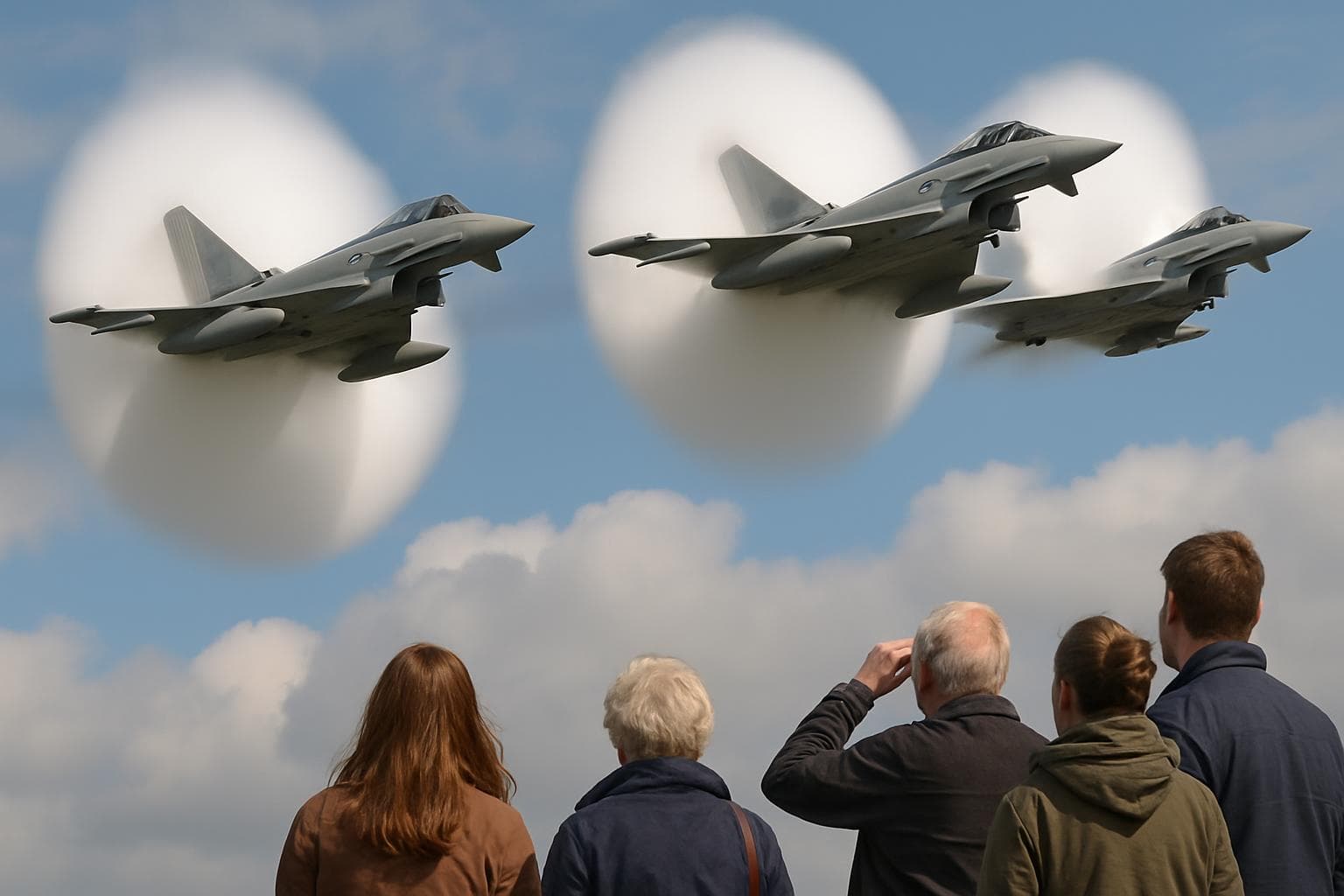
A sonic boom reverberated across parts of southeast England on Friday morning, startling residents as Royal Air Force (RAF) Typhoon jets were dispatched to intercept a civilian aircraft. The incident unfolded when the plane, en route from Nice, France, lost contact with air traffic control, prompting a swift response from the RAF.
RAF Quick Reaction Alert
At approximately 11:40 BST, three Typhoon jets from RAF Coningsby in Lincolnshire were launched under the Quick Reaction Alert protocol. The jets, authorized to travel at supersonic speeds, quickly located the aircraft and escorted it safely to Stansted Airport. A spokesperson for the RAF confirmed that communications with the plane were re-established before it landed without incident.
Public Reaction and Police Response
The sonic boom, a result of the jets exceeding the speed of sound, was widely reported across social media. Residents from Essex to Kent described the noise as an explosion or thunderclap, with some experiencing their homes shaking. Essex Police, who were alerted to the situation, confirmed that there were no concerns once the plane was on the ground.
Understanding Sonic Booms
Sonic booms occur when aircraft travel faster than the speed of sound, creating shockwaves that compress and decompress the air. These shockwaves produce a loud, explosive noise that can be heard over a large area. The speed of sound varies with altitude, but at ground level, it is approximately 761 mph (1,225 km/h).
WHAT THIS MIGHT MEAN
The incident highlights the RAF's readiness to respond to potential threats in UK airspace, ensuring the safety of civilian flights. While the situation was resolved without further issues, it underscores the importance of maintaining robust communication systems between aircraft and air traffic control. Future developments may focus on enhancing these systems to prevent similar occurrences. Additionally, the public's reaction to the sonic boom emphasizes the need for awareness and understanding of military protocols that may impact civilian areas.
Images from the Web

Related Articles
UK Police Assess Epstein's Use of Private Flights Amid Trafficking Allegations

UK and Allies Accuse Russia of Killing Navalny with Dart Frog Toxin

Crackdown on Waste Crime: £1.2 Million Fine and New Drone Unit to Combat Illegal Dumping

Government U-turn Forces Local Elections in Lancashire and Essex Amid Reorganisation Plans
New UK Entry Rules for Dual Nationals Spark Outcry

Gisèle Pelicot: A Journey from Horror to Advocacy in France's Largest Rape Trial
Sonic Boom Shakes Southeast England as RAF Jets Escort Civilian Plane
In This Article
 Ethan Brooks| Published
 HIGHLIGHTS
- A sonic boom was heard across parts of southeast England as RAF Typhoon jets intercepted a civilian plane.
- The aircraft, traveling from Nice, lost contact with air traffic control and was escorted to Stansted Airport.
- The incident occurred around 11:40 BST, with communications re-established before landing.
- Essex Police confirmed there were no concerns after the plane landed safely.
- Sonic booms occur when aircraft exceed the speed of sound, causing shockwaves and loud noises.
A sonic boom reverberated across parts of southeast England on Friday morning, startling residents as Royal Air Force (RAF) Typhoon jets were dispatched to intercept a civilian aircraft. The incident unfolded when the plane, en route from Nice, France, lost contact with air traffic control, prompting a swift response from the RAF.
RAF Quick Reaction Alert
At approximately 11:40 BST, three Typhoon jets from RAF Coningsby in Lincolnshire were launched under the Quick Reaction Alert protocol. The jets, authorized to travel at supersonic speeds, quickly located the aircraft and escorted it safely to Stansted Airport. A spokesperson for the RAF confirmed that communications with the plane were re-established before it landed without incident.
Public Reaction and Police Response
The sonic boom, a result of the jets exceeding the speed of sound, was widely reported across social media. Residents from Essex to Kent described the noise as an explosion or thunderclap, with some experiencing their homes shaking. Essex Police, who were alerted to the situation, confirmed that there were no concerns once the plane was on the ground.
Understanding Sonic Booms
Sonic booms occur when aircraft travel faster than the speed of sound, creating shockwaves that compress and decompress the air. These shockwaves produce a loud, explosive noise that can be heard over a large area. The speed of sound varies with altitude, but at ground level, it is approximately 761 mph (1,225 km/h).
WHAT THIS MIGHT MEAN
The incident highlights the RAF's readiness to respond to potential threats in UK airspace, ensuring the safety of civilian flights. While the situation was resolved without further issues, it underscores the importance of maintaining robust communication systems between aircraft and air traffic control. Future developments may focus on enhancing these systems to prevent similar occurrences. Additionally, the public's reaction to the sonic boom emphasizes the need for awareness and understanding of military protocols that may impact civilian areas.
Images from the Web
Related Articles
UK Police Assess Epstein's Use of Private Flights Amid Trafficking Allegations
UK and Allies Accuse Russia of Killing Navalny with Dart Frog Toxin
Crackdown on Waste Crime: £1.2 Million Fine and New Drone Unit to Combat Illegal Dumping
Government U-turn Forces Local Elections in Lancashire and Essex Amid Reorganisation Plans
New UK Entry Rules for Dual Nationals Spark Outcry
Gisèle Pelicot: A Journey from Horror to Advocacy in France's Largest Rape Trial