
Southern Europe Grapples with Intense Heatwave Amid Climate Concerns
In This Article
HIGHLIGHTS
- Southern Europe is experiencing a severe heatwave, with temperatures expected to exceed 40°C in several countries, including Spain, Italy, and Greece.
- Authorities have issued health and fire warnings, urging residents to stay hydrated and avoid outdoor activities during peak heat hours.
- Wildfires have erupted in Greece, leading to evacuations, while public facilities like swimming pools in France are being offered free to help residents cope.
- The heatwave is attributed to hot air from North Africa and is intensified by climate change, making such extreme weather events more frequent.
- The heatwave is expected to persist until Tuesday, with potential implications for public health and safety across the region.
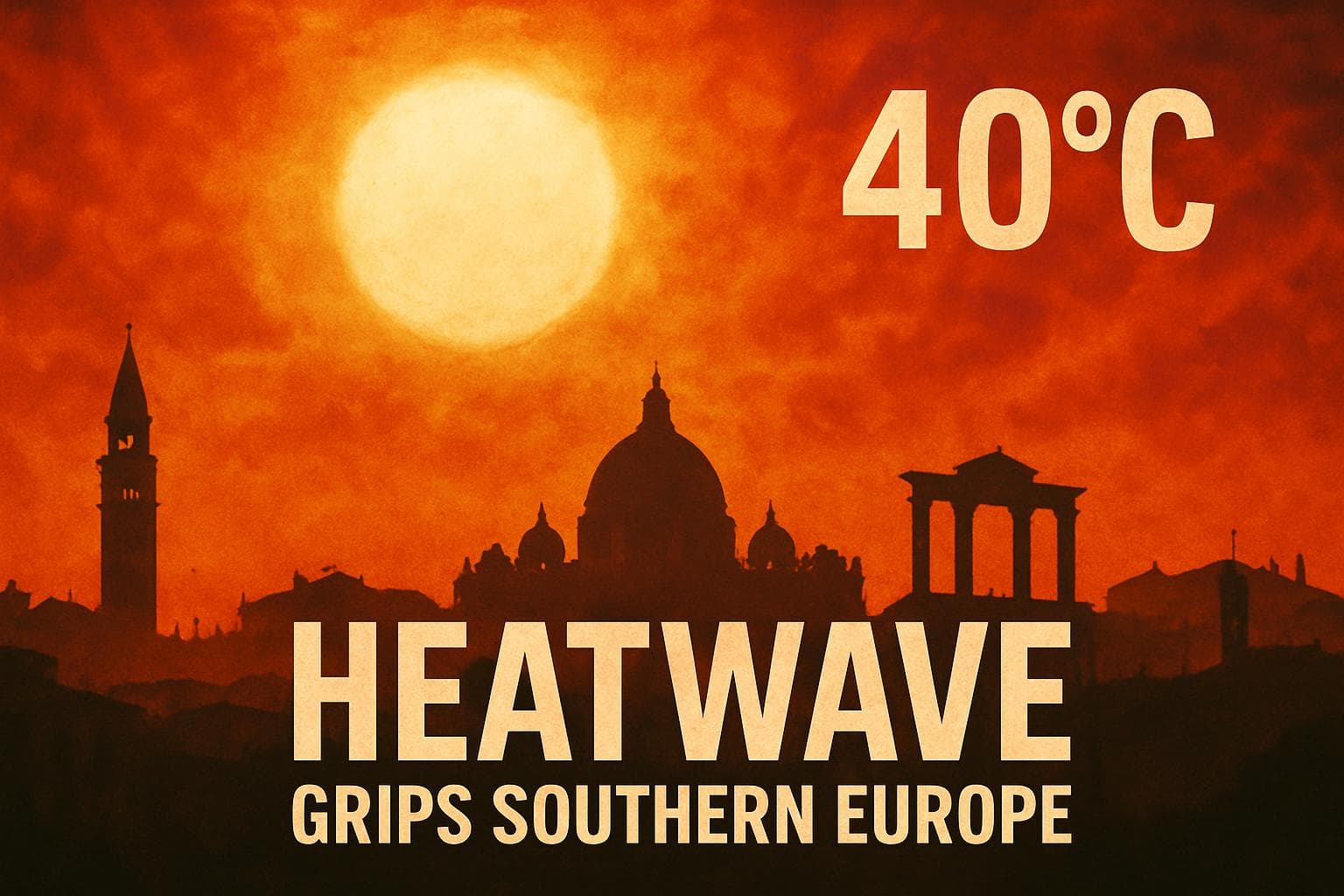
Southern Europe is currently in the grip of an intense heatwave, with temperatures soaring above 40°C across several countries, including Spain, Italy, and Greece. This early summer heatwave, driven by hot air masses from North Africa, is raising alarms as it intensifies the ongoing climate change debate.
Rising Temperatures and Public Health Concerns
In Spain, the state meteorological office, Aemet, has issued special heat warnings, predicting temperatures could reach 42°C in southern regions. The Spanish capital, Madrid, is on high alert, with health officials advising residents to stay indoors, remain hydrated, and pay special attention to vulnerable groups such as the elderly and those with chronic health conditions. "It always gets super hot in Madrid, what surprises me is how early it's happening - we're still in June," said Marina, a 22-year-old resident.
Italy is also feeling the heat, with cities like Rome, Milan, and Venice advising residents to avoid outdoor activities during peak hours. In Venice, where Amazon founder Jeff Bezos recently celebrated his wedding, tourists and locals alike are struggling with the oppressive heat. "There is no wind, a lot of humidity, we are sweating, and I'm suffocating at night," shared Alejandra Echeverria, a tourist from Mexico.
Wildfires and Emergency Measures
The heatwave has exacerbated wildfire risks, particularly in Greece, where fires near Athens have forced evacuations and road closures. In France, where temperatures in Marseille are nearing 40°C, authorities have opened public swimming pools free of charge to help residents cool down. Meanwhile, Portugal is bracing for extreme heat and potential forest fires, with two-thirds of the country on high alert.
Climate Change and Future Implications
Scientists attribute the increasing frequency and intensity of such heatwaves to climate change. According to World Weather Attribution, heatwaves with three consecutive days above 28°C are now about ten times more likely than in pre-industrial times. Last year marked the hottest year on record, with extreme weather events causing over $300 billion in damages globally.
WHAT THIS MIGHT MEAN
As the heatwave continues to grip Southern Europe, authorities are likely to maintain and possibly escalate public health warnings and emergency measures. The persistent high temperatures could lead to increased health risks, particularly for vulnerable populations, and strain emergency services. In the long term, this heatwave serves as a stark reminder of the urgent need for climate action. Experts warn that without significant efforts to curb greenhouse gas emissions, such extreme weather events will become more frequent, posing severe challenges to public health, infrastructure, and economies across the globe.
Related Articles

Saharan Dust to Illuminate UK Skies with Vivid Sunrises and Sunsets

Avalanche Risks Surge Amidst Extreme Weather Conditions in California and Europe

Rai Sport Chief Resigns Amid Olympic Commentary Controversy

Spain's Sánchez Stands Firm Against Trump's Trade Threat Over Iran Stance

El Mencho's Death Sparks Violent Unrest Across Mexico

St Francis of Assisi's Bones Draw Global Pilgrims to Italy
Southern Europe Grapples with Intense Heatwave Amid Climate Concerns
In This Article
 Leila Hassan| Published
 HIGHLIGHTS
- Southern Europe is experiencing a severe heatwave, with temperatures expected to exceed 40°C in several countries, including Spain, Italy, and Greece.
- Authorities have issued health and fire warnings, urging residents to stay hydrated and avoid outdoor activities during peak heat hours.
- Wildfires have erupted in Greece, leading to evacuations, while public facilities like swimming pools in France are being offered free to help residents cope.
- The heatwave is attributed to hot air from North Africa and is intensified by climate change, making such extreme weather events more frequent.
- The heatwave is expected to persist until Tuesday, with potential implications for public health and safety across the region.
Southern Europe is currently in the grip of an intense heatwave, with temperatures soaring above 40°C across several countries, including Spain, Italy, and Greece. This early summer heatwave, driven by hot air masses from North Africa, is raising alarms as it intensifies the ongoing climate change debate.
Rising Temperatures and Public Health Concerns
In Spain, the state meteorological office, Aemet, has issued special heat warnings, predicting temperatures could reach 42°C in southern regions. The Spanish capital, Madrid, is on high alert, with health officials advising residents to stay indoors, remain hydrated, and pay special attention to vulnerable groups such as the elderly and those with chronic health conditions. "It always gets super hot in Madrid, what surprises me is how early it's happening - we're still in June," said Marina, a 22-year-old resident.
Italy is also feeling the heat, with cities like Rome, Milan, and Venice advising residents to avoid outdoor activities during peak hours. In Venice, where Amazon founder Jeff Bezos recently celebrated his wedding, tourists and locals alike are struggling with the oppressive heat. "There is no wind, a lot of humidity, we are sweating, and I'm suffocating at night," shared Alejandra Echeverria, a tourist from Mexico.
Wildfires and Emergency Measures
The heatwave has exacerbated wildfire risks, particularly in Greece, where fires near Athens have forced evacuations and road closures. In France, where temperatures in Marseille are nearing 40°C, authorities have opened public swimming pools free of charge to help residents cool down. Meanwhile, Portugal is bracing for extreme heat and potential forest fires, with two-thirds of the country on high alert.
Climate Change and Future Implications
Scientists attribute the increasing frequency and intensity of such heatwaves to climate change. According to World Weather Attribution, heatwaves with three consecutive days above 28°C are now about ten times more likely than in pre-industrial times. Last year marked the hottest year on record, with extreme weather events causing over $300 billion in damages globally.
WHAT THIS MIGHT MEAN
As the heatwave continues to grip Southern Europe, authorities are likely to maintain and possibly escalate public health warnings and emergency measures. The persistent high temperatures could lead to increased health risks, particularly for vulnerable populations, and strain emergency services. In the long term, this heatwave serves as a stark reminder of the urgent need for climate action. Experts warn that without significant efforts to curb greenhouse gas emissions, such extreme weather events will become more frequent, posing severe challenges to public health, infrastructure, and economies across the globe.
Related Articles
Saharan Dust to Illuminate UK Skies with Vivid Sunrises and Sunsets
Avalanche Risks Surge Amidst Extreme Weather Conditions in California and Europe
Rai Sport Chief Resigns Amid Olympic Commentary Controversy
Spain's Sánchez Stands Firm Against Trump's Trade Threat Over Iran Stance
El Mencho's Death Sparks Violent Unrest Across Mexico
St Francis of Assisi's Bones Draw Global Pilgrims to Italy