
Texas Floods: Over 100 Dead and 161 Missing as Questions Arise Over Emergency Response
In This Article
HIGHLIGHTS
- Over 100 people have died, and at least 161 remain missing following catastrophic flash floods in Texas, primarily affecting Kerr County.
- The disaster has raised questions about the adequacy of flood warnings and emergency response, with officials facing scrutiny over their handling of the situation.
- Camp Mystic, a Christian all-girls summer camp, was severely impacted, with 27 campers and counselors confirmed dead.
- Rescue efforts involve over 250 responders, including the Texas National Guard and international teams, using helicopters and drones.
- The floods have caused significant economic damage, estimated between $18 billion and $22 billion, highlighting the increasing frequency of extreme weather events.
In the aftermath of devastating flash floods that swept through Texas, particularly in Kerr County, the death toll has risen to over 100, with at least 161 individuals still unaccounted for. The disaster, which struck over the Fourth of July weekend, has left communities grappling with the scale of destruction and the loss of life.
Impact on Kerr County and Camp Mystic
Kerr County has borne the brunt of the tragedy, with 87 bodies recovered so far, including 56 adults and 30 children. Among the hardest-hit locations is Camp Mystic, a Christian all-girls summer camp on the Guadalupe River, where 27 campers and counselors have died. The camp was celebrating the holiday weekend when the floods struck, transforming a time of joy into a scene of devastation.
Rescue Efforts and Challenges
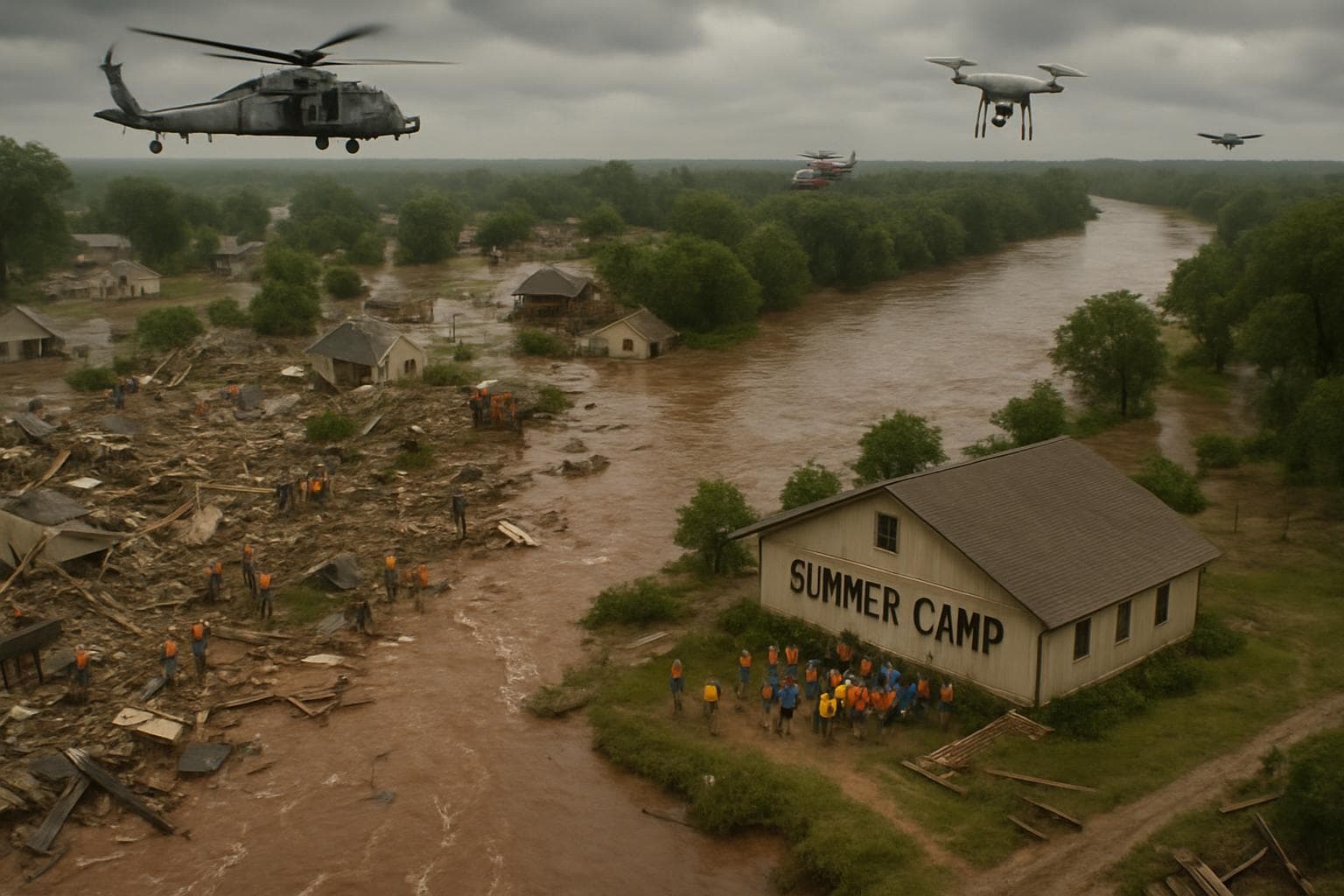
Rescue operations are ongoing, with over 250 responders from various agencies, including the Texas National Guard, FBI, and border patrol, working tirelessly to locate the missing. The efforts are bolstered by the use of Chinook and Black Hawk helicopters, as well as drones. However, the scale of destruction has made the search challenging, with volunteers describing the task as akin to "finding a single hay in a haystack."
Scrutiny Over Emergency Response
The floods have sparked intense scrutiny over the adequacy of the emergency response and the effectiveness of the flood warning system. Despite warnings issued by the National Weather Service, many residents reported not receiving timely alerts. Sheriff Larry Leitha emphasized that the priority remains on search and recovery, but questions persist about the timeline and communication of warnings.
Economic and Environmental Impact
The economic toll of the floods is staggering, with preliminary estimates suggesting damages between $18 billion and $22 billion. The disaster underscores the increasing frequency and severity of extreme weather events, raising concerns about preparedness and resilience in the face of climate change.
WHAT THIS MIGHT MEAN
As rescue efforts continue, the focus will likely shift to accountability and improving emergency response systems. The scrutiny over the handling of the disaster may lead to policy changes, including investments in better warning systems and infrastructure to mitigate future risks. Experts warn that such extreme weather events could become more common, necessitating a reevaluation of current preparedness strategies. The tragedy also highlights the need for a coordinated federal and state response to effectively manage natural disasters and protect vulnerable communities.
Images from the Web

Related Articles

Les Wexner Denies Knowledge of Epstein's Crimes in Congressional Testimony

Search for Nancy Guthrie Intensifies as DNA Evidence Yields No Leads

The Disappearance of Nancy Guthrie: A Case That Captivates and Confounds

Search Intensifies for Missing Mother of News Anchor Savannah Guthrie

FBI Intensifies Search for Suspect in Nancy Guthrie Kidnapping

El Paso Airspace Closure Sparks Confusion Amid Drone Concerns
Texas Floods: Over 100 Dead and 161 Missing as Questions Arise Over Emergency Response
In This Article
 Ethan Brooks| Published
 HIGHLIGHTS
- Over 100 people have died, and at least 161 remain missing following catastrophic flash floods in Texas, primarily affecting Kerr County.
- The disaster has raised questions about the adequacy of flood warnings and emergency response, with officials facing scrutiny over their handling of the situation.
- Camp Mystic, a Christian all-girls summer camp, was severely impacted, with 27 campers and counselors confirmed dead.
- Rescue efforts involve over 250 responders, including the Texas National Guard and international teams, using helicopters and drones.
- The floods have caused significant economic damage, estimated between $18 billion and $22 billion, highlighting the increasing frequency of extreme weather events.
In the aftermath of devastating flash floods that swept through Texas, particularly in Kerr County, the death toll has risen to over 100, with at least 161 individuals still unaccounted for. The disaster, which struck over the Fourth of July weekend, has left communities grappling with the scale of destruction and the loss of life.
Impact on Kerr County and Camp Mystic
Kerr County has borne the brunt of the tragedy, with 87 bodies recovered so far, including 56 adults and 30 children. Among the hardest-hit locations is Camp Mystic, a Christian all-girls summer camp on the Guadalupe River, where 27 campers and counselors have died. The camp was celebrating the holiday weekend when the floods struck, transforming a time of joy into a scene of devastation.
Rescue Efforts and Challenges
Rescue operations are ongoing, with over 250 responders from various agencies, including the Texas National Guard, FBI, and border patrol, working tirelessly to locate the missing. The efforts are bolstered by the use of Chinook and Black Hawk helicopters, as well as drones. However, the scale of destruction has made the search challenging, with volunteers describing the task as akin to "finding a single hay in a haystack."
Scrutiny Over Emergency Response
The floods have sparked intense scrutiny over the adequacy of the emergency response and the effectiveness of the flood warning system. Despite warnings issued by the National Weather Service, many residents reported not receiving timely alerts. Sheriff Larry Leitha emphasized that the priority remains on search and recovery, but questions persist about the timeline and communication of warnings.
Economic and Environmental Impact
The economic toll of the floods is staggering, with preliminary estimates suggesting damages between $18 billion and $22 billion. The disaster underscores the increasing frequency and severity of extreme weather events, raising concerns about preparedness and resilience in the face of climate change.
WHAT THIS MIGHT MEAN
As rescue efforts continue, the focus will likely shift to accountability and improving emergency response systems. The scrutiny over the handling of the disaster may lead to policy changes, including investments in better warning systems and infrastructure to mitigate future risks. Experts warn that such extreme weather events could become more common, necessitating a reevaluation of current preparedness strategies. The tragedy also highlights the need for a coordinated federal and state response to effectively manage natural disasters and protect vulnerable communities.
Images from the Web
Related Articles
Les Wexner Denies Knowledge of Epstein's Crimes in Congressional Testimony
Search for Nancy Guthrie Intensifies as DNA Evidence Yields No Leads
The Disappearance of Nancy Guthrie: A Case That Captivates and Confounds
Search Intensifies for Missing Mother of News Anchor Savannah Guthrie
FBI Intensifies Search for Suspect in Nancy Guthrie Kidnapping
El Paso Airspace Closure Sparks Confusion Amid Drone Concerns