
UK's Declining Birth Rate Sparks Concern Amid Rising Living Costs
In This Article
HIGHLIGHTS
- The UK's fertility rate has dropped to 1.44 children per woman, the lowest since records began in 1938, with Bristol experiencing a 36% decline over the past decade.
- Financial pressures, including high living costs and housing expenses, are significant factors influencing the decision to delay or forgo having children.
- Education Secretary Bridget Phillipson advocates for policies to support young families, including new nursery places in schools, to address the declining birth rate.
- The Office for National Statistics highlights that women are having children later, with the average age of new mothers now 31, but this does not necessarily mean they are having fewer children overall.
- Social and economic changes, such as increased female workforce participation and rising childcare costs, are contributing to the trend of delayed parenthood.
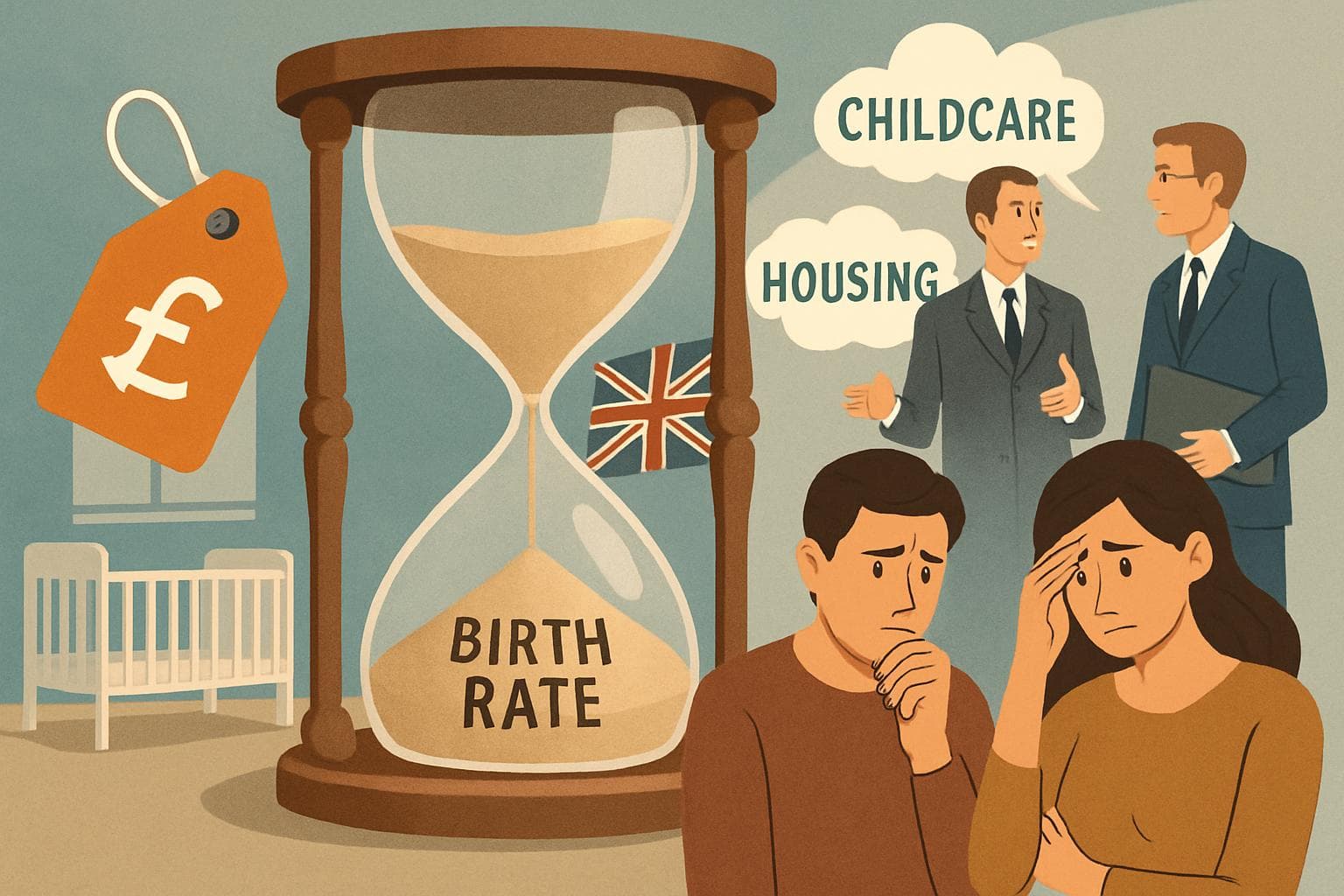
The United Kingdom is witnessing a significant decline in its birth rate, with financial pressures and changing social dynamics playing pivotal roles. The fertility rate in England and Wales has plummeted to 1.44 children per woman, marking the lowest point since 1938. Bristol, in particular, has seen a dramatic 36% decrease in its birth rate over the past decade, according to the Office for National Statistics (ONS).
Economic Pressures and Family Planning
The rising cost of living is a major concern for many prospective parents. Courtney Young, a 32-year-old from Bristol, expressed his worries about the financial feasibility of raising a family. "It's always been a goal of mine to have kids in the future," he told the BBC. However, he fears that the current economic climate may hinder his ability to provide the life he envisions for his children.
Aaliyah Thomas, a mother of two, echoed these sentiments, noting the challenges of balancing finances with family life. "The cost of living is so high, a lot of people just need to be in a better financial position before they can even think about having kids," she said.
Government Response and Policy Initiatives
Education Secretary Bridget Phillipson has voiced her concerns about the declining birth rate, emphasizing the need for supportive policies to encourage young people to have children. In an article for the Daily Telegraph, Phillipson outlined plans to introduce new nursery places in approximately 200 schools across England. She described the falling birth rate as a trend with "worrying repercussions for society in the future."
Phillipson's proposals aim to alleviate some of the financial burdens associated with starting a family. These include expanding free childcare hours, introducing free breakfast clubs, and capping school uniform costs. She criticized previous policy suggestions, such as abolishing the two-child benefit limit, as inadequate solutions.
Changing Social Dynamics
The ONS highlights that women are having children later in life, with the average age of new mothers now at 31. Kerry Gadson, head of population analysis at the ONS, noted that while birth rates are currently declining, this does not necessarily mean women are having fewer children overall. Factors such as increased female workforce participation and the high cost of housing are contributing to delayed parenthood.
WHAT THIS MIGHT MEAN
The UK's declining birth rate poses significant implications for future societal and economic structures. If the trend continues, the country may face challenges related to an aging population and workforce shortages. Policymakers will need to address the root causes of financial and social pressures to create an environment conducive to family growth.
Experts suggest that comprehensive policy reforms, including affordable housing and accessible childcare, are essential to reversing the declining birth rate. As the government implements new initiatives, the effectiveness of these measures will be closely monitored to determine their impact on family planning decisions.
The ongoing dialogue around birth rates and family support highlights the need for a multifaceted approach that considers both economic and social factors. By addressing these challenges, the UK can work towards a sustainable future that supports the aspirations of young families.
Images from the Web

Related Articles
Conservatives Propose Interest Rate Cap on Student Loans Amid Growing Debt Concerns

Police Federation Chief Arrested Amid Fraud Investigation

Saharan Dust to Illuminate UK Skies with Vivid Sunrises and Sunsets

UK Government Announces Major Overhaul of SEND System with £3.4 Billion Investment

Breakthrough Drug Offers Hope for Children with Severe Epilepsy

Sisters Tragically Drown at Eryri National Park's Watkin Path
UK's Declining Birth Rate Sparks Concern Amid Rising Living Costs
In This Article
 Daniel Rivera| Published
 HIGHLIGHTS
- The UK's fertility rate has dropped to 1.44 children per woman, the lowest since records began in 1938, with Bristol experiencing a 36% decline over the past decade.
- Financial pressures, including high living costs and housing expenses, are significant factors influencing the decision to delay or forgo having children.
- Education Secretary Bridget Phillipson advocates for policies to support young families, including new nursery places in schools, to address the declining birth rate.
- The Office for National Statistics highlights that women are having children later, with the average age of new mothers now 31, but this does not necessarily mean they are having fewer children overall.
- Social and economic changes, such as increased female workforce participation and rising childcare costs, are contributing to the trend of delayed parenthood.
The United Kingdom is witnessing a significant decline in its birth rate, with financial pressures and changing social dynamics playing pivotal roles. The fertility rate in England and Wales has plummeted to 1.44 children per woman, marking the lowest point since 1938. Bristol, in particular, has seen a dramatic 36% decrease in its birth rate over the past decade, according to the Office for National Statistics (ONS).
Economic Pressures and Family Planning
The rising cost of living is a major concern for many prospective parents. Courtney Young, a 32-year-old from Bristol, expressed his worries about the financial feasibility of raising a family. "It's always been a goal of mine to have kids in the future," he told the BBC. However, he fears that the current economic climate may hinder his ability to provide the life he envisions for his children.
Aaliyah Thomas, a mother of two, echoed these sentiments, noting the challenges of balancing finances with family life. "The cost of living is so high, a lot of people just need to be in a better financial position before they can even think about having kids," she said.
Government Response and Policy Initiatives
Education Secretary Bridget Phillipson has voiced her concerns about the declining birth rate, emphasizing the need for supportive policies to encourage young people to have children. In an article for the Daily Telegraph, Phillipson outlined plans to introduce new nursery places in approximately 200 schools across England. She described the falling birth rate as a trend with "worrying repercussions for society in the future."
Phillipson's proposals aim to alleviate some of the financial burdens associated with starting a family. These include expanding free childcare hours, introducing free breakfast clubs, and capping school uniform costs. She criticized previous policy suggestions, such as abolishing the two-child benefit limit, as inadequate solutions.
Changing Social Dynamics
The ONS highlights that women are having children later in life, with the average age of new mothers now at 31. Kerry Gadson, head of population analysis at the ONS, noted that while birth rates are currently declining, this does not necessarily mean women are having fewer children overall. Factors such as increased female workforce participation and the high cost of housing are contributing to delayed parenthood.
WHAT THIS MIGHT MEAN
The UK's declining birth rate poses significant implications for future societal and economic structures. If the trend continues, the country may face challenges related to an aging population and workforce shortages. Policymakers will need to address the root causes of financial and social pressures to create an environment conducive to family growth.
Experts suggest that comprehensive policy reforms, including affordable housing and accessible childcare, are essential to reversing the declining birth rate. As the government implements new initiatives, the effectiveness of these measures will be closely monitored to determine their impact on family planning decisions.
The ongoing dialogue around birth rates and family support highlights the need for a multifaceted approach that considers both economic and social factors. By addressing these challenges, the UK can work towards a sustainable future that supports the aspirations of young families.
Images from the Web
Related Articles
Conservatives Propose Interest Rate Cap on Student Loans Amid Growing Debt Concerns
Police Federation Chief Arrested Amid Fraud Investigation
Saharan Dust to Illuminate UK Skies with Vivid Sunrises and Sunsets
UK Government Announces Major Overhaul of SEND System with £3.4 Billion Investment
Breakthrough Drug Offers Hope for Children with Severe Epilepsy
Sisters Tragically Drown at Eryri National Park's Watkin Path