
UK Government Faces Backlash Over Proposed Ban on Palestine Action Protest Group
In This Article
HIGHLIGHTS
- Two Palestine Action protesters were arrested at Elbit Systems in Bristol for alleged criminal damage and disruption.
- The UK government is considering proscribing Palestine Action under the Terrorism Act 2000, which could criminalize membership or support.
- Legal experts and UN rapporteurs argue that banning the group conflates protest with terrorism and threatens civil liberties.
- A legal challenge against the proposed ban is expected, with a hearing set for Friday.
- The debate over the ban highlights tensions between national security measures and the right to protest.
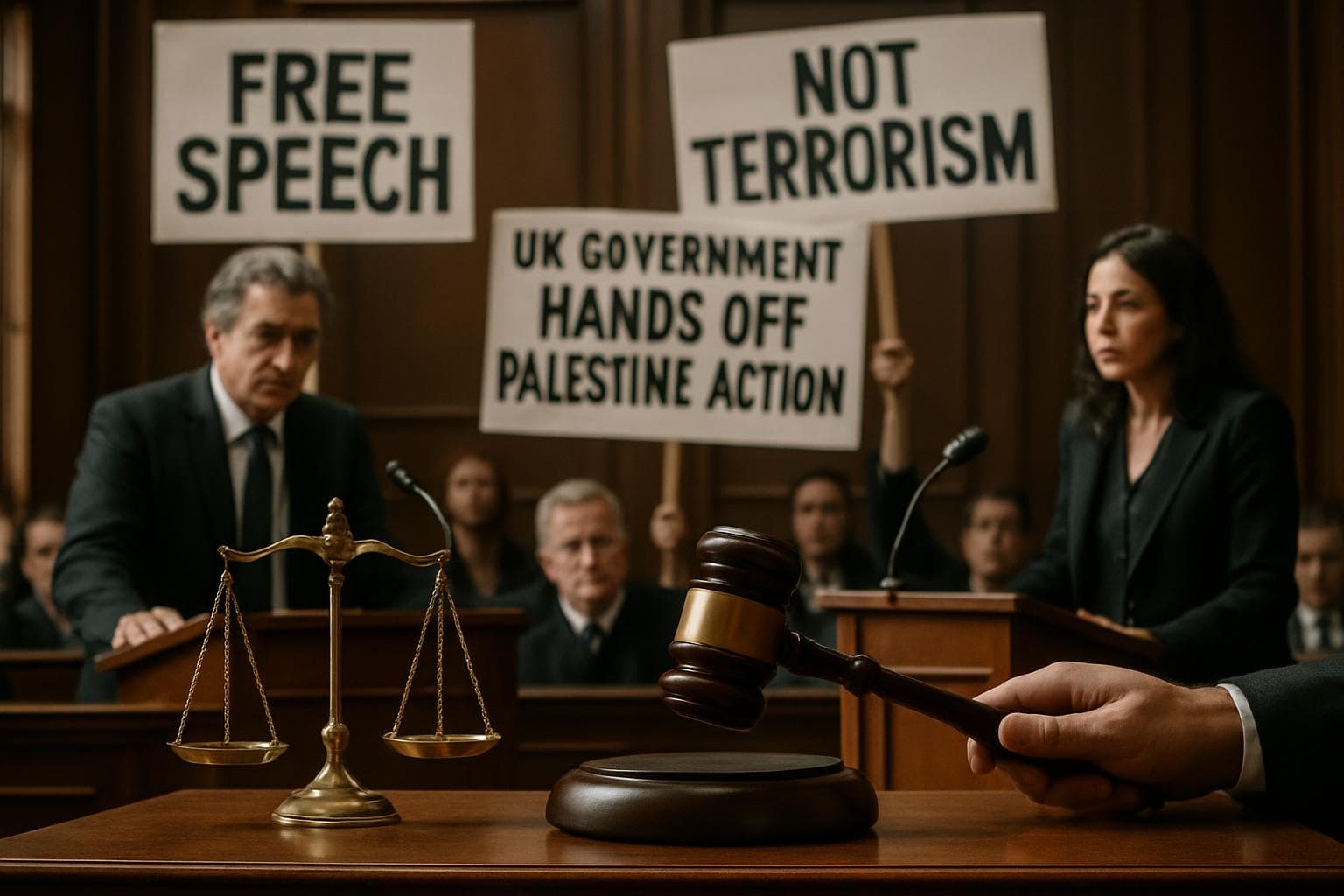
The UK government's proposal to ban the protest group Palestine Action under the Terrorism Act 2000 has sparked significant controversy and debate. The move comes after two members of the group were arrested for allegedly blocking the entrance to Elbit Systems in Bristol, a defense company accused by activists of supplying weapons to the Israeli military—a claim the company denies.
Arrests and Allegations
On Tuesday, Avon and Somerset Police detained a 30-year-old woman and a 36-year-old man on suspicion of criminal damage and unauthorized entry. The activists reportedly covered the entrance of Elbit Systems with red paint, symbolizing Palestinian bloodshed. This incident is part of a series of protests targeting the company, which has faced previous disruptions.
Government's Proposed Ban
The UK government has laid a draft order before Parliament to classify Palestine Action as a terrorist organization. If approved, it would become illegal to be a member or supporter of the group, with penalties of up to 14 years in prison. The proposal is set for debate in Parliament, with a decision expected by the end of the week.
Legal and Human Rights Concerns
The proposed ban has drawn criticism from various quarters, including legal experts and UN special rapporteurs. In letters to Home Secretary Yvette Cooper, groups like the Network for Police Monitoring and the Haldane Society of Socialist Lawyers argue that equating protest with terrorism sets a dangerous precedent. They emphasize that acts of protest, even those causing property damage, should not be treated as terrorism if they do not intend to harm individuals.
Public and Political Reactions
The proposal has also faced opposition from public figures and politicians, including Caroline Lucas and Jeremy Corbyn. Critics warn that proscribing peaceful protest groups could undermine democratic freedoms and civil liberties. A legal challenge against the ban is anticipated, with a hearing scheduled for Friday to determine if the ban can be temporarily blocked.
WHAT THIS MIGHT MEAN
If the UK government proceeds with the ban on Palestine Action, it could face significant legal challenges and public backlash. The move may set a precedent for how protest groups are treated under terrorism legislation, potentially impacting future civil liberties. Experts warn that such actions could lead to a chilling effect on free expression and protest rights. The outcome of the legal challenge and parliamentary debate will be crucial in determining the balance between national security and the right to protest in the UK.
Related Articles

Police Federation Chief Arrested Amid Fraud Investigation
UK Police Intensify Investigation into Andrew Mountbatten-Windsor Amid Misconduct Allegations

Prince Andrew's Arrest Intensifies Scrutiny on Royal Succession and Prince William's Future Role
Middle East Conflict Drives UK Energy Prices to New Highs

Government Announces £4 Billion Overhaul of SEND Support in England

UK Government Announces Major Overhaul of SEND System with £3.4 Billion Investment
UK Government Faces Backlash Over Proposed Ban on Palestine Action Protest Group
In This Article
 Sofia Romano| Published
 HIGHLIGHTS
- Two Palestine Action protesters were arrested at Elbit Systems in Bristol for alleged criminal damage and disruption.
- The UK government is considering proscribing Palestine Action under the Terrorism Act 2000, which could criminalize membership or support.
- Legal experts and UN rapporteurs argue that banning the group conflates protest with terrorism and threatens civil liberties.
- A legal challenge against the proposed ban is expected, with a hearing set for Friday.
- The debate over the ban highlights tensions between national security measures and the right to protest.
The UK government's proposal to ban the protest group Palestine Action under the Terrorism Act 2000 has sparked significant controversy and debate. The move comes after two members of the group were arrested for allegedly blocking the entrance to Elbit Systems in Bristol, a defense company accused by activists of supplying weapons to the Israeli military—a claim the company denies.
Arrests and Allegations
On Tuesday, Avon and Somerset Police detained a 30-year-old woman and a 36-year-old man on suspicion of criminal damage and unauthorized entry. The activists reportedly covered the entrance of Elbit Systems with red paint, symbolizing Palestinian bloodshed. This incident is part of a series of protests targeting the company, which has faced previous disruptions.
Government's Proposed Ban
The UK government has laid a draft order before Parliament to classify Palestine Action as a terrorist organization. If approved, it would become illegal to be a member or supporter of the group, with penalties of up to 14 years in prison. The proposal is set for debate in Parliament, with a decision expected by the end of the week.
Legal and Human Rights Concerns
The proposed ban has drawn criticism from various quarters, including legal experts and UN special rapporteurs. In letters to Home Secretary Yvette Cooper, groups like the Network for Police Monitoring and the Haldane Society of Socialist Lawyers argue that equating protest with terrorism sets a dangerous precedent. They emphasize that acts of protest, even those causing property damage, should not be treated as terrorism if they do not intend to harm individuals.
Public and Political Reactions
The proposal has also faced opposition from public figures and politicians, including Caroline Lucas and Jeremy Corbyn. Critics warn that proscribing peaceful protest groups could undermine democratic freedoms and civil liberties. A legal challenge against the ban is anticipated, with a hearing scheduled for Friday to determine if the ban can be temporarily blocked.
WHAT THIS MIGHT MEAN
If the UK government proceeds with the ban on Palestine Action, it could face significant legal challenges and public backlash. The move may set a precedent for how protest groups are treated under terrorism legislation, potentially impacting future civil liberties. Experts warn that such actions could lead to a chilling effect on free expression and protest rights. The outcome of the legal challenge and parliamentary debate will be crucial in determining the balance between national security and the right to protest in the UK.
Related Articles
Police Federation Chief Arrested Amid Fraud Investigation
UK Police Intensify Investigation into Andrew Mountbatten-Windsor Amid Misconduct Allegations
Prince Andrew's Arrest Intensifies Scrutiny on Royal Succession and Prince William's Future Role
Middle East Conflict Drives UK Energy Prices to New Highs
Government Announces £4 Billion Overhaul of SEND Support in England
UK Government Announces Major Overhaul of SEND System with £3.4 Billion Investment