
UK Growth Forecasts Lowered Amidst Tax Hikes and Economic Vulnerability
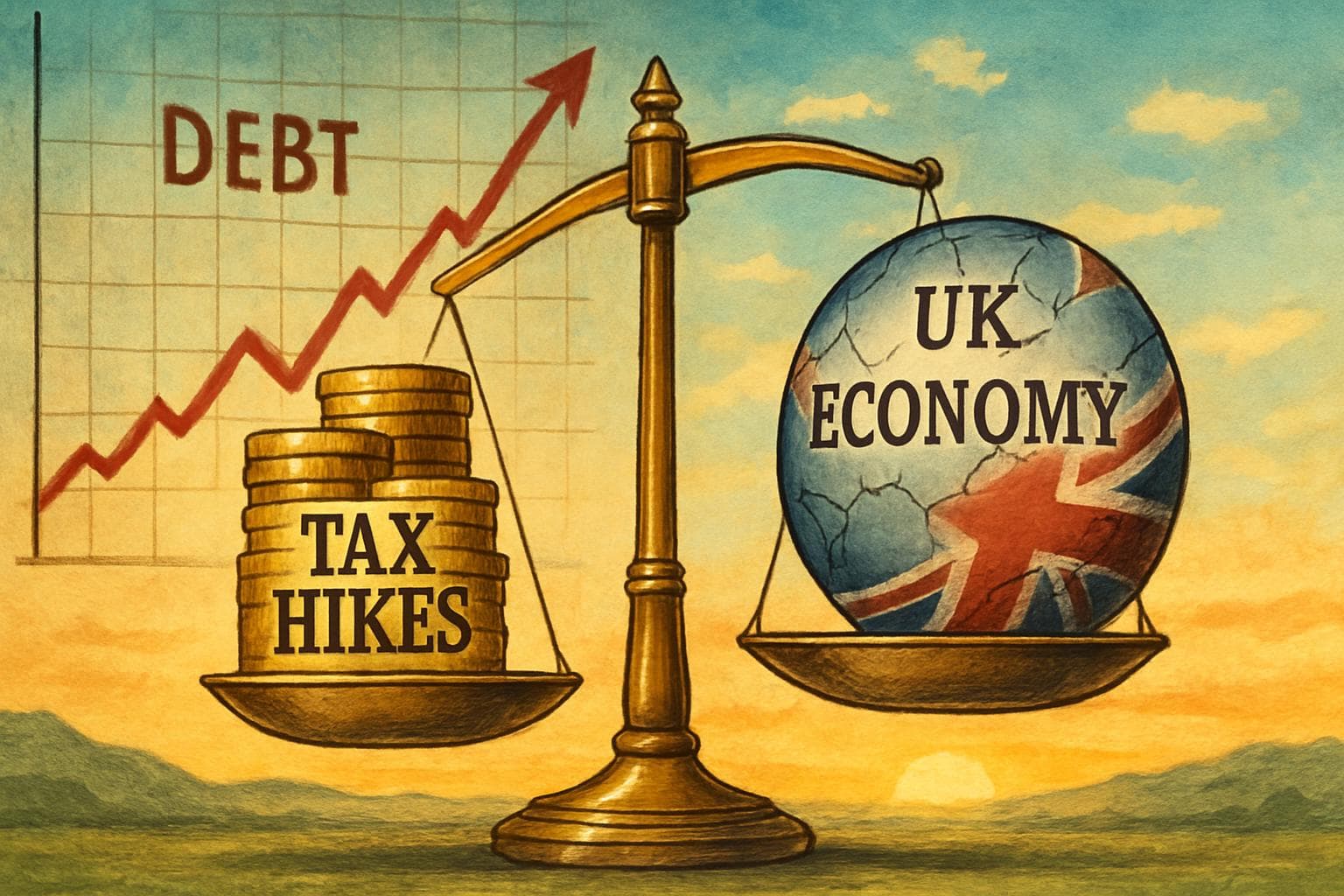
In This Article
HIGHLIGHTS
- The Office for Budget Responsibility (OBR) has revised its UK growth forecast, predicting slower growth from next year due to lower productivity.
- Chancellor Rachel Reeves announced a budget with significant tax increases, aiming to double the UK's financial buffer to £22bn.
- Despite increased tax revenues, the OBR warns that the UK's public finances remain vulnerable to future economic shocks.
- The OBR's early release of its report was an unprecedented error, prompting an apology and investigation.
- The budget strategy involves immediate spending to address social issues, followed by tax hikes to manage long-term borrowing.
The UK economy is set to experience slower growth than previously anticipated, according to the latest forecasts from the Office for Budget Responsibility (OBR). The independent forecaster has adjusted its predictions, citing lower productivity growth as a key factor. While the economy is expected to grow by 1.5% this year, the OBR has downgraded its forecast for the next four years, projecting a growth rate of 1.4% in 2026 and 1.5% in subsequent years.
Impact of Tax Increases
Chancellor Rachel Reeves has responded with a budget that includes substantial tax increases, aiming to bolster the UK's financial buffer from £9.9bn to £22bn. The OBR's report, which was accidentally released early, highlighted the need for these measures to offset the £16bn cost of the economic downgrade. Despite this, the OBR cautioned that the UK's public finances remain susceptible to potential global economic disruptions.
Economic Vulnerability and Public Spending
The OBR's analysis underscores the vulnerability of the UK's public finances, even with the increased financial buffer. Richard Hughes, the chair of the OBR, noted that the country's debt burden could rise significantly, posing a risk to economic stability. The budget outlines increased government spending over the next five years, with an additional £11bn allocated for 2029-30.
Political and Economic Strategy
The budget reflects a dual strategy: immediate spending to address social issues, such as child poverty and energy costs, followed by tax hikes to manage borrowing. This approach aims to secure political support while addressing fiscal challenges. However, experts like Helen Miller from the Institute for Fiscal Studies describe it as a "spend now, pay later" budget, with most tax increases deferred to the end of the parliamentary term.
WHAT THIS MIGHT MEAN
Looking ahead, the UK's economic trajectory will largely depend on external factors, such as global market stability and technological advancements. The OBR's acknowledgment of AI's potential to boost productivity offers a glimmer of hope for future growth. Politically, the success of Reeves's budget will hinge on its ability to maintain parliamentary support and public confidence amidst rising taxes. As the UK navigates these challenges, the balance between immediate fiscal needs and long-term economic resilience will be crucial.
Related Articles
Andrew Mountbatten-Windsor Arrested Amid Misconduct Allegations
UK Achieves Record Budget Surplus Amid Calls for Fiscal Policy Reform
Trump Criticizes UK Plan to Transfer Chagos Islands to Mauritius

Breakthrough Drug Offers Hope for Children with Severe Epilepsy

Arrest of Andrew Mountbatten-Windsor Captured in Iconic Photograph
UK Denies US Use of Military Bases for Potential Iran Strikes Amid Chagos Islands Dispute
UK Growth Forecasts Lowered Amidst Tax Hikes and Economic Vulnerability
In This Article
 Ethan Brooks| Published
 HIGHLIGHTS
- The Office for Budget Responsibility (OBR) has revised its UK growth forecast, predicting slower growth from next year due to lower productivity.
- Chancellor Rachel Reeves announced a budget with significant tax increases, aiming to double the UK's financial buffer to £22bn.
- Despite increased tax revenues, the OBR warns that the UK's public finances remain vulnerable to future economic shocks.
- The OBR's early release of its report was an unprecedented error, prompting an apology and investigation.
- The budget strategy involves immediate spending to address social issues, followed by tax hikes to manage long-term borrowing.
The UK economy is set to experience slower growth than previously anticipated, according to the latest forecasts from the Office for Budget Responsibility (OBR). The independent forecaster has adjusted its predictions, citing lower productivity growth as a key factor. While the economy is expected to grow by 1.5% this year, the OBR has downgraded its forecast for the next four years, projecting a growth rate of 1.4% in 2026 and 1.5% in subsequent years.
Impact of Tax Increases
Chancellor Rachel Reeves has responded with a budget that includes substantial tax increases, aiming to bolster the UK's financial buffer from £9.9bn to £22bn. The OBR's report, which was accidentally released early, highlighted the need for these measures to offset the £16bn cost of the economic downgrade. Despite this, the OBR cautioned that the UK's public finances remain susceptible to potential global economic disruptions.
Economic Vulnerability and Public Spending
The OBR's analysis underscores the vulnerability of the UK's public finances, even with the increased financial buffer. Richard Hughes, the chair of the OBR, noted that the country's debt burden could rise significantly, posing a risk to economic stability. The budget outlines increased government spending over the next five years, with an additional £11bn allocated for 2029-30.
Political and Economic Strategy
The budget reflects a dual strategy: immediate spending to address social issues, such as child poverty and energy costs, followed by tax hikes to manage borrowing. This approach aims to secure political support while addressing fiscal challenges. However, experts like Helen Miller from the Institute for Fiscal Studies describe it as a "spend now, pay later" budget, with most tax increases deferred to the end of the parliamentary term.
WHAT THIS MIGHT MEAN
Looking ahead, the UK's economic trajectory will largely depend on external factors, such as global market stability and technological advancements. The OBR's acknowledgment of AI's potential to boost productivity offers a glimmer of hope for future growth. Politically, the success of Reeves's budget will hinge on its ability to maintain parliamentary support and public confidence amidst rising taxes. As the UK navigates these challenges, the balance between immediate fiscal needs and long-term economic resilience will be crucial.
Related Articles
Andrew Mountbatten-Windsor Arrested Amid Misconduct Allegations
UK Achieves Record Budget Surplus Amid Calls for Fiscal Policy Reform
Trump Criticizes UK Plan to Transfer Chagos Islands to Mauritius
Breakthrough Drug Offers Hope for Children with Severe Epilepsy
Arrest of Andrew Mountbatten-Windsor Captured in Iconic Photograph
UK Denies US Use of Military Bases for Potential Iran Strikes Amid Chagos Islands Dispute