
UK Government's Plan to Limit Jury Trials Sparks Debate Over Justice System Integrity
In This Article
HIGHLIGHTS
- The UK government plans to limit jury trials to serious offences, aiming to address a 78,000-case backlog in crown courts.
- Justice Secretary David Lammy's proposal has sparked criticism, with concerns about public confidence and potential bias in the justice system.
- Law students and legal professionals express fears over the impact on legal careers and justice for minority groups.
- Critics argue that removing jury trials could lead to a more closed-off and less accountable legal system.
- The reforms include creating "swift courts" and increasing the workload for community magistrates.
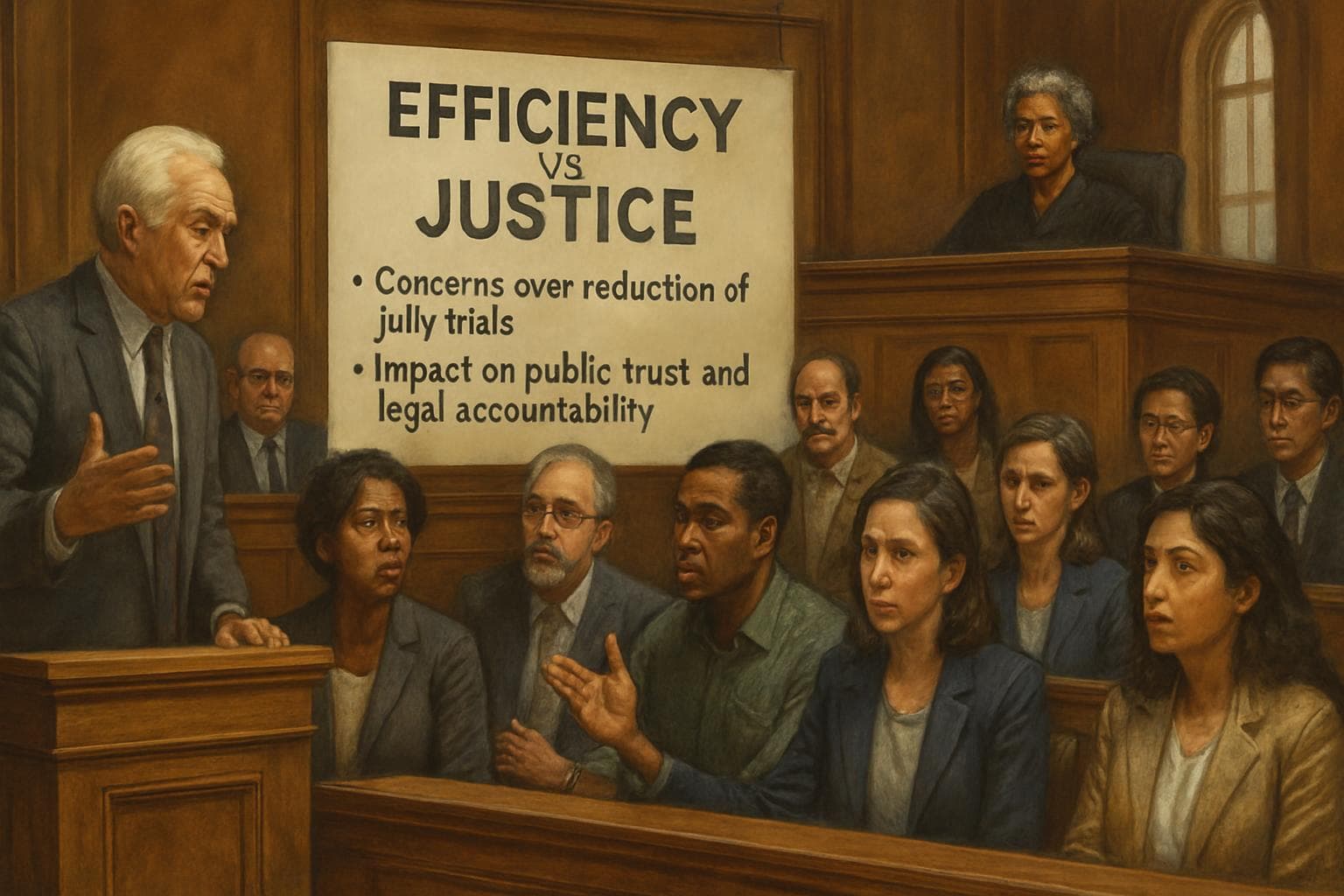
The UK government's recent proposal to restrict jury trials to only the most serious offences has ignited a heated debate among legal professionals, students, and the public. Announced by Justice Secretary David Lammy, the reforms aim to tackle a significant backlog of 78,000 cases in crown courts by reserving jury trials for indictable-only offences such as murder and rape, and either-way offences with potential sentences exceeding three years.
Concerns Over Public Confidence
The announcement has raised alarms about the erosion of public confidence in the criminal justice system. Law students in Birmingham, like Evie Bailey, express concerns that removing juries distances ordinary people from legal proceedings. "The jury is the cornerstone of public involvement in the criminal justice system," Bailey remarked, emphasizing the importance of laypeople in maintaining transparency and accountability.
Impact on Legal Careers and Minority Justice
The proposed changes have also led some aspiring barristers to reconsider their career paths. Josh Pegus, a law student, cited the lack of funding and reduced jury trials as factors influencing his decision to train as a solicitor instead. Manya Devgan, another student, voiced worries about the reforms' impact on justice for minority groups, highlighting the role of juries in mitigating bias.
Criticism from Legal Experts
Legal experts, including Mary Prior KC, have criticized the move, arguing that the right to a jury trial should only be removed as a last resort. "The minute we remove the right of ordinary people to take part in our criminal justice system, that's never coming back," Prior warned. The reforms also propose the creation of "swift courts" and an increased workload for community magistrates, which some fear could strain the system further.
Personal Accounts Highlight Jury Importance
Personal stories underscore the significance of jury trials. Abrar Javid, a defendant in a high-profile case, shared how an all-white jury's fair deliberation restored his faith in the justice system. Conversely, Dorothy*, a victim of coercive control, felt more comfortable with a magistrate's understanding of legal nuances, though her case resulted in a not-guilty verdict.
WHAT THIS MIGHT MEAN
The proposed changes to the UK's criminal justice system could have far-reaching implications. If implemented, the reforms may streamline court processes but risk undermining public trust and accountability. Legal experts warn that reducing jury trials could lead to a more authoritarian state, where the public's role in justice is diminished. The increased reliance on magistrates and swift courts may also strain resources, potentially affecting the quality of justice delivered. As the debate continues, the government faces pressure to balance efficiency with maintaining the integrity of the justice system.
Related Articles

Arrest of Andrew Mountbatten-Windsor Captured in Iconic Photograph

UK Police Intensify Investigation into Andrew Mountbatten-Windsor Amid Misconduct Allegations

Government Criticized for Mishandling Maccabi Tel Aviv Fan Ban
Prince Andrew's Arrest Intensifies Scrutiny on Royal Succession and Prince William's Future Role

Middle East Conflict Drives UK Energy Prices to New Highs

Government Announces £4 Billion Overhaul of SEND Support in England
UK Government's Plan to Limit Jury Trials Sparks Debate Over Justice System Integrity
In This Article
 Sofia Romano| Published
 HIGHLIGHTS
- The UK government plans to limit jury trials to serious offences, aiming to address a 78,000-case backlog in crown courts.
- Justice Secretary David Lammy's proposal has sparked criticism, with concerns about public confidence and potential bias in the justice system.
- Law students and legal professionals express fears over the impact on legal careers and justice for minority groups.
- Critics argue that removing jury trials could lead to a more closed-off and less accountable legal system.
- The reforms include creating "swift courts" and increasing the workload for community magistrates.
The UK government's recent proposal to restrict jury trials to only the most serious offences has ignited a heated debate among legal professionals, students, and the public. Announced by Justice Secretary David Lammy, the reforms aim to tackle a significant backlog of 78,000 cases in crown courts by reserving jury trials for indictable-only offences such as murder and rape, and either-way offences with potential sentences exceeding three years.
Concerns Over Public Confidence
The announcement has raised alarms about the erosion of public confidence in the criminal justice system. Law students in Birmingham, like Evie Bailey, express concerns that removing juries distances ordinary people from legal proceedings. "The jury is the cornerstone of public involvement in the criminal justice system," Bailey remarked, emphasizing the importance of laypeople in maintaining transparency and accountability.
Impact on Legal Careers and Minority Justice
The proposed changes have also led some aspiring barristers to reconsider their career paths. Josh Pegus, a law student, cited the lack of funding and reduced jury trials as factors influencing his decision to train as a solicitor instead. Manya Devgan, another student, voiced worries about the reforms' impact on justice for minority groups, highlighting the role of juries in mitigating bias.
Criticism from Legal Experts
Legal experts, including Mary Prior KC, have criticized the move, arguing that the right to a jury trial should only be removed as a last resort. "The minute we remove the right of ordinary people to take part in our criminal justice system, that's never coming back," Prior warned. The reforms also propose the creation of "swift courts" and an increased workload for community magistrates, which some fear could strain the system further.
Personal Accounts Highlight Jury Importance
Personal stories underscore the significance of jury trials. Abrar Javid, a defendant in a high-profile case, shared how an all-white jury's fair deliberation restored his faith in the justice system. Conversely, Dorothy*, a victim of coercive control, felt more comfortable with a magistrate's understanding of legal nuances, though her case resulted in a not-guilty verdict.
WHAT THIS MIGHT MEAN
The proposed changes to the UK's criminal justice system could have far-reaching implications. If implemented, the reforms may streamline court processes but risk undermining public trust and accountability. Legal experts warn that reducing jury trials could lead to a more authoritarian state, where the public's role in justice is diminished. The increased reliance on magistrates and swift courts may also strain resources, potentially affecting the quality of justice delivered. As the debate continues, the government faces pressure to balance efficiency with maintaining the integrity of the justice system.
Related Articles
Arrest of Andrew Mountbatten-Windsor Captured in Iconic Photograph
UK Police Intensify Investigation into Andrew Mountbatten-Windsor Amid Misconduct Allegations
Government Criticized for Mishandling Maccabi Tel Aviv Fan Ban
Prince Andrew's Arrest Intensifies Scrutiny on Royal Succession and Prince William's Future Role
Middle East Conflict Drives UK Energy Prices to New Highs
Government Announces £4 Billion Overhaul of SEND Support in England