
UK Loses Measles-Free Status Amid Rising Cases and Declining Vaccination Rates
In This Article
HIGHLIGHTS
- The UK has lost its measles elimination status due to rising cases and declining MMR vaccination rates.
- In 2024, the UK reported 3,681 measles cases, with vaccination rates below the 95% threshold needed for herd immunity.
- The World Health Organization cites vaccine hesitancy and access issues as key factors in the UK's status change.
- Health experts stress the importance of increasing MMR uptake to prevent further outbreaks and regain elimination status.
- The NHS is implementing new strategies to boost vaccination rates, including earlier second-dose appointments.
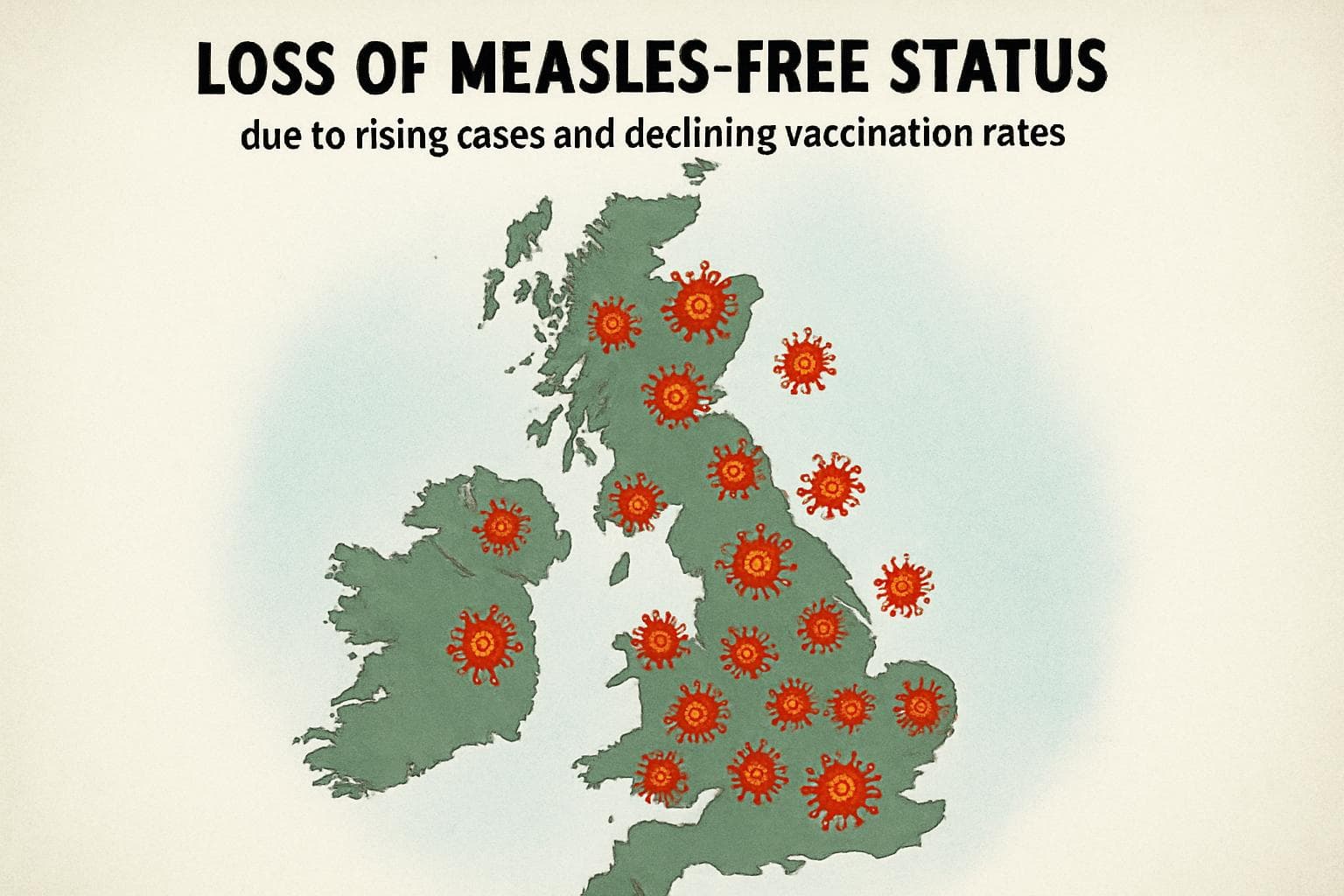
The United Kingdom has lost its measles elimination status, as confirmed by the World Health Organization (WHO), following a significant increase in measles cases and a decline in vaccination rates. The WHO's decision reflects the re-establishment of the disease in the UK, which reported 3,681 suspected cases in 2024 alone.
Rising Cases and Declining Vaccination Rates
The UK was initially declared measles-free in 2017, but this status has fluctuated due to varying vaccination rates and outbreaks. In 2024, vaccination coverage fell below the critical 95% threshold required for herd immunity, with only 92% of children receiving the first MMR dose and just under 85% receiving the second. This decline has been attributed to vaccine hesitancy and challenges in accessing immunization services.
Health Experts Call for Action
Health professionals and public health experts have expressed concern over the UK's loss of measles elimination status. Dr. Vanessa Saliba from the UK Health Security Agency emphasized the need for all eligible children to receive two doses of the MMR vaccine before starting school. Dr. Bharat Pankhania from the University of Exeter highlighted the urgency of addressing low vaccination uptake, suggesting improved access to healthcare services and countering misinformation about vaccine safety.
WHO's Regional Concerns
The WHO's European regional verification commission has noted the loss of measles elimination status in several countries, including the UK, Spain, and Austria. The commission has urged governments to enhance their vaccination efforts, particularly targeting vulnerable and hard-to-reach populations, to close immunity gaps and prevent further outbreaks.
NHS Initiatives to Boost Vaccination
In response to the WHO's decision, the NHS is implementing new strategies to increase vaccination rates. These include offering the second MMR dose earlier, at an 18-month appointment, to improve uptake and support elimination goals. The NHS is also providing catch-up vaccinations for older children and adults who missed their initial doses.
WHAT THIS MIGHT MEAN
The loss of measles elimination status in the UK could have significant public health implications if not addressed promptly. Experts warn that without increased vaccination rates, the country may face more frequent and severe outbreaks, potentially leading to higher morbidity and mortality rates. The NHS's new initiatives aim to reverse this trend, but success will depend on overcoming vaccine hesitancy and improving access to immunization services. If these efforts prove effective, the UK could regain its measles-free status, setting a precedent for other countries facing similar challenges.
Related Articles

UK Government to Reform Asylum Seeker Support and Employment Policies
Persistent Safety Concerns in Nottingham Maternity Services Amidst Calls for Systemic Reform
Nottingham Attacks Inquiry: Families Demand Accountability and Truth
Birmingham's Proactive Approach to Measles Outbreak Offers Lessons for North London

Andrew Mountbatten-Windsor Arrested Amid Misconduct Allegations

Breakthrough Drug Offers Hope for Children with Severe Epilepsy
UK Loses Measles-Free Status Amid Rising Cases and Declining Vaccination Rates
In This Article
 Ethan Brooks| Published
 HIGHLIGHTS
- The UK has lost its measles elimination status due to rising cases and declining MMR vaccination rates.
- In 2024, the UK reported 3,681 measles cases, with vaccination rates below the 95% threshold needed for herd immunity.
- The World Health Organization cites vaccine hesitancy and access issues as key factors in the UK's status change.
- Health experts stress the importance of increasing MMR uptake to prevent further outbreaks and regain elimination status.
- The NHS is implementing new strategies to boost vaccination rates, including earlier second-dose appointments.
The United Kingdom has lost its measles elimination status, as confirmed by the World Health Organization (WHO), following a significant increase in measles cases and a decline in vaccination rates. The WHO's decision reflects the re-establishment of the disease in the UK, which reported 3,681 suspected cases in 2024 alone.
Rising Cases and Declining Vaccination Rates
The UK was initially declared measles-free in 2017, but this status has fluctuated due to varying vaccination rates and outbreaks. In 2024, vaccination coverage fell below the critical 95% threshold required for herd immunity, with only 92% of children receiving the first MMR dose and just under 85% receiving the second. This decline has been attributed to vaccine hesitancy and challenges in accessing immunization services.
Health Experts Call for Action
Health professionals and public health experts have expressed concern over the UK's loss of measles elimination status. Dr. Vanessa Saliba from the UK Health Security Agency emphasized the need for all eligible children to receive two doses of the MMR vaccine before starting school. Dr. Bharat Pankhania from the University of Exeter highlighted the urgency of addressing low vaccination uptake, suggesting improved access to healthcare services and countering misinformation about vaccine safety.
WHO's Regional Concerns
The WHO's European regional verification commission has noted the loss of measles elimination status in several countries, including the UK, Spain, and Austria. The commission has urged governments to enhance their vaccination efforts, particularly targeting vulnerable and hard-to-reach populations, to close immunity gaps and prevent further outbreaks.
NHS Initiatives to Boost Vaccination
In response to the WHO's decision, the NHS is implementing new strategies to increase vaccination rates. These include offering the second MMR dose earlier, at an 18-month appointment, to improve uptake and support elimination goals. The NHS is also providing catch-up vaccinations for older children and adults who missed their initial doses.
WHAT THIS MIGHT MEAN
The loss of measles elimination status in the UK could have significant public health implications if not addressed promptly. Experts warn that without increased vaccination rates, the country may face more frequent and severe outbreaks, potentially leading to higher morbidity and mortality rates. The NHS's new initiatives aim to reverse this trend, but success will depend on overcoming vaccine hesitancy and improving access to immunization services. If these efforts prove effective, the UK could regain its measles-free status, setting a precedent for other countries facing similar challenges.
Related Articles
UK Government to Reform Asylum Seeker Support and Employment Policies
Persistent Safety Concerns in Nottingham Maternity Services Amidst Calls for Systemic Reform
Nottingham Attacks Inquiry: Families Demand Accountability and Truth
Birmingham's Proactive Approach to Measles Outbreak Offers Lessons for North London
Andrew Mountbatten-Windsor Arrested Amid Misconduct Allegations
Breakthrough Drug Offers Hope for Children with Severe Epilepsy