
UK Manufacturers Call for Revival of HS2 Northern Leg to Boost Rail Capacity
In This Article
HIGHLIGHTS
- UK manufacturers urge the government to revive the HS2 northern leg to enhance rail freight capacity and reduce road congestion.
- The Conservative government scrapped the HS2 northern leg in October 2023, citing cost savings of £36 billion.
- A survey by Make UK and Barclays found 90% of manufacturers support the original high-speed rail plans to boost passenger numbers and freight capacity.
- Regional leaders argue that limiting HS2 to London-Birmingham hampers northern economic growth and connectivity.
- The current rail capacity is deemed insufficient for future freight traffic, necessitating investment in high-speed rail and multi-mode hubs.
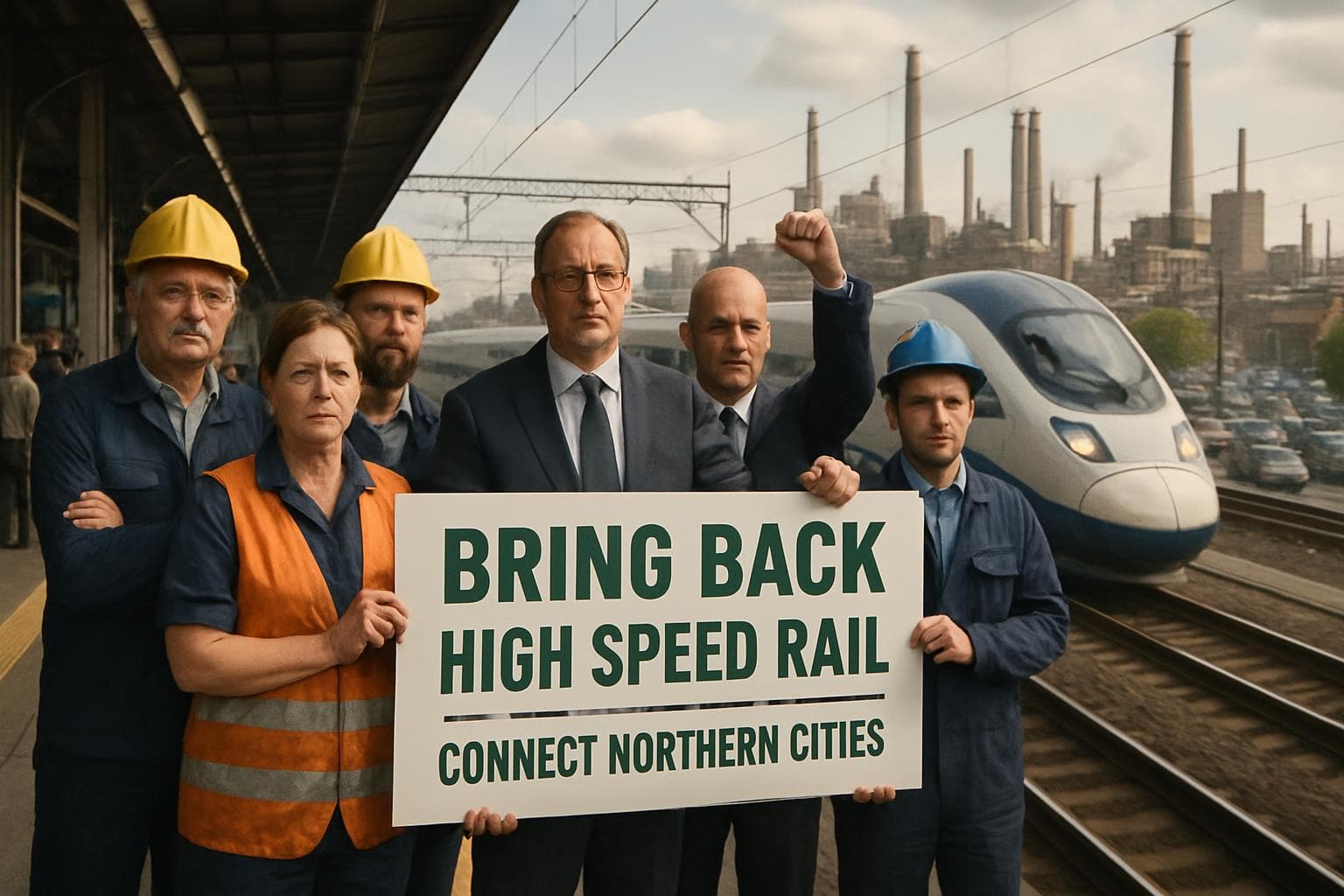
In a concerted push to enhance the UK's rail infrastructure, manufacturing firms are urging the government to reconsider plans for the HS2 high-speed rail line extending to Leeds and Manchester. This call comes after the Conservative government, led by then-Prime Minister Rishi Sunak, scrapped the northern leg of HS2 in October 2023, citing a potential £36 billion saving to be redirected to other transport projects.
Manufacturers Advocate for Strategic Rail Investment
A recent survey conducted by Make UK and Barclays Corporate Banking revealed that 90% of manufacturers believe the original HS2 plans should proceed. The high-speed rail line is seen as crucial for increasing passenger numbers and freeing up existing lines for rail freight, a move that could significantly reduce road congestion and emissions. The survey also highlighted a strong demand for improved rail connections between key northern cities, including Liverpool, Manchester, Sheffield, Hull, and Newcastle.
Economic and Environmental Implications
The decision to limit HS2 to a London-Birmingham service has drawn criticism from regional leaders. Tracy Brabin, Mayor of West Yorkshire, described it as a setback for northern transport and economic development. Similarly, South Yorkshire Mayor Oliver Coppard labeled the cancellation a "catastrophe" for the UK. The current rail capacity is considered inadequate for the projected freight traffic, underscoring the need for high-speed links and investment in multi-mode transport hubs.
Industry Leaders Highlight Connectivity Needs
Verity Davidge, Director of Policy at Make UK, emphasized the necessity of additional rail capacity to accommodate future freight demands. Lee Collinson of Barclays UK Corporate Bank echoed this sentiment, stressing the importance of integrating road, rail, and port systems to enhance productivity and support long-term competitiveness.
WHAT THIS MIGHT MEAN
The push to revive the HS2 northern leg underscores a broader debate about the UK's transport priorities and economic strategy. If the government heeds the call from manufacturers and regional leaders, it could lead to significant investments in rail infrastructure, potentially transforming northern England's economic landscape. However, financial constraints and political considerations may continue to pose challenges. Experts suggest that a balanced approach, incorporating both rail and road investments, could be key to achieving sustainable growth and decarbonisation goals. As discussions continue, the future of the HS2 project remains a pivotal issue for the UK's transport policy.
Related Articles

Arrest of Andrew Mountbatten-Windsor Captured in Iconic Photograph

Labour MP's Husband Arrested in UK-China Espionage Probe

Nottingham Attacks Inquiry: Families Demand Accountability and Truth

Birmingham's Proactive Approach to Measles Outbreak Offers Lessons for North London

Government Criticized for Mishandling Maccabi Tel Aviv Fan Ban

Teen Couple's Tragic Death at Yorkshire Holiday Park Sparks Investigation
UK Manufacturers Call for Revival of HS2 Northern Leg to Boost Rail Capacity
In This Article
 Ethan Brooks| Published
 HIGHLIGHTS
- UK manufacturers urge the government to revive the HS2 northern leg to enhance rail freight capacity and reduce road congestion.
- The Conservative government scrapped the HS2 northern leg in October 2023, citing cost savings of £36 billion.
- A survey by Make UK and Barclays found 90% of manufacturers support the original high-speed rail plans to boost passenger numbers and freight capacity.
- Regional leaders argue that limiting HS2 to London-Birmingham hampers northern economic growth and connectivity.
- The current rail capacity is deemed insufficient for future freight traffic, necessitating investment in high-speed rail and multi-mode hubs.
In a concerted push to enhance the UK's rail infrastructure, manufacturing firms are urging the government to reconsider plans for the HS2 high-speed rail line extending to Leeds and Manchester. This call comes after the Conservative government, led by then-Prime Minister Rishi Sunak, scrapped the northern leg of HS2 in October 2023, citing a potential £36 billion saving to be redirected to other transport projects.
Manufacturers Advocate for Strategic Rail Investment
A recent survey conducted by Make UK and Barclays Corporate Banking revealed that 90% of manufacturers believe the original HS2 plans should proceed. The high-speed rail line is seen as crucial for increasing passenger numbers and freeing up existing lines for rail freight, a move that could significantly reduce road congestion and emissions. The survey also highlighted a strong demand for improved rail connections between key northern cities, including Liverpool, Manchester, Sheffield, Hull, and Newcastle.
Economic and Environmental Implications
The decision to limit HS2 to a London-Birmingham service has drawn criticism from regional leaders. Tracy Brabin, Mayor of West Yorkshire, described it as a setback for northern transport and economic development. Similarly, South Yorkshire Mayor Oliver Coppard labeled the cancellation a "catastrophe" for the UK. The current rail capacity is considered inadequate for the projected freight traffic, underscoring the need for high-speed links and investment in multi-mode transport hubs.
Industry Leaders Highlight Connectivity Needs
Verity Davidge, Director of Policy at Make UK, emphasized the necessity of additional rail capacity to accommodate future freight demands. Lee Collinson of Barclays UK Corporate Bank echoed this sentiment, stressing the importance of integrating road, rail, and port systems to enhance productivity and support long-term competitiveness.
WHAT THIS MIGHT MEAN
The push to revive the HS2 northern leg underscores a broader debate about the UK's transport priorities and economic strategy. If the government heeds the call from manufacturers and regional leaders, it could lead to significant investments in rail infrastructure, potentially transforming northern England's economic landscape. However, financial constraints and political considerations may continue to pose challenges. Experts suggest that a balanced approach, incorporating both rail and road investments, could be key to achieving sustainable growth and decarbonisation goals. As discussions continue, the future of the HS2 project remains a pivotal issue for the UK's transport policy.
Related Articles
Arrest of Andrew Mountbatten-Windsor Captured in Iconic Photograph
Labour MP's Husband Arrested in UK-China Espionage Probe
Nottingham Attacks Inquiry: Families Demand Accountability and Truth
Birmingham's Proactive Approach to Measles Outbreak Offers Lessons for North London
Government Criticized for Mishandling Maccabi Tel Aviv Fan Ban
Teen Couple's Tragic Death at Yorkshire Holiday Park Sparks Investigation