
UK Government Considers Limiting Jury Trials to Combat Court Backlog
In This Article
HIGHLIGHTS
- The UK government is considering reforms to limit jury trials to serious crimes like murder and rape, aiming to address a backlog of 78,000 cases in Crown Courts.
- Justice Secretary David Lammy plans to announce £550 million in funding for victim support and £34 million to attract more barristers to criminal work.
- The proposed changes, based on recommendations from Sir Brian Leveson, face opposition from legal professionals who argue that underfunding, not juries, is the root cause of delays.
- The reforms could see jury trials replaced by judge-only trials for less severe crimes, with magistrates' sentencing powers increased.
- Critics warn that these changes might lead to miscarriages of justice and undermine public confidence in the legal system.
The UK government is poised to announce significant reforms to the justice system, aiming to alleviate the mounting backlog of cases in Crown Courts. Justice Secretary David Lammy is expected to present these proposals to Parliament, which include restricting jury trials to only the most serious offenses, such as murder, rape, and manslaughter. This move comes as the number of outstanding cases in England and Wales approaches 78,000, with projections indicating it could surpass 100,000 by 2028 if no action is taken.
Proposed Reforms and Funding Initiatives
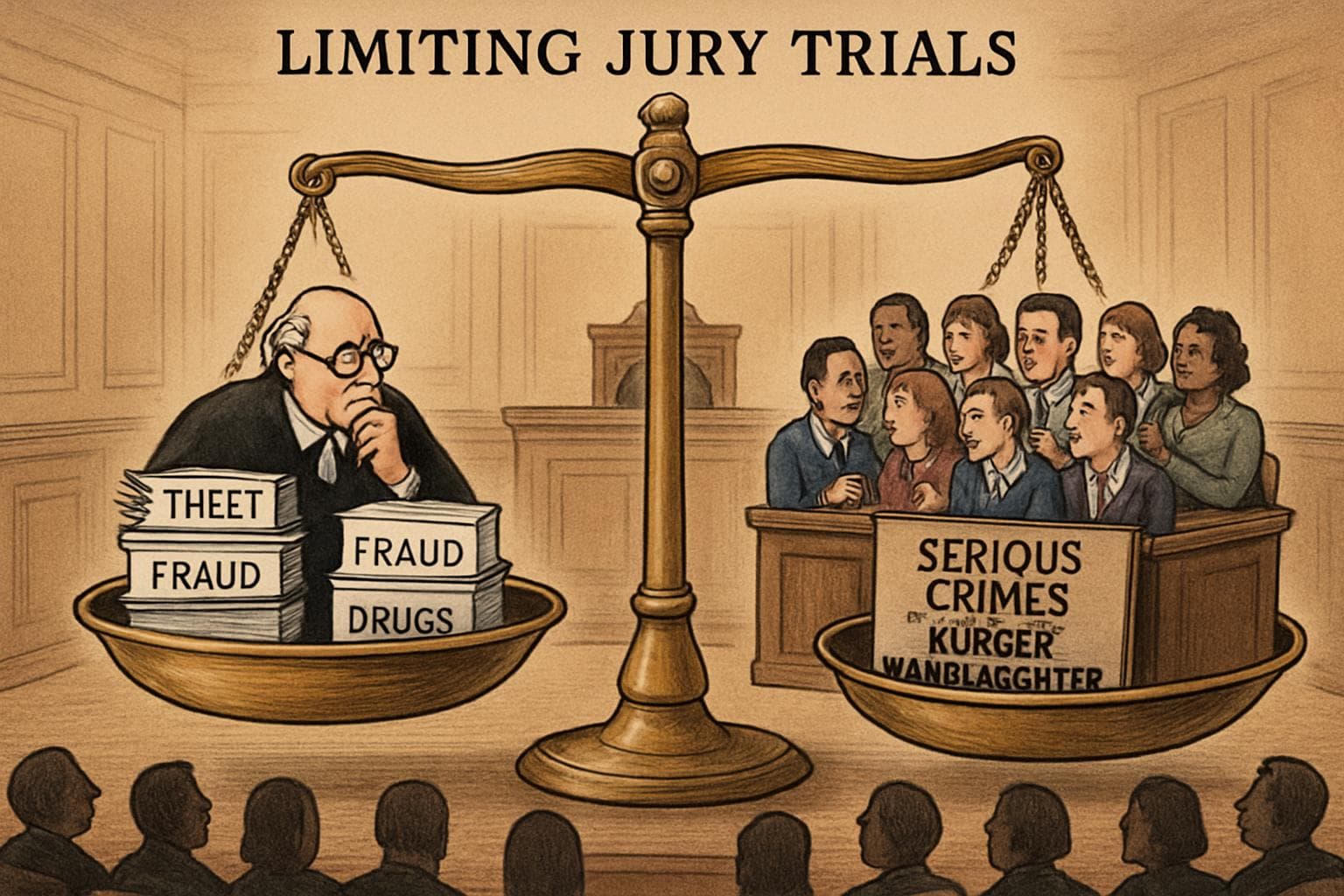
The proposed changes, informed by recommendations from retired Court of Appeal judge Sir Brian Leveson, suggest that less severe crimes could be adjudicated by judges alone, rather than juries. This would apply to offenses like theft, fraud, and most drug-related crimes. Additionally, the reforms propose doubling the sentencing powers of volunteer magistrates to two years, potentially expediting the resolution of lower-level cases.
To support these changes, Lammy has announced a £550 million investment over three years for victim support services and an additional £34 million to encourage more barristers to engage in criminal law. "Juries remain a fundamental part of our justice system," Lammy stated, emphasizing the need to prioritize victims and streamline the legal process.
Opposition and Concerns
Despite the government's intentions, the proposals have met with significant opposition from legal professionals and advocacy groups. Critics argue that the backlog is primarily due to years of underfunding rather than the jury system itself. The Criminal Bar Association and the Bar Council have expressed concerns that limiting jury trials could lead to miscarriages of justice and erode public trust in the legal system.
Riel Karmy-Jones KC, chair of the Criminal Bar Association, highlighted the risk of further injustices, stating, "Imposing an alternative to jury trials without addressing the root causes of delays is not the solution."
WHAT THIS MIGHT MEAN
If implemented, these reforms could significantly alter the landscape of the UK justice system. While they may reduce the backlog in the short term, the long-term implications on public confidence and the integrity of the legal process remain uncertain. Legal experts warn that the changes could lead to increased appeals and potential miscarriages of justice, particularly if judge-only trials become the norm for a broader range of offenses.
Politically, the government may face increased scrutiny and pressure from both the public and legal professionals to ensure that any reforms do not compromise the fairness and transparency of the justice system. As the debate continues, the focus will likely remain on balancing efficiency with the fundamental rights of defendants and victims alike.
Related Articles

UK Police Intensify Investigation into Andrew Mountbatten-Windsor Amid Misconduct Allegations

Prince Andrew's Arrest Intensifies Scrutiny on Royal Succession and Prince William's Future Role

Middle East Conflict Drives UK Energy Prices to New Highs

Government Announces £4 Billion Overhaul of SEND Support in England

UK Government Announces Major Overhaul of SEND System with £3.4 Billion Investment

Prince Andrew's Ties to Epstein Under Scrutiny Amid Calls for Inquiry
UK Government Considers Limiting Jury Trials to Combat Court Backlog
In This Article
 Sofia Romano| Published
 HIGHLIGHTS
- The UK government is considering reforms to limit jury trials to serious crimes like murder and rape, aiming to address a backlog of 78,000 cases in Crown Courts.
- Justice Secretary David Lammy plans to announce £550 million in funding for victim support and £34 million to attract more barristers to criminal work.
- The proposed changes, based on recommendations from Sir Brian Leveson, face opposition from legal professionals who argue that underfunding, not juries, is the root cause of delays.
- The reforms could see jury trials replaced by judge-only trials for less severe crimes, with magistrates' sentencing powers increased.
- Critics warn that these changes might lead to miscarriages of justice and undermine public confidence in the legal system.
The UK government is poised to announce significant reforms to the justice system, aiming to alleviate the mounting backlog of cases in Crown Courts. Justice Secretary David Lammy is expected to present these proposals to Parliament, which include restricting jury trials to only the most serious offenses, such as murder, rape, and manslaughter. This move comes as the number of outstanding cases in England and Wales approaches 78,000, with projections indicating it could surpass 100,000 by 2028 if no action is taken.
Proposed Reforms and Funding Initiatives
The proposed changes, informed by recommendations from retired Court of Appeal judge Sir Brian Leveson, suggest that less severe crimes could be adjudicated by judges alone, rather than juries. This would apply to offenses like theft, fraud, and most drug-related crimes. Additionally, the reforms propose doubling the sentencing powers of volunteer magistrates to two years, potentially expediting the resolution of lower-level cases.
To support these changes, Lammy has announced a £550 million investment over three years for victim support services and an additional £34 million to encourage more barristers to engage in criminal law. "Juries remain a fundamental part of our justice system," Lammy stated, emphasizing the need to prioritize victims and streamline the legal process.
Opposition and Concerns
Despite the government's intentions, the proposals have met with significant opposition from legal professionals and advocacy groups. Critics argue that the backlog is primarily due to years of underfunding rather than the jury system itself. The Criminal Bar Association and the Bar Council have expressed concerns that limiting jury trials could lead to miscarriages of justice and erode public trust in the legal system.
Riel Karmy-Jones KC, chair of the Criminal Bar Association, highlighted the risk of further injustices, stating, "Imposing an alternative to jury trials without addressing the root causes of delays is not the solution."
WHAT THIS MIGHT MEAN
If implemented, these reforms could significantly alter the landscape of the UK justice system. While they may reduce the backlog in the short term, the long-term implications on public confidence and the integrity of the legal process remain uncertain. Legal experts warn that the changes could lead to increased appeals and potential miscarriages of justice, particularly if judge-only trials become the norm for a broader range of offenses.
Politically, the government may face increased scrutiny and pressure from both the public and legal professionals to ensure that any reforms do not compromise the fairness and transparency of the justice system. As the debate continues, the focus will likely remain on balancing efficiency with the fundamental rights of defendants and victims alike.
Related Articles
UK Police Intensify Investigation into Andrew Mountbatten-Windsor Amid Misconduct Allegations
Prince Andrew's Arrest Intensifies Scrutiny on Royal Succession and Prince William's Future Role
Middle East Conflict Drives UK Energy Prices to New Highs
Government Announces £4 Billion Overhaul of SEND Support in England
UK Government Announces Major Overhaul of SEND System with £3.4 Billion Investment
Prince Andrew's Ties to Epstein Under Scrutiny Amid Calls for Inquiry