
UK to Implement AI for Age Verification of Asylum Seekers
In This Article
HIGHLIGHTS
- The UK government plans to implement AI technology to verify the ages of migrants claiming to be children, aiming to prevent adults from posing as minors.
- A report by David Bolt, the Independent Chief Inspector of Borders and Immigration, highlighted inaccuracies in current age assessments, with significant safeguarding risks.
- The AI system, trained on millions of facial images, offers a rapid and potentially accurate method for age estimation, with a pilot scheme set to launch before a full rollout in 2026.
- Concerns have been raised about the potential for AI tools to exacerbate biases in government decision-making, despite their cost-effectiveness and efficiency.
- The Home Office is seeking private sector collaboration to leverage existing technologies used by retailers and banks for age verification.
The UK government is set to introduce artificial intelligence (AI) technology to verify the ages of asylum seekers, a move aimed at curbing instances of adults posing as minors. This initiative follows a critical report by David Bolt, the Independent Chief Inspector of Borders and Immigration, which underscored the challenges and inaccuracies in current age assessment processes.
AI Technology for Age Verification
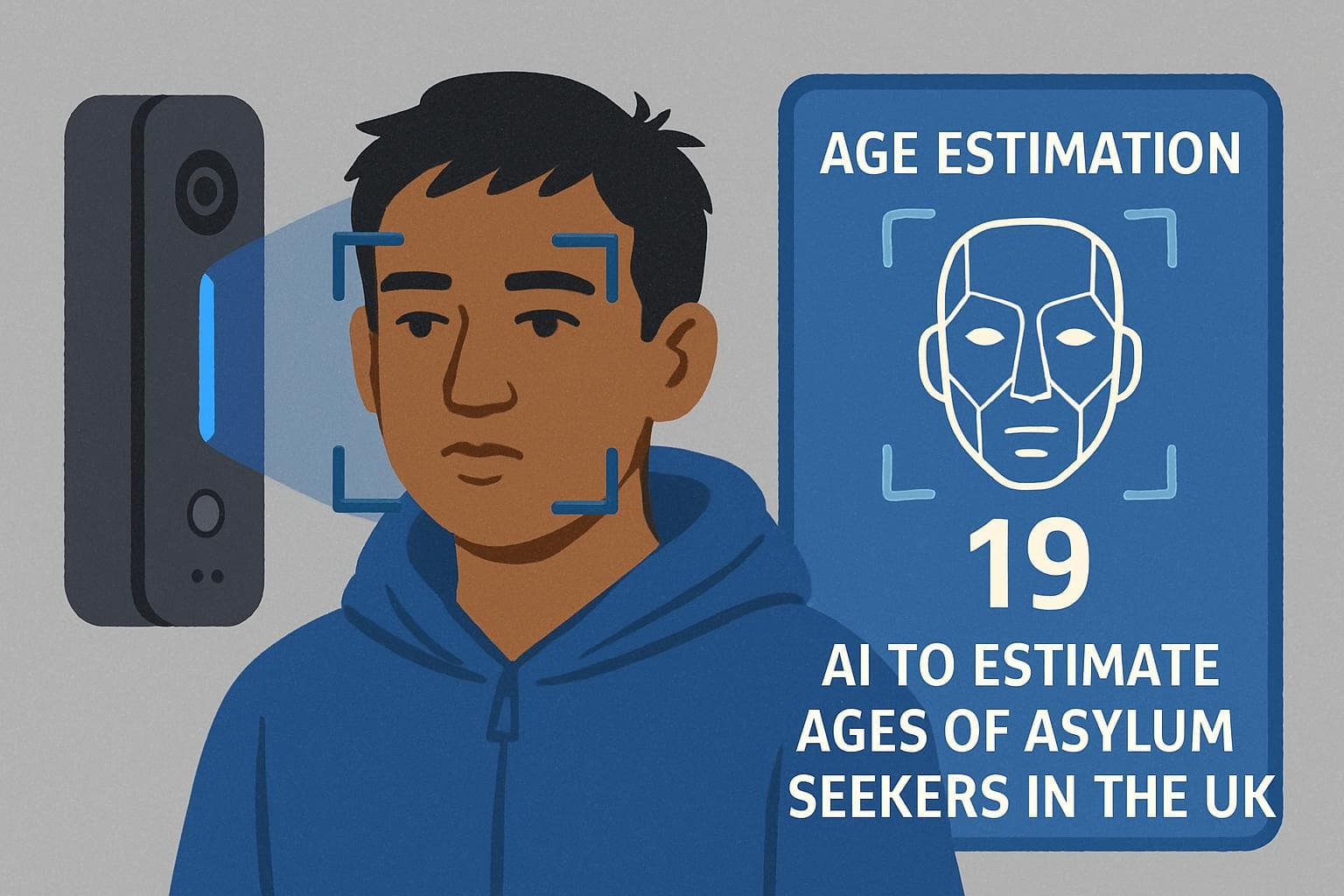
The proposed AI system, which has been trained on millions of facial images, is designed to estimate an individual's age with a known degree of accuracy. This technology, already in use by online retailers and banks for age-restricted products, offers a potentially rapid and straightforward solution to the complex issue of age verification. Angela Eagle, the Border Security and Asylum Minister, emphasized the system's potential to enhance the accuracy of age assessments, which are currently conducted by immigration officials and social workers.
Challenges and Concerns
Bolt's report revealed significant safeguarding risks, such as children being mistakenly classified as adults and vice versa. In a sample of 100 case files, 22 individuals initially assessed as adults were later determined to be minors. The report also highlighted the mental health impact on young asylum seekers subjected to flawed age verification processes, particularly at the Dover processing facility.
Private Sector Collaboration
The Home Office plans to collaborate with private sector companies that have pioneered similar technologies, aiming to leverage their expertise and investment. A tender for technology providers is expected to be launched in August, with a pilot scheme commencing soon after. The full rollout of the AI system is anticipated by 2026.
Addressing Bias and Efficiency
While AI offers a cost-effective and efficient solution, concerns persist about potential biases in government decision-making. Previous AI tools used by the Home Office have faced criticism for disproportionately flagging certain nationalities. Despite these concerns, the government is exploring further applications of AI in areas such as justice, security, and education.
WHAT THIS MIGHT MEAN
The introduction of AI for age verification in the UK immigration system could significantly streamline processes and reduce errors in age assessments. However, the potential for AI to exacerbate existing biases remains a critical concern. As the government moves forward with its pilot scheme, it will be essential to address these issues to ensure fair and accurate outcomes for asylum seekers. The collaboration with private sector companies may bring advanced technological solutions, but it also necessitates rigorous oversight to maintain ethical standards. As the rollout progresses, the impact on both policy and the lives of asylum seekers will need careful monitoring and evaluation.
Related Articles

Government Criticized for Mishandling Maccabi Tel Aviv Fan Ban

UK Defence Faces Scrutiny Amid Ajax Armoured Vehicle Delays and Soldier Safety Concerns

UK Government to Reform Asylum Seeker Support and Employment Policies

Middle East Conflict Drives UK Energy Prices to New Highs

Government Announces £4 Billion Overhaul of SEND Support in England

UK Government Announces Major Overhaul of SEND System with £3.4 Billion Investment
UK to Implement AI for Age Verification of Asylum Seekers
In This Article
 Himanshu Kaushik| Published
 HIGHLIGHTS
- The UK government plans to implement AI technology to verify the ages of migrants claiming to be children, aiming to prevent adults from posing as minors.
- A report by David Bolt, the Independent Chief Inspector of Borders and Immigration, highlighted inaccuracies in current age assessments, with significant safeguarding risks.
- The AI system, trained on millions of facial images, offers a rapid and potentially accurate method for age estimation, with a pilot scheme set to launch before a full rollout in 2026.
- Concerns have been raised about the potential for AI tools to exacerbate biases in government decision-making, despite their cost-effectiveness and efficiency.
- The Home Office is seeking private sector collaboration to leverage existing technologies used by retailers and banks for age verification.
The UK government is set to introduce artificial intelligence (AI) technology to verify the ages of asylum seekers, a move aimed at curbing instances of adults posing as minors. This initiative follows a critical report by David Bolt, the Independent Chief Inspector of Borders and Immigration, which underscored the challenges and inaccuracies in current age assessment processes.
AI Technology for Age Verification
The proposed AI system, which has been trained on millions of facial images, is designed to estimate an individual's age with a known degree of accuracy. This technology, already in use by online retailers and banks for age-restricted products, offers a potentially rapid and straightforward solution to the complex issue of age verification. Angela Eagle, the Border Security and Asylum Minister, emphasized the system's potential to enhance the accuracy of age assessments, which are currently conducted by immigration officials and social workers.
Challenges and Concerns
Bolt's report revealed significant safeguarding risks, such as children being mistakenly classified as adults and vice versa. In a sample of 100 case files, 22 individuals initially assessed as adults were later determined to be minors. The report also highlighted the mental health impact on young asylum seekers subjected to flawed age verification processes, particularly at the Dover processing facility.
Private Sector Collaboration
The Home Office plans to collaborate with private sector companies that have pioneered similar technologies, aiming to leverage their expertise and investment. A tender for technology providers is expected to be launched in August, with a pilot scheme commencing soon after. The full rollout of the AI system is anticipated by 2026.
Addressing Bias and Efficiency
While AI offers a cost-effective and efficient solution, concerns persist about potential biases in government decision-making. Previous AI tools used by the Home Office have faced criticism for disproportionately flagging certain nationalities. Despite these concerns, the government is exploring further applications of AI in areas such as justice, security, and education.
WHAT THIS MIGHT MEAN
The introduction of AI for age verification in the UK immigration system could significantly streamline processes and reduce errors in age assessments. However, the potential for AI to exacerbate existing biases remains a critical concern. As the government moves forward with its pilot scheme, it will be essential to address these issues to ensure fair and accurate outcomes for asylum seekers. The collaboration with private sector companies may bring advanced technological solutions, but it also necessitates rigorous oversight to maintain ethical standards. As the rollout progresses, the impact on both policy and the lives of asylum seekers will need careful monitoring and evaluation.
Related Articles
Government Criticized for Mishandling Maccabi Tel Aviv Fan Ban
UK Defence Faces Scrutiny Amid Ajax Armoured Vehicle Delays and Soldier Safety Concerns
UK Government to Reform Asylum Seeker Support and Employment Policies
Middle East Conflict Drives UK Energy Prices to New Highs
Government Announces £4 Billion Overhaul of SEND Support in England
UK Government Announces Major Overhaul of SEND System with £3.4 Billion Investment