
UK Welfare Bill Passes Amid Labour Rebellion and Government Concessions
In This Article
HIGHLIGHTS
- The UK government's welfare bill, including changes to Universal Credit and Personal Independence Payment (PIP), passed the Commons despite a Labour MPs rebellion.
- Labour MPs opposed the bill due to concerns over cuts to disability benefits and the impact on vulnerable groups.
- The government made concessions, delaying stricter PIP eligibility rules pending a review led by Stephen Timms.
- Kemi Badenoch criticized Labour's handling of welfare reforms, calling for tighter restrictions on foreign nationals claiming benefits.
- The bill's passage marks a significant step in the government's efforts to reform welfare spending, with implications for millions of households.
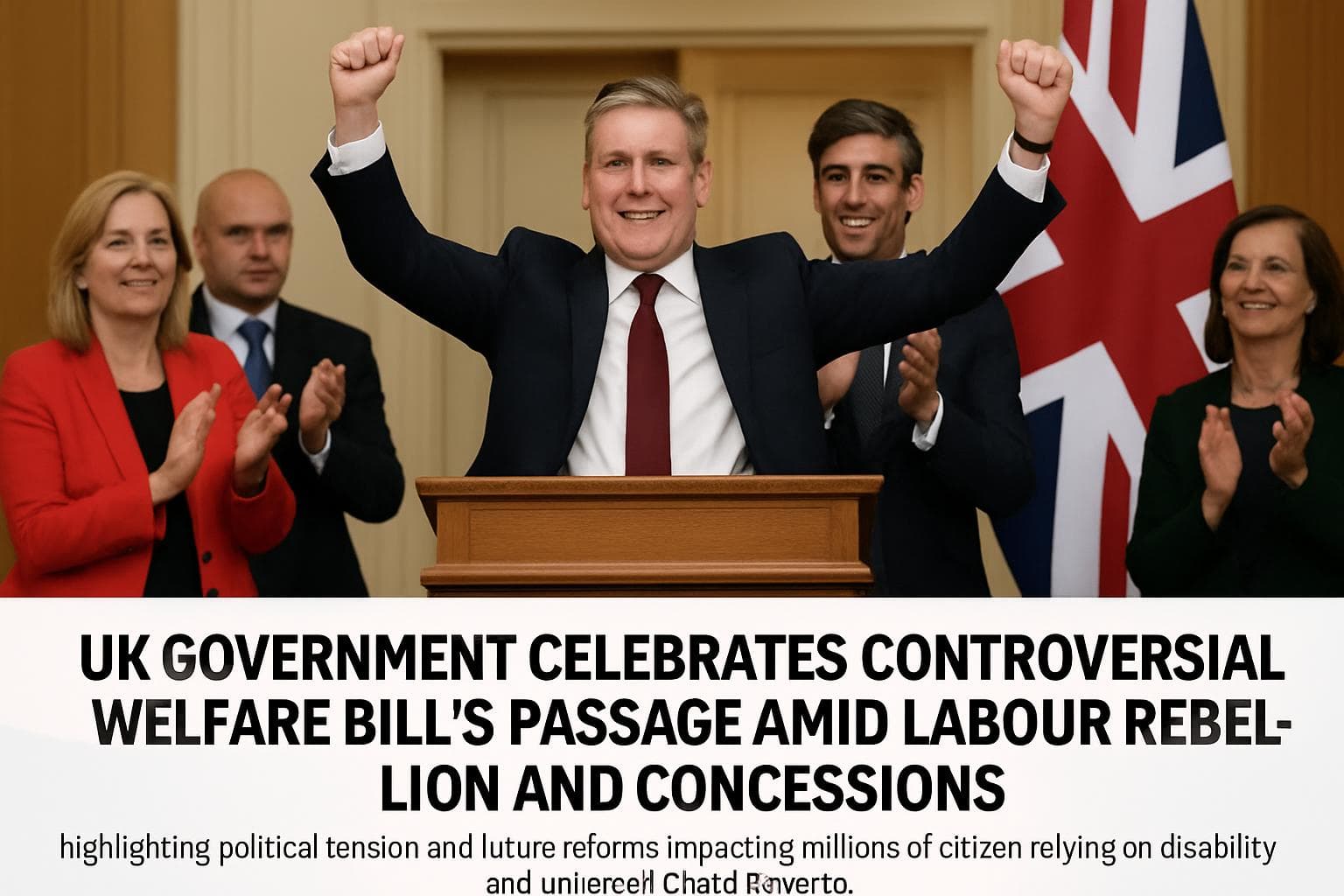
The UK government's controversial welfare bill has cleared the House of Commons, overcoming significant opposition from Labour MPs and prompting further concessions from ministers. The legislation, which includes changes to Universal Credit and Personal Independence Payment (PIP), passed its final reading by 336 votes to 242, despite 47 Labour MPs rebelling against it.
Labour Opposition and Government Concessions
The bill faced fierce resistance from Labour backbenchers, who criticized proposed cuts to disability benefits and their potential impact on vulnerable groups. In response, the government made several concessions, including delaying stricter eligibility rules for new PIP claimants until a review led by Disabilities Minister Stephen Timms is completed. This review will involve a "disability co-production taskforce" to ensure that changes are informed by those directly affected.
Kemi Badenoch's Critique and Conservative Proposals
Meanwhile, Conservative MP Kemi Badenoch has called for tighter restrictions on welfare, particularly targeting foreign nationals claiming disability and sickness benefits. In a speech, she described the benefits bill as a "ticking time bomb" that could threaten the economy, urging for reforms to ensure sustainability. Badenoch's comments highlight ongoing tensions within the Conservative Party over the extent of welfare cuts, with some members arguing for more stringent measures.
Implications for UK Welfare System
The passage of the welfare bill marks a significant step in the government's efforts to reform welfare spending, which is projected to rise by nearly £30 billion by 2030. The changes to Universal Credit are expected to boost the income of nearly four million households by £725 over the next five years. However, the debate over the bill has exposed deep divisions within the UK political landscape, with Labour accusing the Conservatives of failing to support the most vulnerable.
WHAT THIS MIGHT MEAN
As the welfare bill moves closer to becoming law, the government faces the challenge of implementing its provisions while addressing concerns from opposition parties and advocacy groups. The forthcoming review of PIP eligibility rules, led by Stephen Timms, will be crucial in shaping future reforms and ensuring that disability benefits are both fair and sustainable. Politically, the bill's passage may strain relations within the Labour Party, as the rebellion underscores internal disagreements over welfare policy. Looking ahead, the government's approach to welfare reform will likely remain a contentious issue, with potential implications for millions of UK citizens relying on these benefits.
Related Articles

UK-Iran Tensions: Starmer Defends Cautious Approach Amid Trump Criticism
Conservatives Propose Interest Rate Cap on Student Loans Amid Growing Debt Concerns

UK Government's SEND Reforms: A Critical Turning Point for Special Education

UK Government to Reform Asylum Seeker Support and Employment Policies

Middle East Conflict Drives UK Energy Prices to New Highs

Labour MP's Husband Arrested in UK-China Espionage Probe
UK Welfare Bill Passes Amid Labour Rebellion and Government Concessions
In This Article
 Alex Carter| Published
 HIGHLIGHTS
- The UK government's welfare bill, including changes to Universal Credit and Personal Independence Payment (PIP), passed the Commons despite a Labour MPs rebellion.
- Labour MPs opposed the bill due to concerns over cuts to disability benefits and the impact on vulnerable groups.
- The government made concessions, delaying stricter PIP eligibility rules pending a review led by Stephen Timms.
- Kemi Badenoch criticized Labour's handling of welfare reforms, calling for tighter restrictions on foreign nationals claiming benefits.
- The bill's passage marks a significant step in the government's efforts to reform welfare spending, with implications for millions of households.
The UK government's controversial welfare bill has cleared the House of Commons, overcoming significant opposition from Labour MPs and prompting further concessions from ministers. The legislation, which includes changes to Universal Credit and Personal Independence Payment (PIP), passed its final reading by 336 votes to 242, despite 47 Labour MPs rebelling against it.
Labour Opposition and Government Concessions
The bill faced fierce resistance from Labour backbenchers, who criticized proposed cuts to disability benefits and their potential impact on vulnerable groups. In response, the government made several concessions, including delaying stricter eligibility rules for new PIP claimants until a review led by Disabilities Minister Stephen Timms is completed. This review will involve a "disability co-production taskforce" to ensure that changes are informed by those directly affected.
Kemi Badenoch's Critique and Conservative Proposals
Meanwhile, Conservative MP Kemi Badenoch has called for tighter restrictions on welfare, particularly targeting foreign nationals claiming disability and sickness benefits. In a speech, she described the benefits bill as a "ticking time bomb" that could threaten the economy, urging for reforms to ensure sustainability. Badenoch's comments highlight ongoing tensions within the Conservative Party over the extent of welfare cuts, with some members arguing for more stringent measures.
Implications for UK Welfare System
The passage of the welfare bill marks a significant step in the government's efforts to reform welfare spending, which is projected to rise by nearly £30 billion by 2030. The changes to Universal Credit are expected to boost the income of nearly four million households by £725 over the next five years. However, the debate over the bill has exposed deep divisions within the UK political landscape, with Labour accusing the Conservatives of failing to support the most vulnerable.
WHAT THIS MIGHT MEAN
As the welfare bill moves closer to becoming law, the government faces the challenge of implementing its provisions while addressing concerns from opposition parties and advocacy groups. The forthcoming review of PIP eligibility rules, led by Stephen Timms, will be crucial in shaping future reforms and ensuring that disability benefits are both fair and sustainable. Politically, the bill's passage may strain relations within the Labour Party, as the rebellion underscores internal disagreements over welfare policy. Looking ahead, the government's approach to welfare reform will likely remain a contentious issue, with potential implications for millions of UK citizens relying on these benefits.
Related Articles
UK-Iran Tensions: Starmer Defends Cautious Approach Amid Trump Criticism
Conservatives Propose Interest Rate Cap on Student Loans Amid Growing Debt Concerns
UK Government's SEND Reforms: A Critical Turning Point for Special Education
UK Government to Reform Asylum Seeker Support and Employment Policies
Middle East Conflict Drives UK Energy Prices to New Highs
Labour MP's Husband Arrested in UK-China Espionage Probe