
UK Faces High Costs in Nuclear Power Development Amid Calls for Regulatory Overhaul
In This Article
HIGHLIGHTS
- The UK is deemed the most expensive place globally to build nuclear power plants due to complex regulations.
- A government taskforce recommends a regulatory overhaul to cut costs and speed up nuclear projects.
- The report suggests creating a single commission for nuclear regulation to streamline processes.
- Current UK nuclear plants are aging, with new ones needed to meet future energy and net-zero targets.
- The UK aims to triple its nuclear capacity by 2050, aligning with global efforts to reduce carbon emissions.
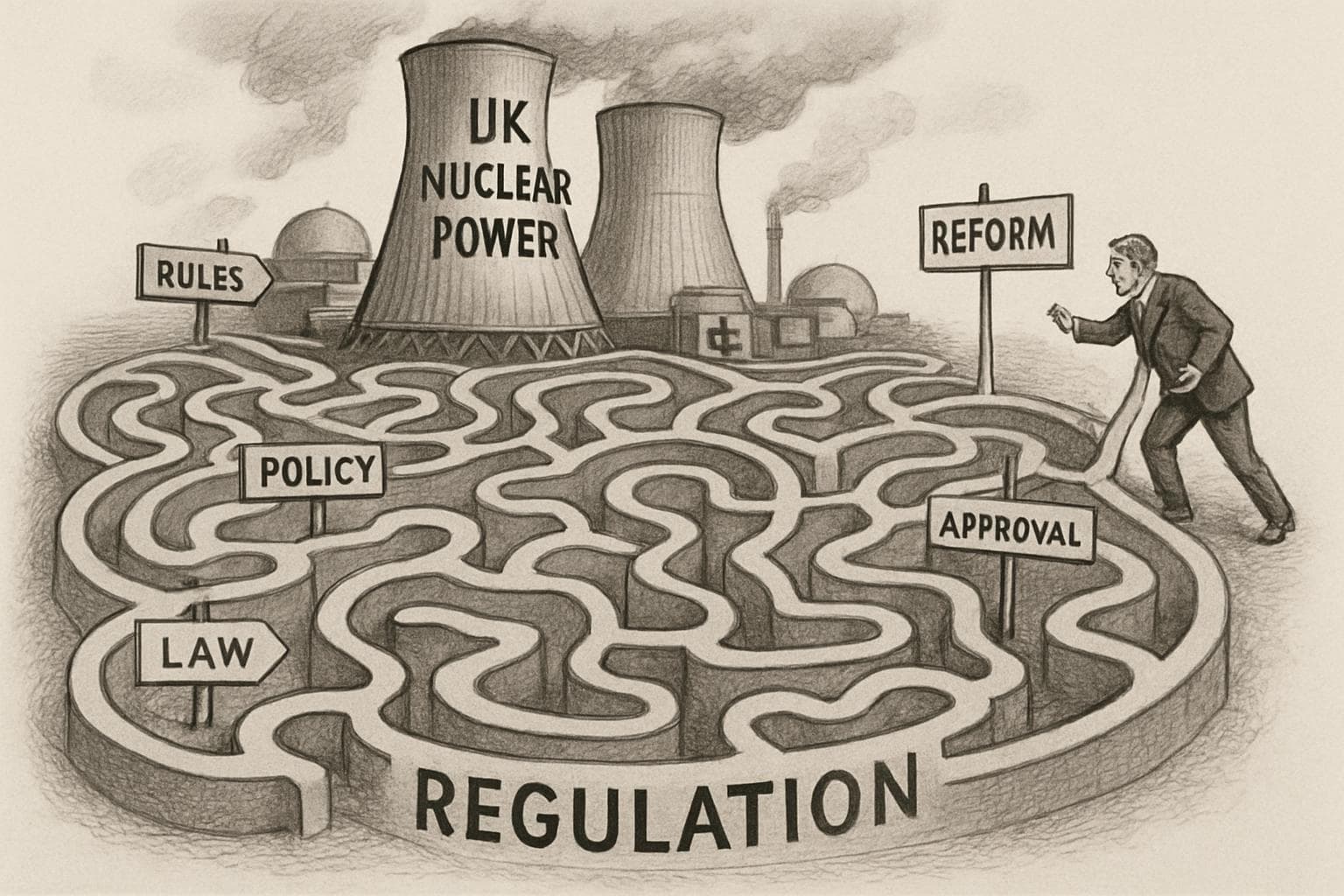
The United Kingdom has been identified as the most expensive country in the world to develop nuclear power plants, according to a recent government review. The report, commissioned by Prime Minister Keir Starmer, criticizes the "overly complex" bureaucracy surrounding the nuclear sector and calls for a comprehensive overhaul of regulations to reduce costs and expedite construction.
Regulatory Challenges and Recommendations
The Nuclear Regulatory Taskforce, led by John Fingleton, has proposed a "radical reset" of the UK's nuclear regulations. The taskforce suggests establishing a "one-stop shop" for nuclear decisions to streamline the planning system and align the UK's risk management with international standards. Fingleton emphasized the need for simplification, stating, "Our solutions are radical, but necessary. By simplifying regulation, we can maintain or enhance safety standards while finally delivering nuclear capacity safely, quickly, and affordably."
The report highlights the fragmented nature of the current regulatory system, which has led to conservative and costly decisions. It also points out that the UK's stringent rules on radiation exposure are more restrictive than those in other sectors, such as healthcare.
Future of UK Nuclear Energy
The UK government is planning to build a new generation of nuclear plants to meet future energy needs and achieve net-zero targets. Hinkley Point C in Somerset is expected to commence operations in the early 2030s, with Sizewell C to follow later in the decade. Additionally, the UK is investing in small modular reactors, which are quicker to construct than traditional reactors.
The taskforce's recommendations have been met with support from industry leaders. Tom Greatrex, CEO of the Nuclear Industry Association, described the report as an "unprecedented opportunity" to make nuclear regulation more coherent and efficient. Sam Richards, CEO of Britain Remade, called it a "watershed moment" for reducing nuclear costs in Britain.
Global Context and Implications
The UK is among 30 countries committed to tripling nuclear capacity by 2050 to cut carbon emissions. Currently, the UK's nuclear power stations, which account for about 15% of its electricity, are aging, with eight out of nine reactors set to shut by 2030. This necessitates the development of new plants, which will take several years to become operational.
Globally, other nations are also expanding their nuclear capabilities. France plans to build at least six new reactors, while China has nearly 30 under construction.
WHAT THIS MIGHT MEAN
The UK government's response to the taskforce's findings, expected later this month, could significantly impact the future of nuclear energy in the country. If the proposed regulatory changes are implemented, they could lower construction costs and accelerate the development of new nuclear plants, contributing to energy security and climate goals.
However, the push for deregulation has raised concerns among civil society groups about potential compromises on safety standards. Balancing cost reduction with safety will be crucial to gaining public and political support for the nuclear expansion. As the UK navigates these challenges, its approach could serve as a model for other countries reassessing their nuclear strategies.
Related Articles

UK Faces Dilemmas Amid Iran Conflict and China Spying Allegations

Labour MP's Husband Arrested in UK-China Espionage Probe

UK-Iran Tensions: Starmer Defends Cautious Approach Amid Trump Criticism

Diplomatic Tensions Rise as Trump Criticizes Starmer's Iran Policy
UK Denies US Use of Military Bases for Potential Iran Strikes Amid Chagos Islands Dispute

Andrew Mountbatten-Windsor Arrested Amid Misconduct Allegations
UK Faces High Costs in Nuclear Power Development Amid Calls for Regulatory Overhaul
In This Article
 Ethan Brooks| Published
 HIGHLIGHTS
- The UK is deemed the most expensive place globally to build nuclear power plants due to complex regulations.
- A government taskforce recommends a regulatory overhaul to cut costs and speed up nuclear projects.
- The report suggests creating a single commission for nuclear regulation to streamline processes.
- Current UK nuclear plants are aging, with new ones needed to meet future energy and net-zero targets.
- The UK aims to triple its nuclear capacity by 2050, aligning with global efforts to reduce carbon emissions.
The United Kingdom has been identified as the most expensive country in the world to develop nuclear power plants, according to a recent government review. The report, commissioned by Prime Minister Keir Starmer, criticizes the "overly complex" bureaucracy surrounding the nuclear sector and calls for a comprehensive overhaul of regulations to reduce costs and expedite construction.
Regulatory Challenges and Recommendations
The Nuclear Regulatory Taskforce, led by John Fingleton, has proposed a "radical reset" of the UK's nuclear regulations. The taskforce suggests establishing a "one-stop shop" for nuclear decisions to streamline the planning system and align the UK's risk management with international standards. Fingleton emphasized the need for simplification, stating, "Our solutions are radical, but necessary. By simplifying regulation, we can maintain or enhance safety standards while finally delivering nuclear capacity safely, quickly, and affordably."
The report highlights the fragmented nature of the current regulatory system, which has led to conservative and costly decisions. It also points out that the UK's stringent rules on radiation exposure are more restrictive than those in other sectors, such as healthcare.
Future of UK Nuclear Energy
The UK government is planning to build a new generation of nuclear plants to meet future energy needs and achieve net-zero targets. Hinkley Point C in Somerset is expected to commence operations in the early 2030s, with Sizewell C to follow later in the decade. Additionally, the UK is investing in small modular reactors, which are quicker to construct than traditional reactors.
The taskforce's recommendations have been met with support from industry leaders. Tom Greatrex, CEO of the Nuclear Industry Association, described the report as an "unprecedented opportunity" to make nuclear regulation more coherent and efficient. Sam Richards, CEO of Britain Remade, called it a "watershed moment" for reducing nuclear costs in Britain.
Global Context and Implications
The UK is among 30 countries committed to tripling nuclear capacity by 2050 to cut carbon emissions. Currently, the UK's nuclear power stations, which account for about 15% of its electricity, are aging, with eight out of nine reactors set to shut by 2030. This necessitates the development of new plants, which will take several years to become operational.
Globally, other nations are also expanding their nuclear capabilities. France plans to build at least six new reactors, while China has nearly 30 under construction.
WHAT THIS MIGHT MEAN
The UK government's response to the taskforce's findings, expected later this month, could significantly impact the future of nuclear energy in the country. If the proposed regulatory changes are implemented, they could lower construction costs and accelerate the development of new nuclear plants, contributing to energy security and climate goals.
However, the push for deregulation has raised concerns among civil society groups about potential compromises on safety standards. Balancing cost reduction with safety will be crucial to gaining public and political support for the nuclear expansion. As the UK navigates these challenges, its approach could serve as a model for other countries reassessing their nuclear strategies.
Related Articles
UK Faces Dilemmas Amid Iran Conflict and China Spying Allegations
Labour MP's Husband Arrested in UK-China Espionage Probe
UK-Iran Tensions: Starmer Defends Cautious Approach Amid Trump Criticism
Diplomatic Tensions Rise as Trump Criticizes Starmer's Iran Policy
UK Denies US Use of Military Bases for Potential Iran Strikes Amid Chagos Islands Dispute
Andrew Mountbatten-Windsor Arrested Amid Misconduct Allegations