
UK's Path to Net Zero: Legal and Policy Challenges Ahead
In This Article
HIGHLIGHTS
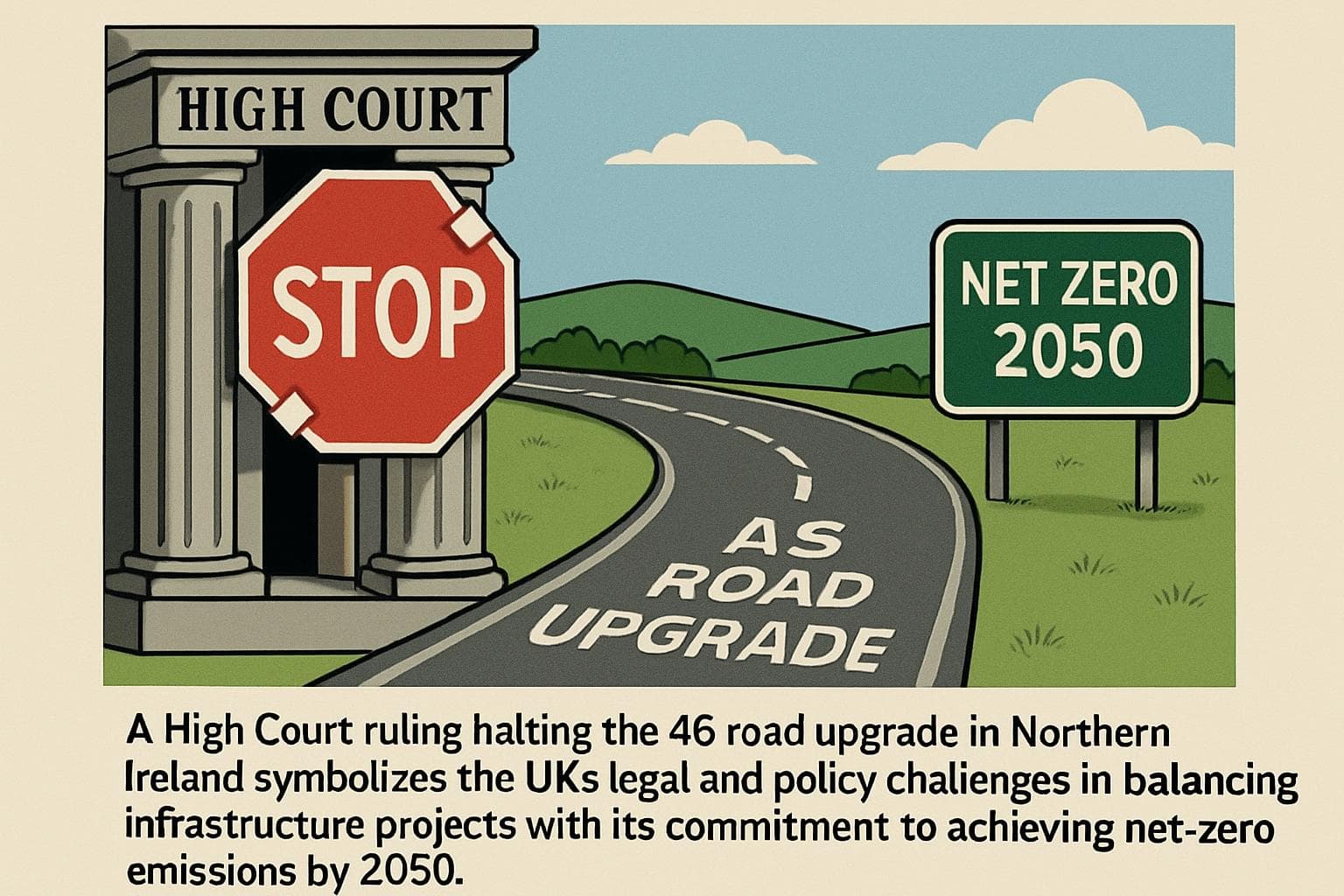
- The High Court blocked the A5 road upgrade due to non-compliance with Northern Ireland's climate change legislation.
- The UK's Climate Change Committee (CCC) reports progress in reaching net zero by 2050, but highlights the need for cheaper electricity.
- Electric vehicle sales have nearly doubled in two years, contributing to reduced transport emissions.
- The CCC emphasizes the economic benefits of achieving net zero, despite political opposition.
- Energy pricing reforms are crucial for the UK to meet its climate targets, according to the CCC.
The UK's journey towards achieving net zero emissions by 2050 faces both legal and policy hurdles, as recent developments highlight the complexities involved in balancing infrastructure projects with climate commitments.
High Court Ruling on A5 Road Project
A recent High Court decision has halted the long-delayed upgrade of the A5 road in Northern Ireland, citing non-compliance with the region's climate change legislation. This ruling underscores the significant impact of the Climate Change Act passed by the Northern Ireland Assembly in 2022, which mandates net-zero greenhouse gas emissions by 2050. Mr. Justice McAlinden found that the Department for Infrastructure failed to provide robust evidence that the project aligns with climate targets, relying instead on "aspirational assumptions." The judgement suggests that future infrastructure projects must demonstrate clear compliance with climate laws, potentially requiring revisions or trade-offs with other schemes.
Progress and Challenges in the UK's Climate Goals
Meanwhile, the UK's independent Climate Change Committee (CCC) has expressed optimism about meeting the country's net zero targets by 2050. The CCC's annual progress report highlights significant advancements, such as the near doubling of electric vehicle sales over the past two years, which has helped reduce transport emissions. However, the report also stresses the need for policy reforms, particularly in energy pricing, to make electricity cheaper and more competitive with gas. Piers Forster, chair of the CCC, emphasized the potential economic benefits of achieving net zero, countering claims that it would harm the economy.
Political and Economic Implications
Despite progress, the UK's net zero target faces political opposition, with some leaders questioning its feasibility. Conservative leader Kemi Badenoch has labeled the target "impossible," while the Reform party has criticized it as "net stupid zero." Nonetheless, the CCC maintains that the target is achievable and economically beneficial in the long term. The committee also notes that recent policy changes, such as lifting the ban on onshore windfarms, have brought the UK closer to its climate goals.
WHAT THIS MIGHT MEAN
Looking ahead, the UK's path to net zero will require careful navigation of legal and political landscapes. The High Court's ruling on the A5 project may set a precedent for future infrastructure developments, necessitating greater coordination among government departments to ensure compliance with climate laws. On the policy front, energy pricing reforms will be crucial to incentivize the transition to cleaner technologies. As the UK continues to grapple with these challenges, the CCC's optimistic outlook suggests that with the right policies and political will, the country can achieve its climate targets and reap the associated economic benefits.
Related Articles

Breakthrough Drug Offers Hope for Children with Severe Epilepsy

UK-Iran Tensions: Starmer Defends Cautious Approach Amid Trump Criticism

Saharan Dust to Illuminate UK Skies with Vivid Sunrises and Sunsets
Tragedy Strikes County Armagh: Three Dead in Multi-Vehicle Collision
Conservatives Propose Interest Rate Cap on Student Loans Amid Growing Debt Concerns

Trump Raises Import Tariffs to 15% After Supreme Court Setback
UK's Path to Net Zero: Legal and Policy Challenges Ahead
In This Article
 Leila Hassan| Published
 HIGHLIGHTS
- The High Court blocked the A5 road upgrade due to non-compliance with Northern Ireland's climate change legislation.
- The UK's Climate Change Committee (CCC) reports progress in reaching net zero by 2050, but highlights the need for cheaper electricity.
- Electric vehicle sales have nearly doubled in two years, contributing to reduced transport emissions.
- The CCC emphasizes the economic benefits of achieving net zero, despite political opposition.
- Energy pricing reforms are crucial for the UK to meet its climate targets, according to the CCC.
The UK's journey towards achieving net zero emissions by 2050 faces both legal and policy hurdles, as recent developments highlight the complexities involved in balancing infrastructure projects with climate commitments.
High Court Ruling on A5 Road Project
A recent High Court decision has halted the long-delayed upgrade of the A5 road in Northern Ireland, citing non-compliance with the region's climate change legislation. This ruling underscores the significant impact of the Climate Change Act passed by the Northern Ireland Assembly in 2022, which mandates net-zero greenhouse gas emissions by 2050. Mr. Justice McAlinden found that the Department for Infrastructure failed to provide robust evidence that the project aligns with climate targets, relying instead on "aspirational assumptions." The judgement suggests that future infrastructure projects must demonstrate clear compliance with climate laws, potentially requiring revisions or trade-offs with other schemes.
Progress and Challenges in the UK's Climate Goals
Meanwhile, the UK's independent Climate Change Committee (CCC) has expressed optimism about meeting the country's net zero targets by 2050. The CCC's annual progress report highlights significant advancements, such as the near doubling of electric vehicle sales over the past two years, which has helped reduce transport emissions. However, the report also stresses the need for policy reforms, particularly in energy pricing, to make electricity cheaper and more competitive with gas. Piers Forster, chair of the CCC, emphasized the potential economic benefits of achieving net zero, countering claims that it would harm the economy.
Political and Economic Implications
Despite progress, the UK's net zero target faces political opposition, with some leaders questioning its feasibility. Conservative leader Kemi Badenoch has labeled the target "impossible," while the Reform party has criticized it as "net stupid zero." Nonetheless, the CCC maintains that the target is achievable and economically beneficial in the long term. The committee also notes that recent policy changes, such as lifting the ban on onshore windfarms, have brought the UK closer to its climate goals.
WHAT THIS MIGHT MEAN
Looking ahead, the UK's path to net zero will require careful navigation of legal and political landscapes. The High Court's ruling on the A5 project may set a precedent for future infrastructure developments, necessitating greater coordination among government departments to ensure compliance with climate laws. On the policy front, energy pricing reforms will be crucial to incentivize the transition to cleaner technologies. As the UK continues to grapple with these challenges, the CCC's optimistic outlook suggests that with the right policies and political will, the country can achieve its climate targets and reap the associated economic benefits.
Related Articles
Breakthrough Drug Offers Hope for Children with Severe Epilepsy
UK-Iran Tensions: Starmer Defends Cautious Approach Amid Trump Criticism
Saharan Dust to Illuminate UK Skies with Vivid Sunrises and Sunsets
Tragedy Strikes County Armagh: Three Dead in Multi-Vehicle Collision
Conservatives Propose Interest Rate Cap on Student Loans Amid Growing Debt Concerns
Trump Raises Import Tariffs to 15% After Supreme Court Setback