
UK Unveils New Trade Strategy to Protect Domestic Firms and Boost Exports
In This Article
HIGHLIGHTS
- The UK government plans to unveil a new trade strategy aimed at boosting exports and protecting domestic firms from cheap imports.
- Business Secretary Jonathan Reynolds emphasizes the need for agile trade deals, focusing on sectors driving economic growth.
- Concerns arise over potential influxes of Chinese-made cars and steel, as current safeguards are set to expire in 2026.
- The strategy marks a shift from major trade deals to more targeted agreements, such as recognizing foreign professional qualifications.
- Criticism persists over the use of the "de minimis" rule, which some argue gives overseas firms an unfair advantage over British businesses.
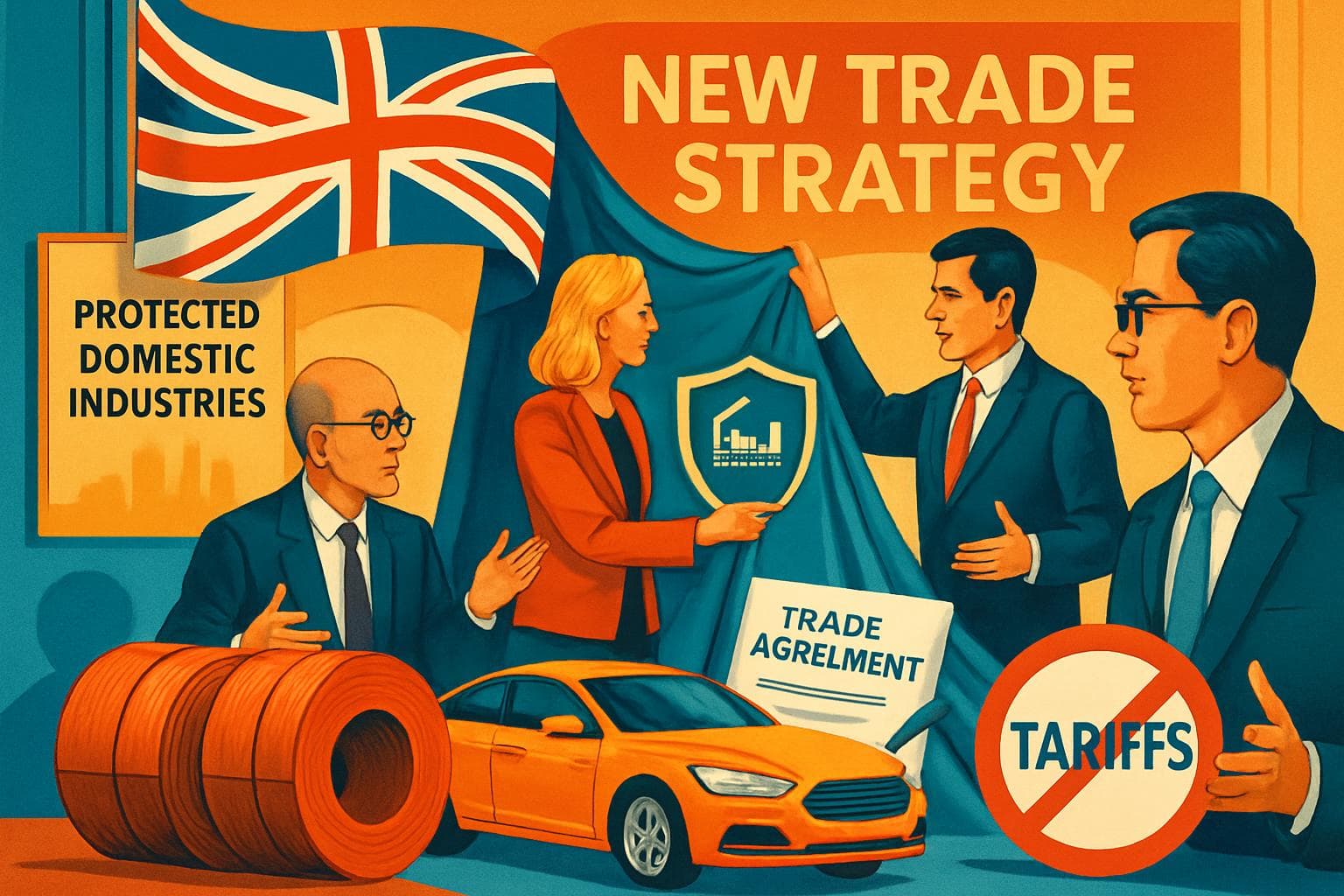
The UK government is set to reveal a comprehensive trade strategy designed to enhance exports and shield domestic businesses from the threat of cheap imports. This initiative comes amid growing concerns about the impact of US tariffs and the potential diversion of goods originally destined for American markets.
A Shift in Trade Focus
Business Secretary Jonathan Reynolds announced that the new strategy will prioritize more agile and targeted trade agreements, moving away from the pursuit of broad free trade deals. This approach aims to exploit sectors that drive significant economic growth, such as services, while maintaining the UK's open trading stance in the face of new geopolitical realities.
Protecting Key Industries
A central concern for the UK is the potential influx of Chinese-made cars and steel, as current safeguards against such imports are due to expire in 2026. Unlike the EU, the UK has not imposed high tariffs on Chinese electric vehicles, raising fears about the competitive landscape for domestic sellers. The government plans to bolster trade defenses to protect industries like steel and automotive from being undercut by cheaper foreign products.
Addressing Trade Barriers
The strategy also includes measures to reduce trade barriers, such as recognizing foreign professional qualifications, which could benefit the UK's services sector. The government highlights recent successes, including a free trade agreement with India, despite criticism over concessions made during negotiations.
Concerns Over Tax Loopholes
Andrew Opie of the British Retail Consortium has raised concerns about the "de minimis" rule, which allows low-value packages to enter the UK tax-free. This rule, intended for personal consumer use, has been exploited by some businesses to avoid taxes, giving overseas firms an unfair edge over British companies. Opie calls for swift action to address these loopholes, which pose risks to both consumers and retailers.
WHAT THIS MIGHT MEAN
The unveiling of the UK's new trade strategy signals a significant shift in post-Brexit trade policy, focusing on more targeted agreements rather than expansive free trade deals. This approach could lead to quicker, more flexible negotiations that align with the UK's national interests. However, the expiration of current safeguards against cheap imports poses a challenge, particularly for industries like steel and automotive. The government may need to implement new protective measures to prevent market disruption.
Additionally, addressing the "de minimis" rule could level the playing field for British businesses, but it requires careful consideration to avoid unintended consequences for consumers. As the UK navigates these complex trade dynamics, the success of its strategy will depend on balancing protectionism with the need for open and competitive markets.
Related Articles
Trump's New Tariff Strategy Sparks Global Trade Uncertainty

Tech Giants Pledge to Cover AI Data Center Energy Costs Amid Rising Electricity Concerns

Middle East Conflict Drives UK Energy Prices to New Highs
US Supreme Court Ruling Sparks Trade Uncertainty in Asia and Beyond

Canada and Australia Forge Strategic Partnership Amid Global Uncertainty

US and Israel Intensify Military Campaign as Iran's Capabilities Dwindle
UK Unveils New Trade Strategy to Protect Domestic Firms and Boost Exports
In This Article
 Daniel Rivera| Published
 HIGHLIGHTS
- The UK government plans to unveil a new trade strategy aimed at boosting exports and protecting domestic firms from cheap imports.
- Business Secretary Jonathan Reynolds emphasizes the need for agile trade deals, focusing on sectors driving economic growth.
- Concerns arise over potential influxes of Chinese-made cars and steel, as current safeguards are set to expire in 2026.
- The strategy marks a shift from major trade deals to more targeted agreements, such as recognizing foreign professional qualifications.
- Criticism persists over the use of the "de minimis" rule, which some argue gives overseas firms an unfair advantage over British businesses.
The UK government is set to reveal a comprehensive trade strategy designed to enhance exports and shield domestic businesses from the threat of cheap imports. This initiative comes amid growing concerns about the impact of US tariffs and the potential diversion of goods originally destined for American markets.
A Shift in Trade Focus
Business Secretary Jonathan Reynolds announced that the new strategy will prioritize more agile and targeted trade agreements, moving away from the pursuit of broad free trade deals. This approach aims to exploit sectors that drive significant economic growth, such as services, while maintaining the UK's open trading stance in the face of new geopolitical realities.
Protecting Key Industries
A central concern for the UK is the potential influx of Chinese-made cars and steel, as current safeguards against such imports are due to expire in 2026. Unlike the EU, the UK has not imposed high tariffs on Chinese electric vehicles, raising fears about the competitive landscape for domestic sellers. The government plans to bolster trade defenses to protect industries like steel and automotive from being undercut by cheaper foreign products.
Addressing Trade Barriers
The strategy also includes measures to reduce trade barriers, such as recognizing foreign professional qualifications, which could benefit the UK's services sector. The government highlights recent successes, including a free trade agreement with India, despite criticism over concessions made during negotiations.
Concerns Over Tax Loopholes
Andrew Opie of the British Retail Consortium has raised concerns about the "de minimis" rule, which allows low-value packages to enter the UK tax-free. This rule, intended for personal consumer use, has been exploited by some businesses to avoid taxes, giving overseas firms an unfair edge over British companies. Opie calls for swift action to address these loopholes, which pose risks to both consumers and retailers.
WHAT THIS MIGHT MEAN
The unveiling of the UK's new trade strategy signals a significant shift in post-Brexit trade policy, focusing on more targeted agreements rather than expansive free trade deals. This approach could lead to quicker, more flexible negotiations that align with the UK's national interests. However, the expiration of current safeguards against cheap imports poses a challenge, particularly for industries like steel and automotive. The government may need to implement new protective measures to prevent market disruption.
Additionally, addressing the "de minimis" rule could level the playing field for British businesses, but it requires careful consideration to avoid unintended consequences for consumers. As the UK navigates these complex trade dynamics, the success of its strategy will depend on balancing protectionism with the need for open and competitive markets.
Related Articles
Trump's New Tariff Strategy Sparks Global Trade Uncertainty
Tech Giants Pledge to Cover AI Data Center Energy Costs Amid Rising Electricity Concerns
Middle East Conflict Drives UK Energy Prices to New Highs
US Supreme Court Ruling Sparks Trade Uncertainty in Asia and Beyond
Canada and Australia Forge Strategic Partnership Amid Global Uncertainty
US and Israel Intensify Military Campaign as Iran's Capabilities Dwindle