
Air India Crash Investigation Intensifies as Key Evidence Recovered
In This Article
HIGHLIGHTS
- Investigators have recovered the cockpit voice recorder from the Air India crash site, crucial for understanding the cause of the accident.
- The crash of the Boeing 787-8 Dreamliner in Ahmedabad resulted in at least 270 fatalities, with only one survivor among the passengers and crew.
- India's Aircraft Accident Investigation Bureau is leading the probe, with assistance from US and UK teams, focusing on potential engine and mechanical failures.
- DNA identification is ongoing to confirm the identities of victims, with 90 bodies identified so far.
- Vigils have been held in India and the UK, as families await answers and the return of their loved ones' remains.
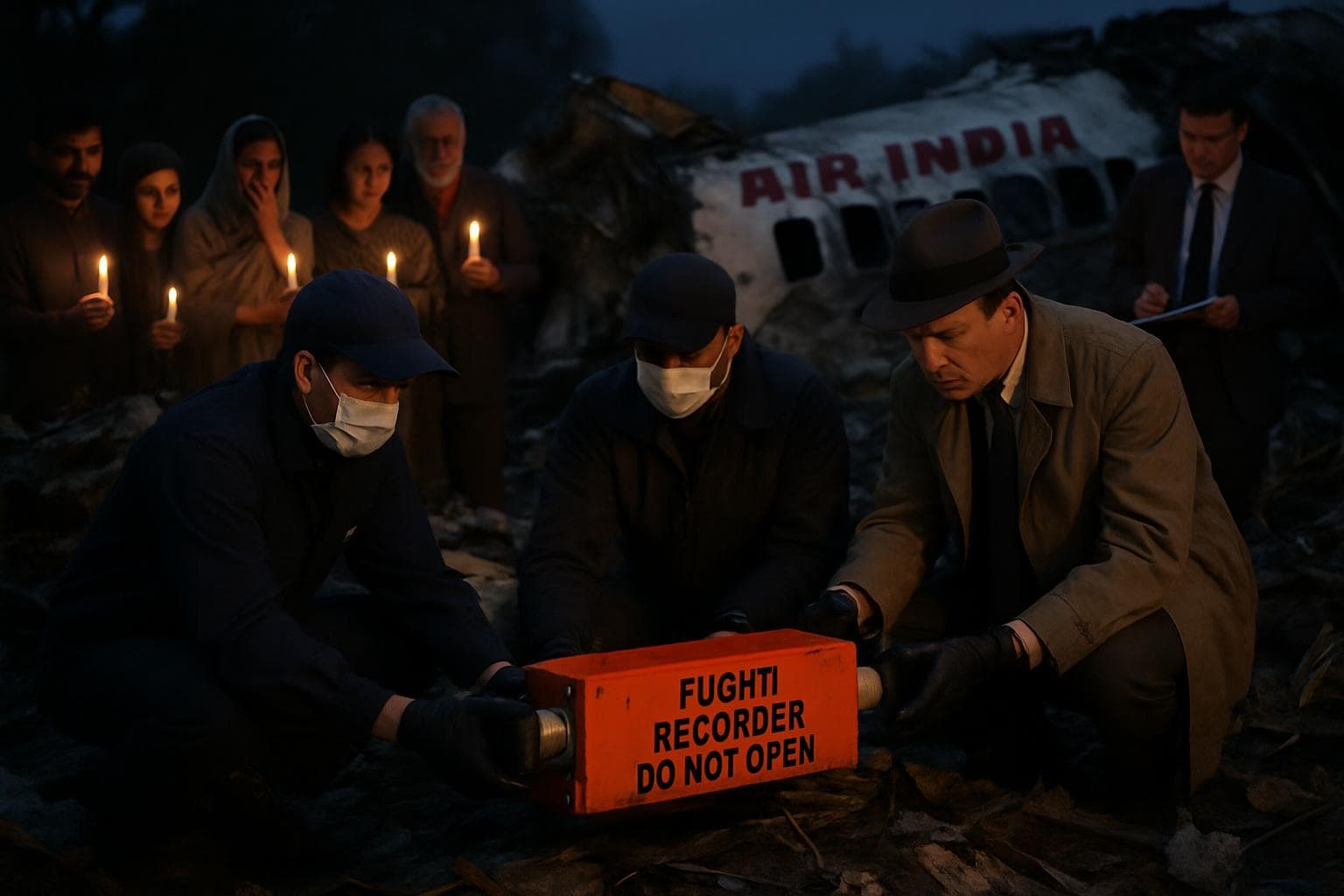
Investigators have made significant progress in the probe into last week's catastrophic Air India crash by recovering the cockpit voice recorder (CVR), a pivotal element in piecing together the tragic sequence of events. The London-bound Boeing 787-8 Dreamliner, operating as flight AI171, crashed shortly after take-off from Ahmedabad, claiming the lives of at least 270 individuals, with only one passenger surviving the ordeal.
Investigation Underway
The recovery of the CVR, alongside the flight data recorder (FDR), marks a crucial step in the investigation led by India's Aircraft Accident Investigation Bureau (AAIB). These devices, collectively known as the "black box," are essential in reconstructing the flight's final moments. The AAIB is collaborating with teams from the US and UK, focusing on potential mechanical failures, including engine issues and problems with the wing flaps and landing gear.
Human Impact and Response
The crash has left a profound impact on families and communities, both in India and abroad. Vigils have been held, including a significant gathering outside the Indian High Commission in London, where mourners laid candles in memory of the deceased. The painstaking process of DNA identification continues, with over 90 victims identified so far, as families endure an agonizing wait for closure.
Government and Regulatory Actions
In response to the disaster, India's Directorate General of Civil Aviation (DGCA) has mandated additional safety checks on Air India's fleet of Boeing 787-8 and 787-9 aircraft. Meanwhile, a high-level committee established by the Indian government is set to meet, aiming to propose new standard operating procedures to prevent future incidents.
Community and Leadership Reactions
Indian Prime Minister Narendra Modi visited the crash site and met with the sole survivor, expressing the nation's collective grief and support. Air India CEO Campbell Wilson described his visit to the site as "deeply moving," underscoring the airline's commitment to uncovering the truth behind the tragedy.
WHAT THIS MIGHT MEAN
As the investigation progresses, the focus will likely remain on technical and mechanical factors that could have contributed to the crash. The findings from the black box analysis will be pivotal in shaping future aviation safety protocols. The international collaboration in the investigation underscores the global implications of such incidents, potentially influencing regulatory practices worldwide. Families and communities affected by the tragedy will continue to seek answers and justice, while the aviation industry may face increased scrutiny and calls for enhanced safety measures.
Related Articles

Canada Calls for De-escalation Amid US-Israel Strikes on Iran

Google Faces Legal Battle Over AI Chatbot's Alleged Role in Tragic Death
Iran Postpones Khamenei Funeral Amid Escalating US-Israeli Strikes

China Sets Lowest GDP Growth Target in Decades Amid Economic Challenges

Breakthrough Drug Offers Hope for Children with Severe Epilepsy

Cuba Faces Widespread Blackout Amid Deepening Fuel Crisis
Air India Crash Investigation Intensifies as Key Evidence Recovered
In This Article
 Himanshu Kaushik| Published
 HIGHLIGHTS
- Investigators have recovered the cockpit voice recorder from the Air India crash site, crucial for understanding the cause of the accident.
- The crash of the Boeing 787-8 Dreamliner in Ahmedabad resulted in at least 270 fatalities, with only one survivor among the passengers and crew.
- India's Aircraft Accident Investigation Bureau is leading the probe, with assistance from US and UK teams, focusing on potential engine and mechanical failures.
- DNA identification is ongoing to confirm the identities of victims, with 90 bodies identified so far.
- Vigils have been held in India and the UK, as families await answers and the return of their loved ones' remains.
Investigators have made significant progress in the probe into last week's catastrophic Air India crash by recovering the cockpit voice recorder (CVR), a pivotal element in piecing together the tragic sequence of events. The London-bound Boeing 787-8 Dreamliner, operating as flight AI171, crashed shortly after take-off from Ahmedabad, claiming the lives of at least 270 individuals, with only one passenger surviving the ordeal.
Investigation Underway
The recovery of the CVR, alongside the flight data recorder (FDR), marks a crucial step in the investigation led by India's Aircraft Accident Investigation Bureau (AAIB). These devices, collectively known as the "black box," are essential in reconstructing the flight's final moments. The AAIB is collaborating with teams from the US and UK, focusing on potential mechanical failures, including engine issues and problems with the wing flaps and landing gear.
Human Impact and Response
The crash has left a profound impact on families and communities, both in India and abroad. Vigils have been held, including a significant gathering outside the Indian High Commission in London, where mourners laid candles in memory of the deceased. The painstaking process of DNA identification continues, with over 90 victims identified so far, as families endure an agonizing wait for closure.
Government and Regulatory Actions
In response to the disaster, India's Directorate General of Civil Aviation (DGCA) has mandated additional safety checks on Air India's fleet of Boeing 787-8 and 787-9 aircraft. Meanwhile, a high-level committee established by the Indian government is set to meet, aiming to propose new standard operating procedures to prevent future incidents.
Community and Leadership Reactions
Indian Prime Minister Narendra Modi visited the crash site and met with the sole survivor, expressing the nation's collective grief and support. Air India CEO Campbell Wilson described his visit to the site as "deeply moving," underscoring the airline's commitment to uncovering the truth behind the tragedy.
WHAT THIS MIGHT MEAN
As the investigation progresses, the focus will likely remain on technical and mechanical factors that could have contributed to the crash. The findings from the black box analysis will be pivotal in shaping future aviation safety protocols. The international collaboration in the investigation underscores the global implications of such incidents, potentially influencing regulatory practices worldwide. Families and communities affected by the tragedy will continue to seek answers and justice, while the aviation industry may face increased scrutiny and calls for enhanced safety measures.
Related Articles
Canada Calls for De-escalation Amid US-Israel Strikes on Iran
Google Faces Legal Battle Over AI Chatbot's Alleged Role in Tragic Death
Iran Postpones Khamenei Funeral Amid Escalating US-Israeli Strikes
China Sets Lowest GDP Growth Target in Decades Amid Economic Challenges
Breakthrough Drug Offers Hope for Children with Severe Epilepsy
Cuba Faces Widespread Blackout Amid Deepening Fuel Crisis