
Rising Tensions: Arrests and Clashes at Anti-Asylum Protests Across England
In This Article
HIGHLIGHTS
- Four arrests were made during an anti-asylum protest in Canary Wharf, with charges including assault and public order offences.
- A police officer was punched but did not sustain significant injuries during the Canary Wharf demonstration.
- In Epping, three individuals were arrested during protests against asylum seekers being housed at The Bell Hotel.
- Protests across England, including in Falkirk and Epping, have seen arrests related to breaches of peace and inciting racial hatred.
- Dispersal orders and Section 60 AA orders were implemented to manage protest activities and prevent masked individuals from concealing their identities.
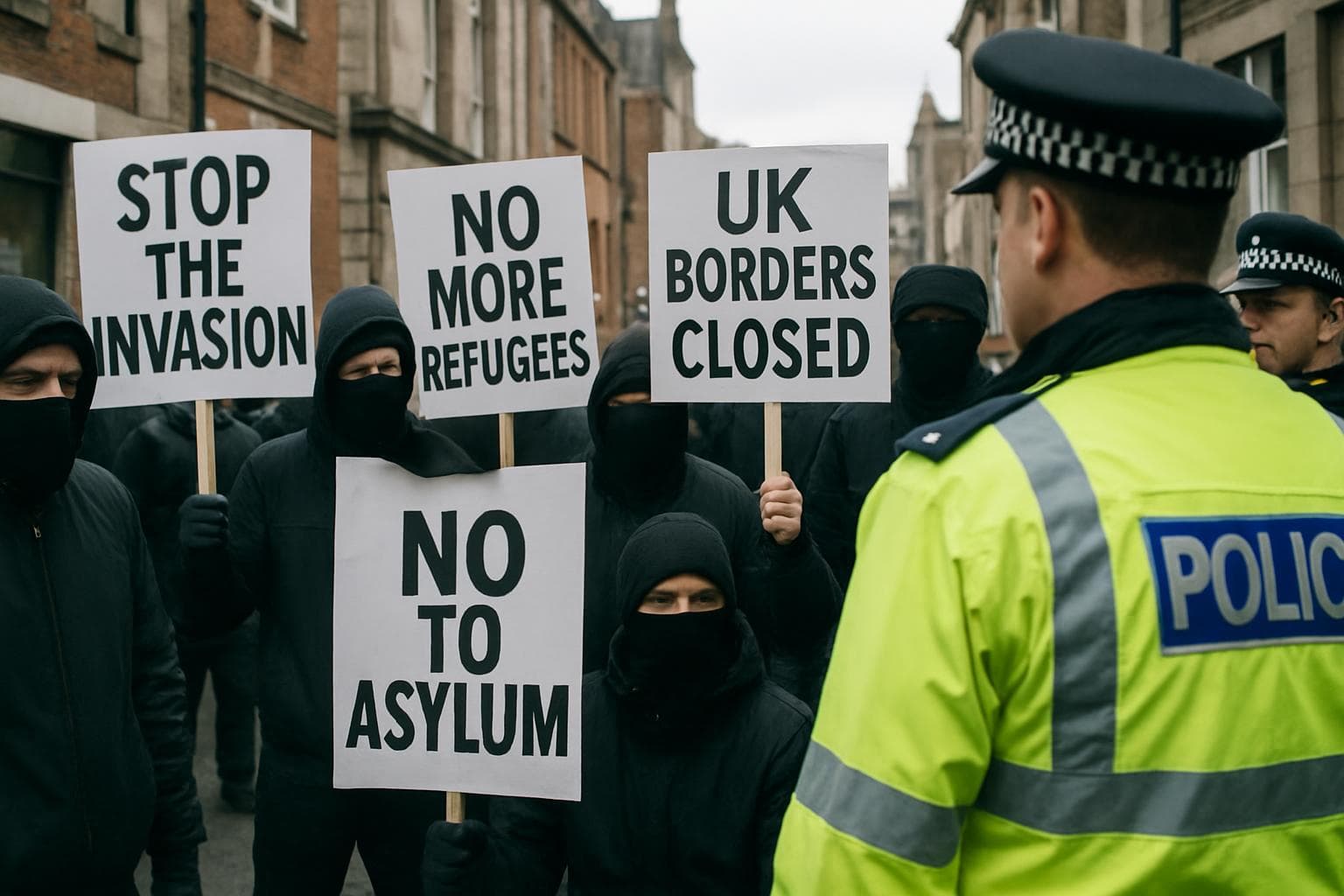
Protests against the housing of asylum seekers in hotels have sparked a series of arrests and confrontations across England, highlighting the growing tensions surrounding immigration policies. Demonstrations in Canary Wharf, Epping, and Falkirk have seen police intervention and the implementation of legal measures to maintain order.
Canary Wharf Unrest
On Sunday, a protest in Canary Wharf, East London, led to the arrest of four individuals on charges including common assault, possession of drugs, and public order offences. The Metropolitan Police reported that a police officer was punched during the demonstration, although the officer did not suffer significant injuries. The protest, which involved 50 to 100 participants, began peacefully on the Isle of Dogs but escalated when some masked protesters entered the Canary Wharf Shopping Centre and became aggressive. In response, police issued a Section 60 AA order to prevent individuals from concealing their identities with masks and a Section 35 dispersal order to direct protesters to leave the area.
Epping Protests and Legal Measures
In Epping, Essex, protests against asylum seekers being housed at The Bell Hotel resulted in three arrests. The demonstration, which saw around 200 participants, was marked by the arrest of a man on suspicion of inciting racial hatred after an emblem was reportedly set alight. A woman and another man were detained for breaching protest orders. Essex Police enforced a dispersal order and a Section 14 order to manage the protest, which required demonstrators to remain in designated areas. The Bell Hotel has become a focal point for protests following the Court of Appeal's decision to overturn an injunction preventing asylum seekers from being housed there.
Falkirk Demonstrations
In Falkirk, Scotland, recent protests outside a hotel housing asylum seekers led to the arrest of three individuals. Police Scotland reported that a 54-year-old man was arrested on an outstanding warrant, while another man faced charges for a breach of the peace. A third individual was charged for displaying an offensive banner during a protest on August 16. Chief Superintendent Stevie Dolan emphasized the importance of proportionate policing to ensure public safety and minimize disruption.
WHAT THIS MIGHT MEAN
The recent wave of protests against asylum seeker housing in the UK underscores the contentious nature of immigration policies. As tensions rise, authorities may continue to implement legal measures such as dispersal orders and Section 60 AA orders to manage protests and prevent disorder. The ongoing legal proceedings related to the housing of asylum seekers at The Bell Hotel in Epping could further influence public sentiment and protest activities. Experts suggest that a balanced approach, addressing both community concerns and the rights of asylum seekers, is crucial to mitigating unrest and fostering dialogue. As the situation develops, the government may face increasing pressure to review and potentially revise its immigration policies to address the root causes of public discontent.
Related Articles
UK Police Intensify Investigation into Andrew Mountbatten-Windsor Amid Misconduct Allegations
Prince Andrew's Arrest Raises Questions About Royal Succession and Monarchy's Future

Crackdown on Waste Crime: £1.2 Million Fine and New Drone Unit to Combat Illegal Dumping

Saharan Dust to Illuminate UK Skies with Vivid Sunrises and Sunsets

Labour MP's Husband Arrested in UK-China Espionage Probe

Government Announces £4 Billion Overhaul of SEND Support in England
Rising Tensions: Arrests and Clashes at Anti-Asylum Protests Across England
In This Article
 Sofia Romano| Published
 HIGHLIGHTS
- Four arrests were made during an anti-asylum protest in Canary Wharf, with charges including assault and public order offences.
- A police officer was punched but did not sustain significant injuries during the Canary Wharf demonstration.
- In Epping, three individuals were arrested during protests against asylum seekers being housed at The Bell Hotel.
- Protests across England, including in Falkirk and Epping, have seen arrests related to breaches of peace and inciting racial hatred.
- Dispersal orders and Section 60 AA orders were implemented to manage protest activities and prevent masked individuals from concealing their identities.
Protests against the housing of asylum seekers in hotels have sparked a series of arrests and confrontations across England, highlighting the growing tensions surrounding immigration policies. Demonstrations in Canary Wharf, Epping, and Falkirk have seen police intervention and the implementation of legal measures to maintain order.
Canary Wharf Unrest
On Sunday, a protest in Canary Wharf, East London, led to the arrest of four individuals on charges including common assault, possession of drugs, and public order offences. The Metropolitan Police reported that a police officer was punched during the demonstration, although the officer did not suffer significant injuries. The protest, which involved 50 to 100 participants, began peacefully on the Isle of Dogs but escalated when some masked protesters entered the Canary Wharf Shopping Centre and became aggressive. In response, police issued a Section 60 AA order to prevent individuals from concealing their identities with masks and a Section 35 dispersal order to direct protesters to leave the area.
Epping Protests and Legal Measures
In Epping, Essex, protests against asylum seekers being housed at The Bell Hotel resulted in three arrests. The demonstration, which saw around 200 participants, was marked by the arrest of a man on suspicion of inciting racial hatred after an emblem was reportedly set alight. A woman and another man were detained for breaching protest orders. Essex Police enforced a dispersal order and a Section 14 order to manage the protest, which required demonstrators to remain in designated areas. The Bell Hotel has become a focal point for protests following the Court of Appeal's decision to overturn an injunction preventing asylum seekers from being housed there.
Falkirk Demonstrations
In Falkirk, Scotland, recent protests outside a hotel housing asylum seekers led to the arrest of three individuals. Police Scotland reported that a 54-year-old man was arrested on an outstanding warrant, while another man faced charges for a breach of the peace. A third individual was charged for displaying an offensive banner during a protest on August 16. Chief Superintendent Stevie Dolan emphasized the importance of proportionate policing to ensure public safety and minimize disruption.
WHAT THIS MIGHT MEAN
The recent wave of protests against asylum seeker housing in the UK underscores the contentious nature of immigration policies. As tensions rise, authorities may continue to implement legal measures such as dispersal orders and Section 60 AA orders to manage protests and prevent disorder. The ongoing legal proceedings related to the housing of asylum seekers at The Bell Hotel in Epping could further influence public sentiment and protest activities. Experts suggest that a balanced approach, addressing both community concerns and the rights of asylum seekers, is crucial to mitigating unrest and fostering dialogue. As the situation develops, the government may face increasing pressure to review and potentially revise its immigration policies to address the root causes of public discontent.
Related Articles
UK Police Intensify Investigation into Andrew Mountbatten-Windsor Amid Misconduct Allegations
Prince Andrew's Arrest Raises Questions About Royal Succession and Monarchy's Future
Crackdown on Waste Crime: £1.2 Million Fine and New Drone Unit to Combat Illegal Dumping
Saharan Dust to Illuminate UK Skies with Vivid Sunrises and Sunsets
Labour MP's Husband Arrested in UK-China Espionage Probe
Government Announces £4 Billion Overhaul of SEND Support in England