
Assisted Dying Bill Faces Delays Amidst Controversial Amendments in the House of Lords
In This Article
HIGHLIGHTS
- The Terminally Ill Adults (End of Life) Bill, introduced by MP Kim Leadbeater, aims to legalize assisted dying in England and Wales.
- The bill has passed the House of Commons but faces over 1,000 amendments in the House of Lords, causing significant delays.
- Supporters argue that the amendments are a tactic to block the bill, while opponents claim they are necessary for safety.
- The bill must be agreed upon by both Houses before the current parliamentary session ends next spring.
- Public support for the bill is high, but its future remains uncertain due to the extensive scrutiny and proposed changes.
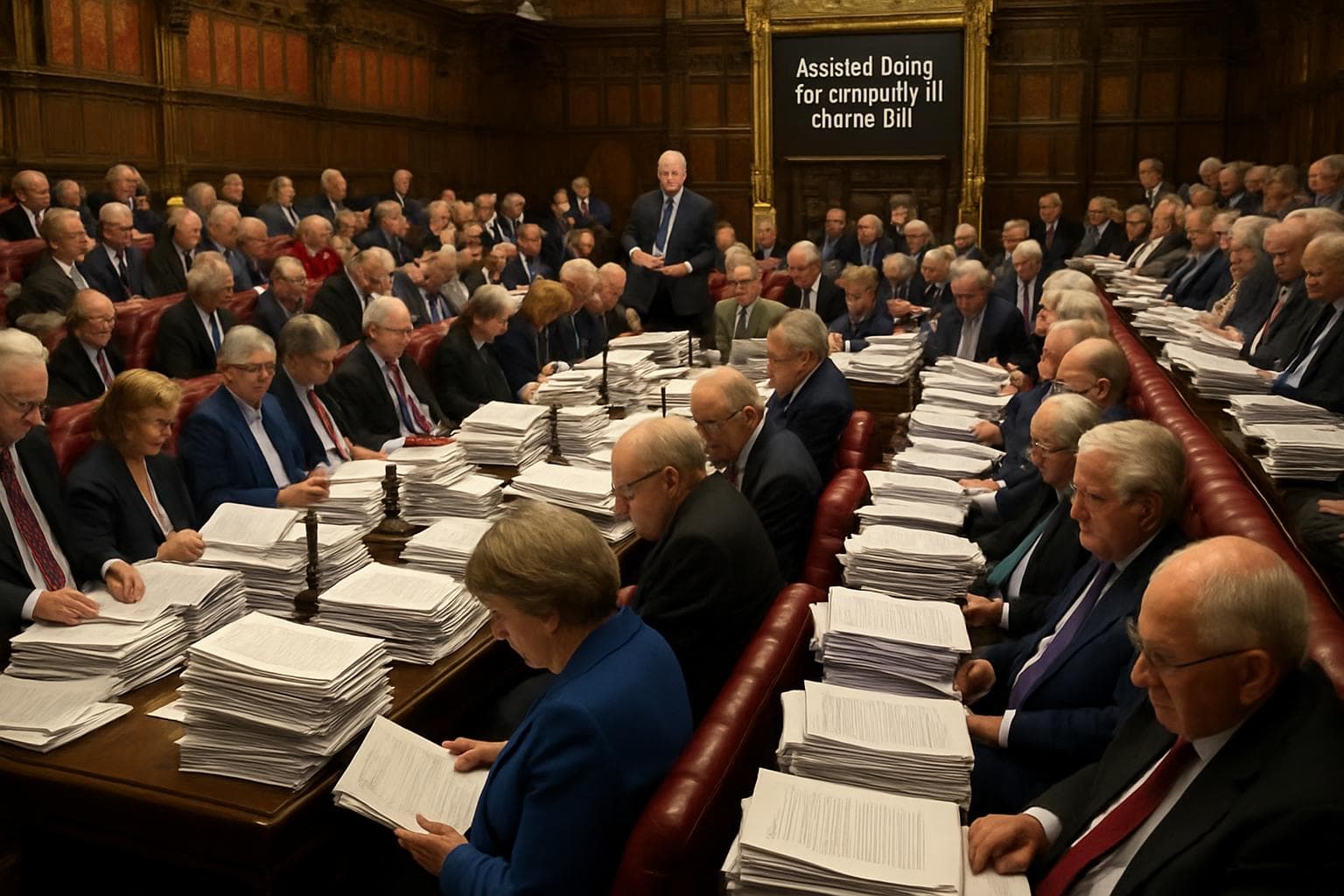
The Terminally Ill Adults (End of Life) Bill, a landmark piece of legislation aimed at legalizing assisted dying in England and Wales, is currently facing significant hurdles in the House of Lords. Originally introduced by Labour MP Kim Leadbeater, the bill has already cleared the House of Commons but is now bogged down by over 1,000 proposed amendments in the Lords, raising concerns about its future.
Background and Legislative Journey
The bill, which would allow terminally ill adults expected to die within six months to seek assistance in ending their lives, was first introduced in October 2024. It passed the House of Commons with a majority vote in June, following extensive debates and consideration of over 500 amendments. However, its progress has stalled in the House of Lords, where peers are conducting a detailed examination of the bill.
Contentious Amendments and Delays
Supporters of the bill, including Leadbeater, argue that the sheer volume of amendments is a deliberate attempt to derail the legislation. Among the controversial proposals are requirements for terminally ill individuals to be filmed during assisted deaths and restrictions on those who have traveled abroad in the past year. Leadbeater described these amendments as "cruel" and "unnecessary," emphasizing the bill's intent to provide dignity to those at the end of life.
Opponents, however, maintain that the amendments are crucial for ensuring the safety and protection of vulnerable individuals. Independent peer Elizabeth Butler-Sloss acknowledged the need for scrutiny but warned against the perception of obstructionism, which could damage the reputation of the House of Lords.
Public Support and Future Prospects
Despite the legislative gridlock, public support for the bill remains strong. Advocates stress the democratic mandate given by the Commons' approval and urge the Lords to expedite the process. The bill must be finalized before the current parliamentary session concludes next spring, or it risks collapsing entirely.
WHAT THIS MIGHT MEAN
The future of the assisted dying bill hinges on the ability of the House of Lords to reconcile the extensive amendments with the original intent of the legislation. If the Lords continue to delay, the bill may not pass before the parliamentary session ends, effectively nullifying its progress. This could lead to public outcry and calls for reform in how such bills are handled. Conversely, if a compromise is reached, the bill could set a precedent for end-of-life legislation in the UK, potentially influencing similar laws in other jurisdictions.
Related Articles

Breakthrough Drug Offers Hope for Children with Severe Epilepsy

Saharan Dust to Illuminate UK Skies with Vivid Sunrises and Sunsets

Sisters Tragically Drown at Eryri National Park's Watkin Path

Labour MP's Husband Arrested in UK-China Espionage Probe

Police Federation Chief Arrested Amid Fraud Investigation

Diplomatic Tensions Rise as Trump Criticizes Starmer's Iran Policy
Assisted Dying Bill Faces Delays Amidst Controversial Amendments in the House of Lords
In This Article
 Maya Singh| Published
 HIGHLIGHTS
- The Terminally Ill Adults (End of Life) Bill, introduced by MP Kim Leadbeater, aims to legalize assisted dying in England and Wales.
- The bill has passed the House of Commons but faces over 1,000 amendments in the House of Lords, causing significant delays.
- Supporters argue that the amendments are a tactic to block the bill, while opponents claim they are necessary for safety.
- The bill must be agreed upon by both Houses before the current parliamentary session ends next spring.
- Public support for the bill is high, but its future remains uncertain due to the extensive scrutiny and proposed changes.
The Terminally Ill Adults (End of Life) Bill, a landmark piece of legislation aimed at legalizing assisted dying in England and Wales, is currently facing significant hurdles in the House of Lords. Originally introduced by Labour MP Kim Leadbeater, the bill has already cleared the House of Commons but is now bogged down by over 1,000 proposed amendments in the Lords, raising concerns about its future.
Background and Legislative Journey
The bill, which would allow terminally ill adults expected to die within six months to seek assistance in ending their lives, was first introduced in October 2024. It passed the House of Commons with a majority vote in June, following extensive debates and consideration of over 500 amendments. However, its progress has stalled in the House of Lords, where peers are conducting a detailed examination of the bill.
Contentious Amendments and Delays
Supporters of the bill, including Leadbeater, argue that the sheer volume of amendments is a deliberate attempt to derail the legislation. Among the controversial proposals are requirements for terminally ill individuals to be filmed during assisted deaths and restrictions on those who have traveled abroad in the past year. Leadbeater described these amendments as "cruel" and "unnecessary," emphasizing the bill's intent to provide dignity to those at the end of life.
Opponents, however, maintain that the amendments are crucial for ensuring the safety and protection of vulnerable individuals. Independent peer Elizabeth Butler-Sloss acknowledged the need for scrutiny but warned against the perception of obstructionism, which could damage the reputation of the House of Lords.
Public Support and Future Prospects
Despite the legislative gridlock, public support for the bill remains strong. Advocates stress the democratic mandate given by the Commons' approval and urge the Lords to expedite the process. The bill must be finalized before the current parliamentary session concludes next spring, or it risks collapsing entirely.
WHAT THIS MIGHT MEAN
The future of the assisted dying bill hinges on the ability of the House of Lords to reconcile the extensive amendments with the original intent of the legislation. If the Lords continue to delay, the bill may not pass before the parliamentary session ends, effectively nullifying its progress. This could lead to public outcry and calls for reform in how such bills are handled. Conversely, if a compromise is reached, the bill could set a precedent for end-of-life legislation in the UK, potentially influencing similar laws in other jurisdictions.
Related Articles
Breakthrough Drug Offers Hope for Children with Severe Epilepsy
Saharan Dust to Illuminate UK Skies with Vivid Sunrises and Sunsets
Sisters Tragically Drown at Eryri National Park's Watkin Path
Labour MP's Husband Arrested in UK-China Espionage Probe
Police Federation Chief Arrested Amid Fraud Investigation
Diplomatic Tensions Rise as Trump Criticizes Starmer's Iran Policy