
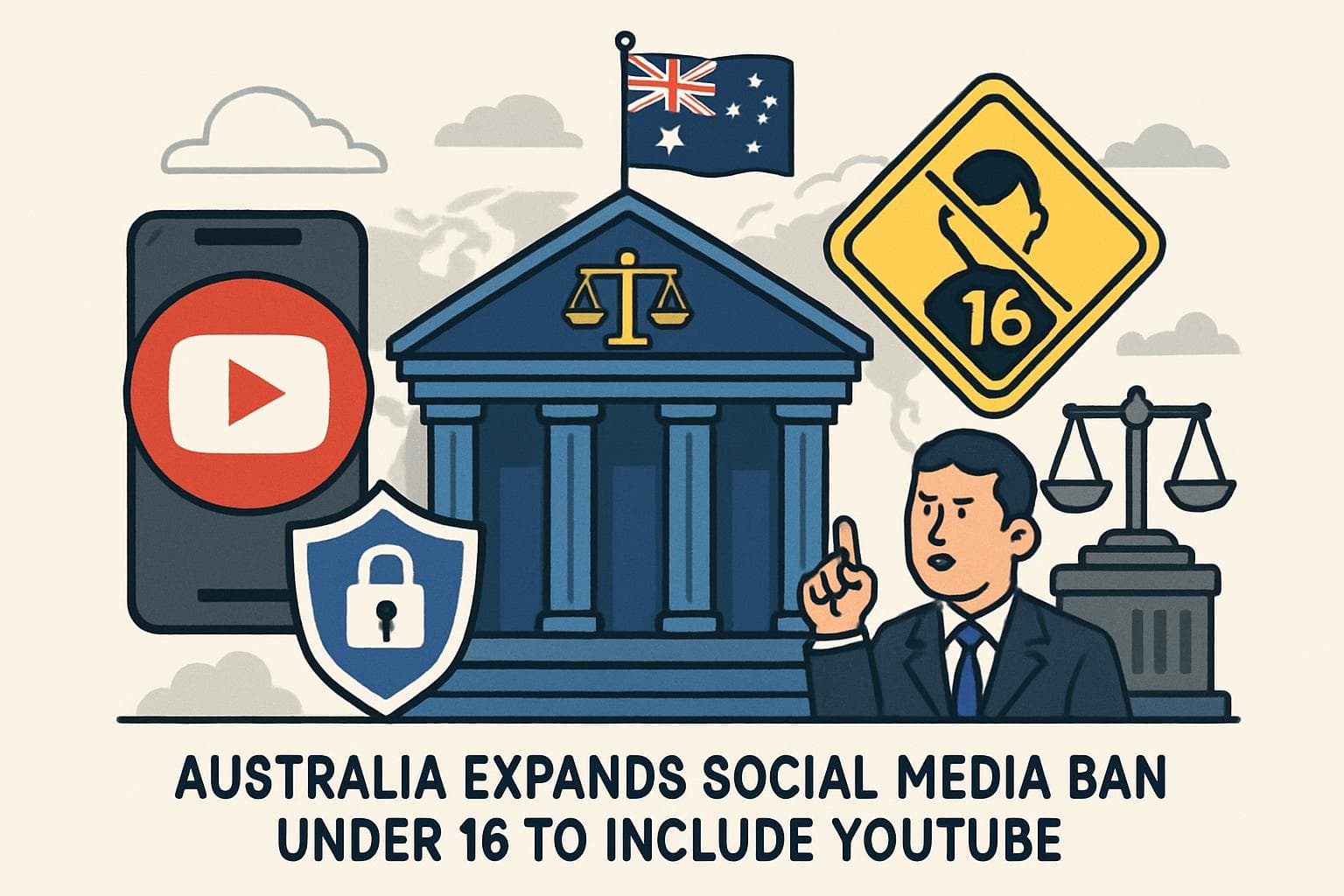
Australia Expands Teen Social Media Ban to Include YouTube
In This Article
HIGHLIGHTS
- Australia will include YouTube in its under-16 social media ban starting December, reversing a previous exemption.
- The ban targets platforms like TikTok, Instagram, and Facebook, with fines up to A$50m for non-compliance.
- Prime Minister Anthony Albanese emphasizes the ban's role in protecting children from social media harm.
- YouTube, owned by Google, has threatened legal action, arguing the ban restricts political freedom.
- The eSafety Commissioner cited YouTube as a frequent source of harmful content for children aged 10 to 15.
In a significant policy shift, the Australian government has decided to include YouTube in its upcoming social media ban for children under 16, set to commence in December. This move reverses a previous exemption for the Google-owned platform, aligning it with other major social media services like TikTok, Instagram, and Facebook, which are also subject to the new restrictions.
Government's Rationale and Industry Pushback
Prime Minister Anthony Albanese announced the decision, underscoring the government's commitment to safeguarding children from the detrimental effects of social media. "Social media is doing social harm to our children, and I want Australian parents to know that we have their backs," Albanese stated. The eSafety Commissioner, Julie Inman Grant, recommended the inclusion of YouTube, citing it as the most frequently reported platform for harmful content among children aged 10 to 15.
Despite the government's firm stance, YouTube has expressed strong opposition. The platform, which had initially been granted an exemption by former communications minister Michelle Rowland, argues that it operates differently from other social media services. In response to the ban, YouTube has launched a lobbying campaign, including full-page ads and direct appeals to current Communications Minister Anika Wells. The company has even hinted at potential legal action, claiming the ban could infringe on political freedoms.
Implementation and Compliance Challenges
The ban, which takes effect on December 10, requires tech companies to deactivate existing accounts for users under 16 and prevent new ones from being created. Non-compliance could result in fines of up to A$50m. However, the government has yet to provide detailed guidance on the "reasonable steps" platforms must take to comply, leaving some companies uncertain about the necessary measures.
Exemptions and Broader Implications
While the ban targets social media platforms, it excludes online gaming, messaging, and educational apps, which are deemed to pose fewer risks. Minister Wells likened the challenge of protecting children online to "teaching your kids to swim in the open ocean with the rips and the sharks compared to at the local council pool."
The decision has sparked interest from other countries, with Norway considering a similar ban and the UK exploring its options. As the December deadline approaches, the global tech industry will be closely watching Australia's implementation and its potential ripple effects.
WHAT THIS MIGHT MEAN
The inclusion of YouTube in Australia's social media ban could set a precedent for other countries grappling with the balance between online safety and freedom of expression. If successful, it may encourage similar legislative actions worldwide, potentially reshaping the landscape of digital content regulation. However, the threat of legal challenges from tech giants like Google could complicate enforcement and lead to prolonged legal battles. As the ban's implementation unfolds, the Australian government will need to navigate these challenges while providing clear compliance guidelines to ensure the policy's effectiveness.
Images from the Web
Related Articles
Canada and Australia Forge Strategic Partnership Amid Global Uncertainty
Google Faces Legal Battle Over AI Chatbot's Alleged Role in Tragic Death
Canada Calls for De-escalation Amid US-Israel Strikes on Iran
Trump's New Tariff Strategy Sparks Global Trade Uncertainty
Tech Giants Pledge to Cover AI Data Center Energy Costs Amid Rising Electricity Concerns
UK Government to Reform Asylum Seeker Support and Employment Policies
Australia Expands Teen Social Media Ban to Include YouTube
In This Article
 Marcus Blake| Published
 HIGHLIGHTS
- Australia will include YouTube in its under-16 social media ban starting December, reversing a previous exemption.
- The ban targets platforms like TikTok, Instagram, and Facebook, with fines up to A$50m for non-compliance.
- Prime Minister Anthony Albanese emphasizes the ban's role in protecting children from social media harm.
- YouTube, owned by Google, has threatened legal action, arguing the ban restricts political freedom.
- The eSafety Commissioner cited YouTube as a frequent source of harmful content for children aged 10 to 15.
In a significant policy shift, the Australian government has decided to include YouTube in its upcoming social media ban for children under 16, set to commence in December. This move reverses a previous exemption for the Google-owned platform, aligning it with other major social media services like TikTok, Instagram, and Facebook, which are also subject to the new restrictions.
Government's Rationale and Industry Pushback
Prime Minister Anthony Albanese announced the decision, underscoring the government's commitment to safeguarding children from the detrimental effects of social media. "Social media is doing social harm to our children, and I want Australian parents to know that we have their backs," Albanese stated. The eSafety Commissioner, Julie Inman Grant, recommended the inclusion of YouTube, citing it as the most frequently reported platform for harmful content among children aged 10 to 15.
Despite the government's firm stance, YouTube has expressed strong opposition. The platform, which had initially been granted an exemption by former communications minister Michelle Rowland, argues that it operates differently from other social media services. In response to the ban, YouTube has launched a lobbying campaign, including full-page ads and direct appeals to current Communications Minister Anika Wells. The company has even hinted at potential legal action, claiming the ban could infringe on political freedoms.
Implementation and Compliance Challenges
The ban, which takes effect on December 10, requires tech companies to deactivate existing accounts for users under 16 and prevent new ones from being created. Non-compliance could result in fines of up to A$50m. However, the government has yet to provide detailed guidance on the "reasonable steps" platforms must take to comply, leaving some companies uncertain about the necessary measures.
Exemptions and Broader Implications
While the ban targets social media platforms, it excludes online gaming, messaging, and educational apps, which are deemed to pose fewer risks. Minister Wells likened the challenge of protecting children online to "teaching your kids to swim in the open ocean with the rips and the sharks compared to at the local council pool."
The decision has sparked interest from other countries, with Norway considering a similar ban and the UK exploring its options. As the December deadline approaches, the global tech industry will be closely watching Australia's implementation and its potential ripple effects.
WHAT THIS MIGHT MEAN
The inclusion of YouTube in Australia's social media ban could set a precedent for other countries grappling with the balance between online safety and freedom of expression. If successful, it may encourage similar legislative actions worldwide, potentially reshaping the landscape of digital content regulation. However, the threat of legal challenges from tech giants like Google could complicate enforcement and lead to prolonged legal battles. As the ban's implementation unfolds, the Australian government will need to navigate these challenges while providing clear compliance guidelines to ensure the policy's effectiveness.
Images from the Web
Related Articles
Canada and Australia Forge Strategic Partnership Amid Global Uncertainty
Google Faces Legal Battle Over AI Chatbot's Alleged Role in Tragic Death
Canada Calls for De-escalation Amid US-Israel Strikes on Iran
Trump's New Tariff Strategy Sparks Global Trade Uncertainty
Tech Giants Pledge to Cover AI Data Center Energy Costs Amid Rising Electricity Concerns
UK Government to Reform Asylum Seeker Support and Employment Policies