
Australia and Turkey at an Impasse Over COP31 Hosting Rights
In This Article
HIGHLIGHTS
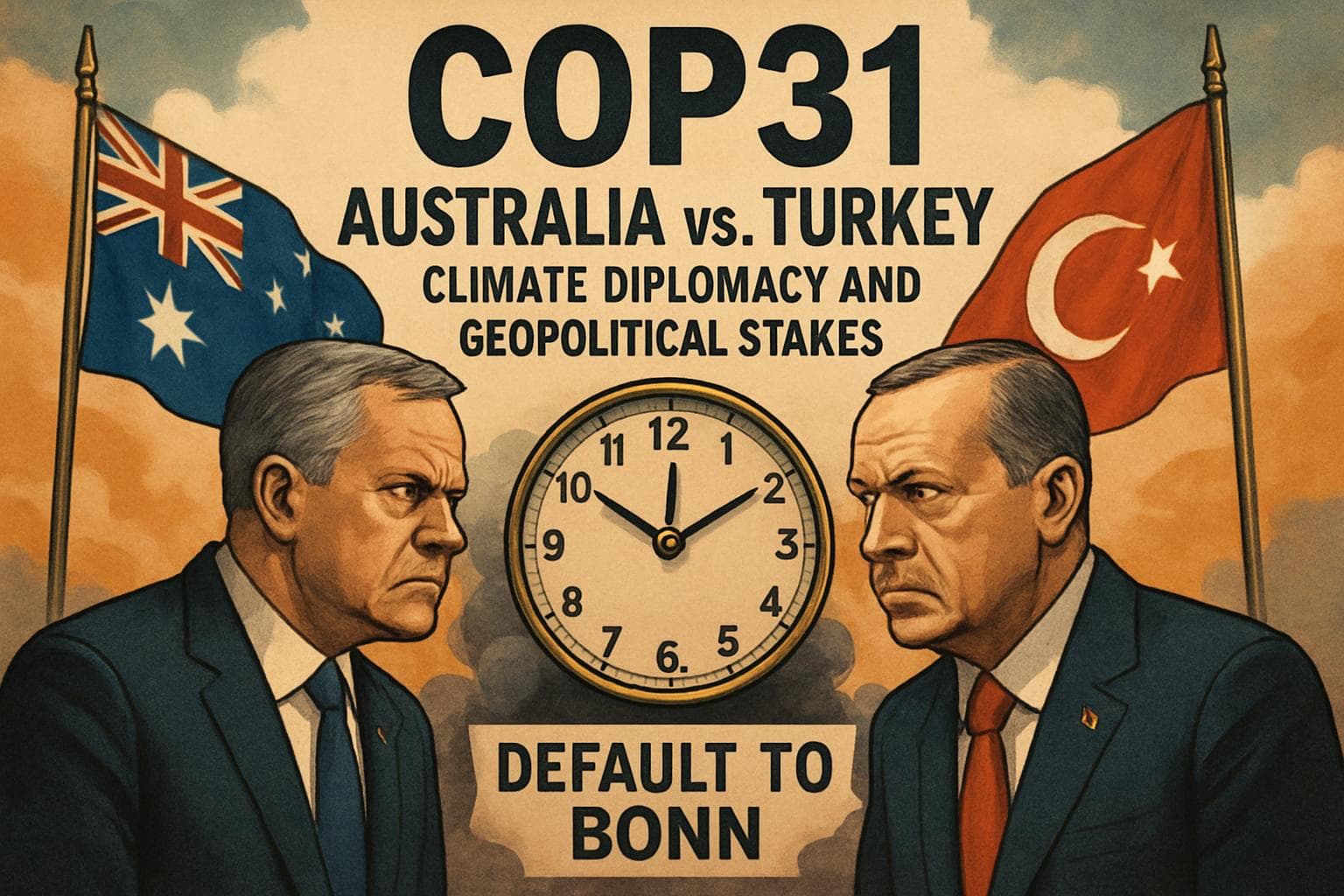
- Australia and Turkey are deadlocked over hosting rights for COP31, with a decision needed by next week.
- If no agreement is reached, the climate summit will default to Bonn, Germany, the UNFCCC headquarters.
- Australia initially proposed co-hosting with Pacific nations, highlighting rising sea levels and regional geopolitics.
- The US, under President Trump, has withdrawn from active climate negotiations, drawing relief from some diplomats.
- Trump's administration is seen as more hostile to climate action than previous US governments, impacting global talks.
As the UN climate talks unfold in Belém, Brazil, a significant deadlock persists between Australia and Turkey over hosting the COP31 summit. This impasse must be resolved by next week, or the event will default to Bonn, Germany, where the UN Framework Convention on Climate Change (UNFCCC) is headquartered.
Australia's Bid and Regional Implications
Australia's initial proposal to co-host COP31 with Pacific nations aimed to spotlight the pressing issue of rising sea levels, which severely impact Pacific islanders. This move was not only a demonstration of Australia's commitment to its neighbors but also a strategic geopolitical stance against growing Chinese influence in the region. "Having it close to your home means you can create space for the greatest ambition," said Shiva Gounden of Greenpeace Australia Pacific, emphasizing the Pacific's leadership in climate action.
Despite early confidence in securing hosting rights, Australia faces a stalemate with Turkey, which remains firm in its desire to host the summit. Gavan McFadzean of the Australian Conservation Foundation noted a sense of complacency in Australia's approach, assuming their joint bid with the Pacific would easily succeed.
US Absence and Global Climate Dynamics
Meanwhile, the absence of high-level US representatives at the COP30 summit in Brazil has been met with quiet relief by some diplomats. Under President Trump, the US has not only withdrawn from climate action but has actively opposed global efforts, advocating for increased fossil fuel use. A White House spokesperson stated, "President Trump will not jeopardize our country’s economic and national security to pursue vague climate goals."
Former US climate negotiator Todd Stern remarked on the administration's aggressive stance, noting that the US is now more hostile to climate action than during previous administrations. This shift has left the US isolated in global climate negotiations, with some countries preferring its absence over disruptive participation.
WHAT THIS MIGHT MEAN
The ongoing deadlock between Australia and Turkey over COP31 hosting rights could have significant implications for future climate negotiations. If unresolved, the default to Bonn might diminish the intended focus on Pacific climate challenges. Experts suggest that a resolution could involve a compromise, such as shared hosting responsibilities.
The US's current climate stance under President Trump may further isolate the country in international discussions, potentially weakening global efforts to address climate change. As other nations continue to advance their climate agendas, the absence of US leadership could shift the balance of power in global climate policy, potentially opening opportunities for other countries to take the lead.
Related Articles

Canada and Australia Forge Strategic Partnership Amid Global Uncertainty

Tech Giants Pledge to Cover AI Data Center Energy Costs Amid Rising Electricity Concerns
Cuba Faces Widespread Blackout Amid Deepening Fuel Crisis

UK Faces Dilemmas Amid Iran Conflict and China Spying Allegations
Spain's Sánchez Stands Firm Against Trump's Trade Threat Over Iran Stance
Canada Calls for De-escalation Amid US-Israel Strikes on Iran
Australia and Turkey at an Impasse Over COP31 Hosting Rights
In This Article
HIGHLIGHTS
- Australia and Turkey are deadlocked over hosting rights for COP31, with a decision needed by next week.
- If no agreement is reached, the climate summit will default to Bonn, Germany, the UNFCCC headquarters.
- Australia initially proposed co-hosting with Pacific nations, highlighting rising sea levels and regional geopolitics.
- The US, under President Trump, has withdrawn from active climate negotiations, drawing relief from some diplomats.
- Trump's administration is seen as more hostile to climate action than previous US governments, impacting global talks.
As the UN climate talks unfold in Belém, Brazil, a significant deadlock persists between Australia and Turkey over hosting the COP31 summit. This impasse must be resolved by next week, or the event will default to Bonn, Germany, where the UN Framework Convention on Climate Change (UNFCCC) is headquartered.
Australia's Bid and Regional Implications
Australia's initial proposal to co-host COP31 with Pacific nations aimed to spotlight the pressing issue of rising sea levels, which severely impact Pacific islanders. This move was not only a demonstration of Australia's commitment to its neighbors but also a strategic geopolitical stance against growing Chinese influence in the region. "Having it close to your home means you can create space for the greatest ambition," said Shiva Gounden of Greenpeace Australia Pacific, emphasizing the Pacific's leadership in climate action.
Despite early confidence in securing hosting rights, Australia faces a stalemate with Turkey, which remains firm in its desire to host the summit. Gavan McFadzean of the Australian Conservation Foundation noted a sense of complacency in Australia's approach, assuming their joint bid with the Pacific would easily succeed.
US Absence and Global Climate Dynamics
Meanwhile, the absence of high-level US representatives at the COP30 summit in Brazil has been met with quiet relief by some diplomats. Under President Trump, the US has not only withdrawn from climate action but has actively opposed global efforts, advocating for increased fossil fuel use. A White House spokesperson stated, "President Trump will not jeopardize our country’s economic and national security to pursue vague climate goals."
Former US climate negotiator Todd Stern remarked on the administration's aggressive stance, noting that the US is now more hostile to climate action than during previous administrations. This shift has left the US isolated in global climate negotiations, with some countries preferring its absence over disruptive participation.
WHAT THIS MIGHT MEAN
The ongoing deadlock between Australia and Turkey over COP31 hosting rights could have significant implications for future climate negotiations. If unresolved, the default to Bonn might diminish the intended focus on Pacific climate challenges. Experts suggest that a resolution could involve a compromise, such as shared hosting responsibilities.
The US's current climate stance under President Trump may further isolate the country in international discussions, potentially weakening global efforts to address climate change. As other nations continue to advance their climate agendas, the absence of US leadership could shift the balance of power in global climate policy, potentially opening opportunities for other countries to take the lead.
Related Articles
Canada and Australia Forge Strategic Partnership Amid Global Uncertainty
Tech Giants Pledge to Cover AI Data Center Energy Costs Amid Rising Electricity Concerns
Cuba Faces Widespread Blackout Amid Deepening Fuel Crisis
UK Faces Dilemmas Amid Iran Conflict and China Spying Allegations
Spain's Sánchez Stands Firm Against Trump's Trade Threat Over Iran Stance
Canada Calls for De-escalation Amid US-Israel Strikes on Iran