
Australian Teens Challenge Social Media Ban in High Court
In This Article
HIGHLIGHTS
- Two Australian teenagers are challenging a new law banning under-16s from social media, claiming it violates their constitutional rights.
- The Digital Freedom Project, led by NSW MP John Ruddick, is supporting the teens' High Court case, arguing the ban impedes political communication.
- The law, effective from December 10, requires platforms like Meta and TikTok to prevent under-16s from holding accounts.
- The Australian government defends the ban as necessary for child safety, despite opposition from tech companies and some mental health advocates.
- The European Parliament is considering similar age restrictions, citing concerns over children's mental health and online safety.
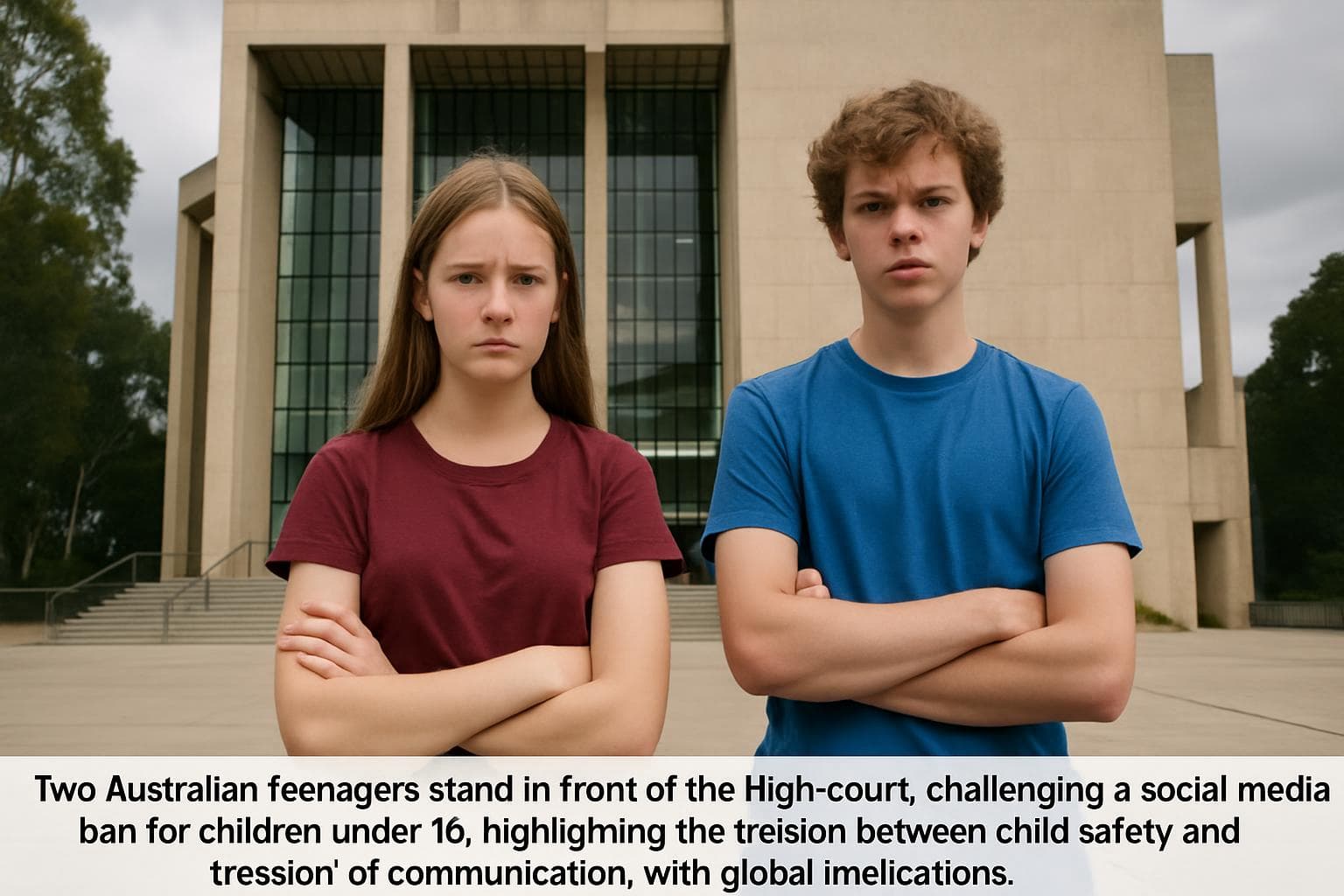
Australia's controversial social media ban for children under 16 is facing a legal challenge in the nation's High Court. Two 15-year-olds, Noah Jones and Macy Neyland, argue that the law, set to take effect on December 10, infringes on their constitutional right to free communication. The teenagers, supported by the Digital Freedom Project (DFP), claim the ban is disproportionate and undermines their ability to engage in political discourse.
Legal Challenge and Support
The Digital Freedom Project, spearheaded by New South Wales parliamentarian John Ruddick, filed the case, emphasizing the ban's impact on political communication. "This ban is a direct assault on young people's right to freedom of political communication," Ruddick stated. The group argues that alternative measures, such as digital literacy programs and age-appropriate features, should be considered to enhance online safety without restricting access.
Government's Stance and Public Opinion
Communications Minister Anika Wells has firmly defended the legislation, stating, "We will not be intimidated by threats or legal challenges." The government maintains that the ban is essential to protect children from harmful content and algorithms. While polls indicate broad support among Australian adults, tech companies like Google and Meta have expressed concerns, with Google reportedly considering its own constitutional challenge.
Global Implications and European Interest
The debate over age restrictions on social media is not confined to Australia. The European Parliament recently passed a resolution advocating for similar measures, citing mental health risks associated with unrestricted internet access. European Commission President Ursula von der Leyen has expressed interest in Australia's approach, highlighting the need for protective measures against exploitative algorithms.
WHAT THIS MIGHT MEAN
The outcome of this legal challenge could set a significant precedent for digital rights and age restrictions globally. If the High Court rules in favor of the teenagers, it may prompt a reevaluation of the balance between child safety and freedom of communication. Conversely, if the ban is upheld, it could embolden other countries to implement similar restrictions. Experts suggest that ongoing dialogue between governments, tech companies, and rights groups will be crucial in shaping future policies that protect children while respecting their rights.
Related Articles
Tech Giants Pledge to Cover AI Data Center Energy Costs Amid Rising Electricity Concerns

Google Faces Legal Battle Over AI Chatbot's Alleged Role in Tragic Death

Zuckerberg Defends Meta in Landmark Social Media Addiction Trial
Canada and Australia Forge Strategic Partnership Amid Global Uncertainty

Canada Calls for De-escalation Amid US-Israel Strikes on Iran
Trump's New Tariff Strategy Sparks Global Trade Uncertainty
Australian Teens Challenge Social Media Ban in High Court
In This Article
 Himanshu Kaushik| Published
 HIGHLIGHTS
- Two Australian teenagers are challenging a new law banning under-16s from social media, claiming it violates their constitutional rights.
- The Digital Freedom Project, led by NSW MP John Ruddick, is supporting the teens' High Court case, arguing the ban impedes political communication.
- The law, effective from December 10, requires platforms like Meta and TikTok to prevent under-16s from holding accounts.
- The Australian government defends the ban as necessary for child safety, despite opposition from tech companies and some mental health advocates.
- The European Parliament is considering similar age restrictions, citing concerns over children's mental health and online safety.
Australia's controversial social media ban for children under 16 is facing a legal challenge in the nation's High Court. Two 15-year-olds, Noah Jones and Macy Neyland, argue that the law, set to take effect on December 10, infringes on their constitutional right to free communication. The teenagers, supported by the Digital Freedom Project (DFP), claim the ban is disproportionate and undermines their ability to engage in political discourse.
Legal Challenge and Support
The Digital Freedom Project, spearheaded by New South Wales parliamentarian John Ruddick, filed the case, emphasizing the ban's impact on political communication. "This ban is a direct assault on young people's right to freedom of political communication," Ruddick stated. The group argues that alternative measures, such as digital literacy programs and age-appropriate features, should be considered to enhance online safety without restricting access.
Government's Stance and Public Opinion
Communications Minister Anika Wells has firmly defended the legislation, stating, "We will not be intimidated by threats or legal challenges." The government maintains that the ban is essential to protect children from harmful content and algorithms. While polls indicate broad support among Australian adults, tech companies like Google and Meta have expressed concerns, with Google reportedly considering its own constitutional challenge.
Global Implications and European Interest
The debate over age restrictions on social media is not confined to Australia. The European Parliament recently passed a resolution advocating for similar measures, citing mental health risks associated with unrestricted internet access. European Commission President Ursula von der Leyen has expressed interest in Australia's approach, highlighting the need for protective measures against exploitative algorithms.
WHAT THIS MIGHT MEAN
The outcome of this legal challenge could set a significant precedent for digital rights and age restrictions globally. If the High Court rules in favor of the teenagers, it may prompt a reevaluation of the balance between child safety and freedom of communication. Conversely, if the ban is upheld, it could embolden other countries to implement similar restrictions. Experts suggest that ongoing dialogue between governments, tech companies, and rights groups will be crucial in shaping future policies that protect children while respecting their rights.
Related Articles
Tech Giants Pledge to Cover AI Data Center Energy Costs Amid Rising Electricity Concerns
Google Faces Legal Battle Over AI Chatbot's Alleged Role in Tragic Death
Zuckerberg Defends Meta in Landmark Social Media Addiction Trial
Canada and Australia Forge Strategic Partnership Amid Global Uncertainty
Canada Calls for De-escalation Amid US-Israel Strikes on Iran
Trump's New Tariff Strategy Sparks Global Trade Uncertainty