
Berlin Power Outage: Activist Group Claims Responsibility for Arson Attack
In This Article
HIGHLIGHTS
- A far-left activist group, Vulkangruppe, claimed responsibility for an arson attack that caused a major power outage in Berlin, affecting 45,000 homes and 2,200 businesses.
- The attack targeted high-voltage cables near the Lichterfelde power station, with the group citing opposition to the fossil fuel economy and AI as motives.
- Emergency measures included deploying power generators to hospitals and care facilities, with some patients being relocated.
- Berlin's mayor, Kai Wegner, condemned the attack as politically motivated, highlighting the risk to human lives.
- Authorities are investigating the incident, with police considering the group's statement credible.
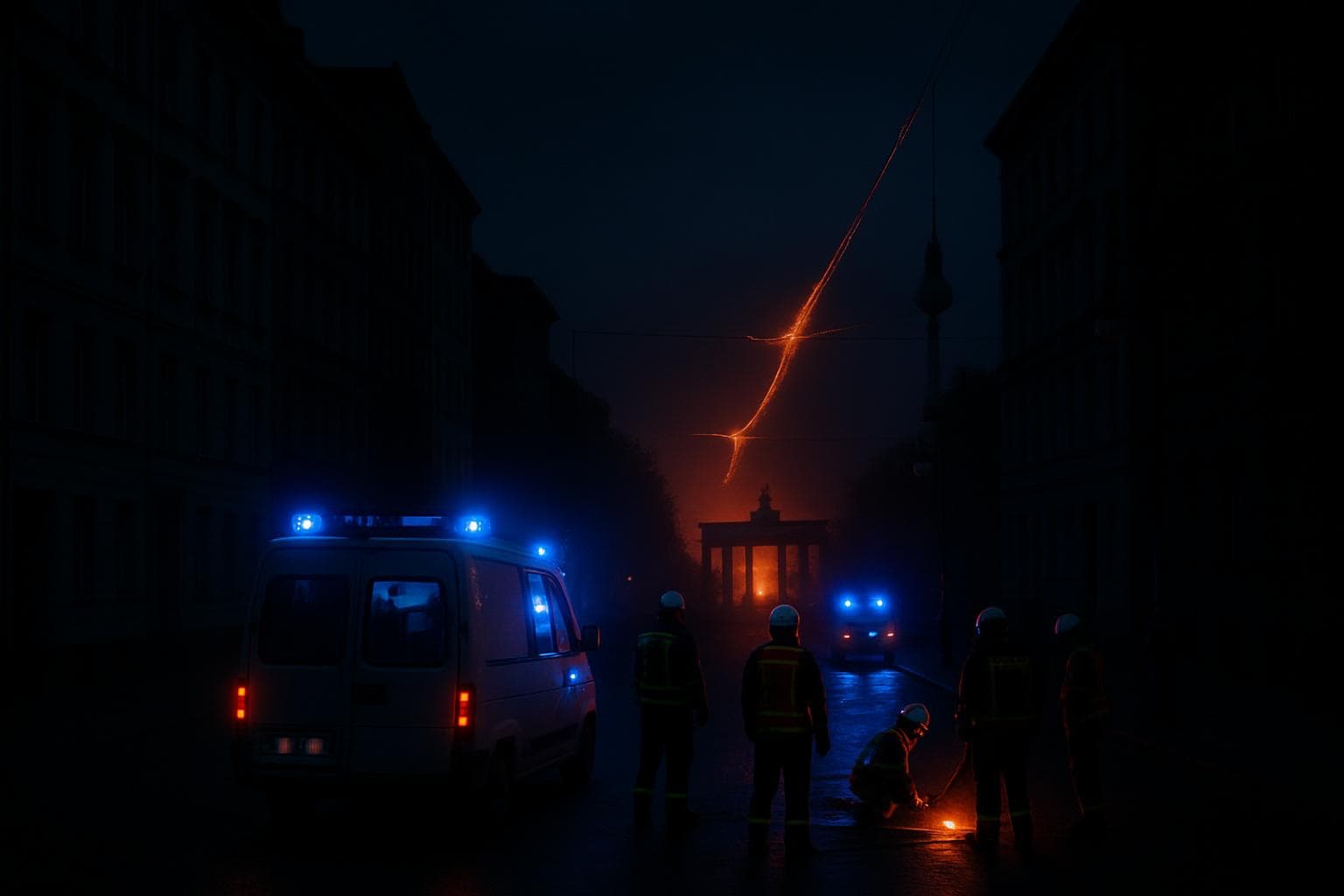
A significant power outage in Berlin has left tens of thousands of residents and businesses in the dark, following an arson attack claimed by the far-left activist group Vulkangruppe. The incident, which occurred early Saturday, targeted high-voltage cables near the Lichterfelde heat and power station, disrupting electricity for approximately 45,000 households and 2,200 businesses.
Attack Details and Motives
The Vulkangruppe, known for its radical stance against the fossil fuel economy and artificial intelligence, stated that the attack was an act of "self-defence" against high-emission energy production. In a detailed pamphlet, the group expressed its intent to "cut the juice to the ruling class," criticizing the energy consumption of data centers used for AI. The group apologized to less affluent residents affected by the outage but showed little sympathy for wealthier villa owners.
Emergency Response and Impact
The power outage has had widespread repercussions, particularly affecting hospitals, care facilities, and high-rise buildings reliant on elevators. Emergency power generators were deployed to critical sites, and some patients were relocated to ensure their safety. Berlin's mayor, Kai Wegner, condemned the attack, emphasizing the endangerment of human lives and attributing a political motive to the incident.
Investigation and Public Reaction
Authorities have launched an investigation into the arson, with police considering the Vulkangruppe's statement credible. The attack has sparked public concern, with mobile networks down and regional commuter lines disrupted. Schools, set to reopen after the holidays, may remain closed due to the ongoing power restoration efforts, expected to continue until Thursday.
WHAT THIS MIGHT MEAN
The recent arson attack in Berlin underscores the growing tension between climate activism and public safety. As authorities work to restore power and investigate the incident, questions arise about the security of critical infrastructure and the potential for future attacks. The political implications are significant, with increased scrutiny on left-wing extremism and its impact on urban centers. Experts suggest that enhanced security measures and dialogue between activists and policymakers could be crucial in addressing the underlying issues driving such radical actions. As Berlin recovers, the incident serves as a stark reminder of the vulnerabilities in modern energy systems and the urgent need for sustainable solutions.
Related Articles
Berlin Blackout Exposes Vulnerabilities in German Infrastructure
London Homicide Rate Hits 11-Year Low Amidst Targeted Crime Prevention Efforts

Global Counsel Enters Administration Amid Epstein Link Fallout

Global Counsel Faces Collapse Amidst Epstein Scandal Fallout

Global Reflections on Holocaust Memorial Day Amid Rising Antisemitism
Protester Removes Iranian Flag During Embassy Demonstration in London
Berlin Power Outage: Activist Group Claims Responsibility for Arson Attack
In This Article
 Sofia Romano| Published
 HIGHLIGHTS
- A far-left activist group, Vulkangruppe, claimed responsibility for an arson attack that caused a major power outage in Berlin, affecting 45,000 homes and 2,200 businesses.
- The attack targeted high-voltage cables near the Lichterfelde power station, with the group citing opposition to the fossil fuel economy and AI as motives.
- Emergency measures included deploying power generators to hospitals and care facilities, with some patients being relocated.
- Berlin's mayor, Kai Wegner, condemned the attack as politically motivated, highlighting the risk to human lives.
- Authorities are investigating the incident, with police considering the group's statement credible.
A significant power outage in Berlin has left tens of thousands of residents and businesses in the dark, following an arson attack claimed by the far-left activist group Vulkangruppe. The incident, which occurred early Saturday, targeted high-voltage cables near the Lichterfelde heat and power station, disrupting electricity for approximately 45,000 households and 2,200 businesses.
Attack Details and Motives
The Vulkangruppe, known for its radical stance against the fossil fuel economy and artificial intelligence, stated that the attack was an act of "self-defence" against high-emission energy production. In a detailed pamphlet, the group expressed its intent to "cut the juice to the ruling class," criticizing the energy consumption of data centers used for AI. The group apologized to less affluent residents affected by the outage but showed little sympathy for wealthier villa owners.
Emergency Response and Impact
The power outage has had widespread repercussions, particularly affecting hospitals, care facilities, and high-rise buildings reliant on elevators. Emergency power generators were deployed to critical sites, and some patients were relocated to ensure their safety. Berlin's mayor, Kai Wegner, condemned the attack, emphasizing the endangerment of human lives and attributing a political motive to the incident.
Investigation and Public Reaction
Authorities have launched an investigation into the arson, with police considering the Vulkangruppe's statement credible. The attack has sparked public concern, with mobile networks down and regional commuter lines disrupted. Schools, set to reopen after the holidays, may remain closed due to the ongoing power restoration efforts, expected to continue until Thursday.
WHAT THIS MIGHT MEAN
The recent arson attack in Berlin underscores the growing tension between climate activism and public safety. As authorities work to restore power and investigate the incident, questions arise about the security of critical infrastructure and the potential for future attacks. The political implications are significant, with increased scrutiny on left-wing extremism and its impact on urban centers. Experts suggest that enhanced security measures and dialogue between activists and policymakers could be crucial in addressing the underlying issues driving such radical actions. As Berlin recovers, the incident serves as a stark reminder of the vulnerabilities in modern energy systems and the urgent need for sustainable solutions.
Related Articles
Berlin Blackout Exposes Vulnerabilities in German Infrastructure
London Homicide Rate Hits 11-Year Low Amidst Targeted Crime Prevention Efforts
Global Counsel Enters Administration Amid Epstein Link Fallout
Global Counsel Faces Collapse Amidst Epstein Scandal Fallout
Global Reflections on Holocaust Memorial Day Amid Rising Antisemitism
Protester Removes Iranian Flag During Embassy Demonstration in London