
BHP Held Liable for Brazil's 2015 Dam Collapse in Landmark UK Ruling
In This Article
HIGHLIGHTS
- London's High Court found BHP liable for the 2015 dam collapse in Brazil, marking a significant legal precedent.
- The disaster, Brazil's worst environmental catastrophe, resulted in 19 deaths and widespread ecological damage.
- The ruling involves potential compensation claims of up to £36 billion, affecting over 600,000 Brazilians.
- BHP plans to appeal, arguing that many claimants have already received compensation in Brazil.
- The dam was operated by Samarco, a joint venture between BHP and Vale, with a separate lawsuit filed against Vale in the Netherlands.
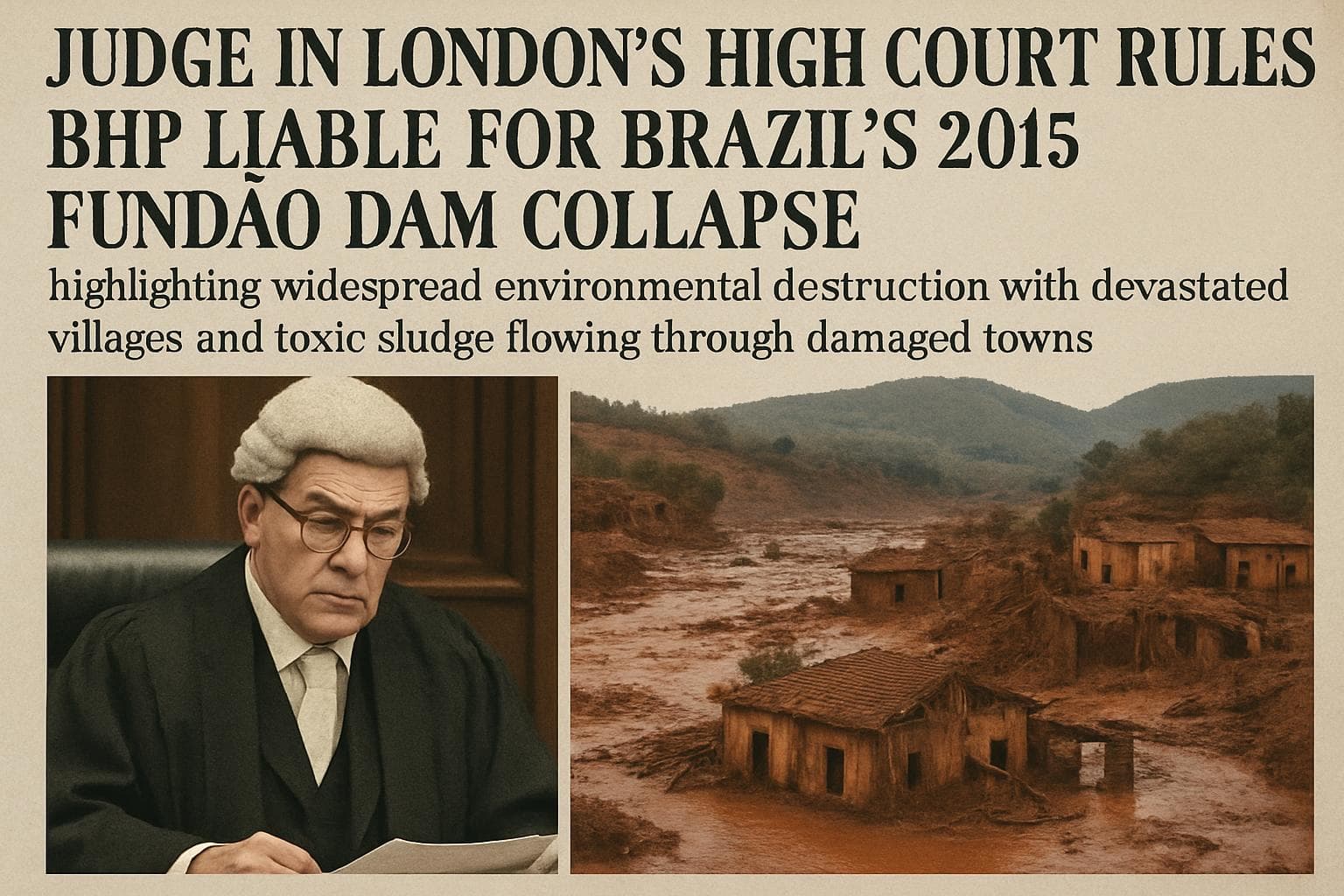
In a landmark decision, London's High Court has found mining giant BHP liable for the catastrophic 2015 dam collapse in Brazil, which is considered the country's worst environmental disaster. The ruling, delivered by Judge Finola O'Farrell, holds BHP accountable for the collapse of the Fundão dam in Mariana, which unleashed millions of cubic meters of toxic waste, killing 19 people and devastating local communities.
The Disaster and Its Aftermath
The dam, operated by Samarco—a joint venture between BHP and Brazilian mining company Vale—ruptured on November 5, 2015. The resulting sludge destroyed the village of Bento Rodrigues and severely damaged other towns along the Doce River, which remains ecologically impaired. The disaster also resulted in the death of 14 tonnes of freshwater fish, according to a study by Ulster University.
Legal Battle and Compensation Claims
The High Court's ruling paves the way for compensation claims potentially totaling £36 billion, involving over 600,000 Brazilians, including civilians, local governments, and businesses. The trial was held in London due to BHP's UK headquarters at the time of the incident. A second phase of the trial will determine the damages owed.
BHP, which is also listed on the London Stock Exchange, has announced plans to appeal the decision, arguing that many claimants have already been compensated in Brazil. Brandon Craig, President of BHP's Minerals Americas, stated that 240,000 claimants in the UK lawsuit have received compensation through the Renova Foundation, an organization established by BHP and Vale to manage reparations.
Ongoing Legal Proceedings
In addition to the UK case, a separate lawsuit against Vale is underway in the Netherlands, involving over 70,000 plaintiffs. The Brazilian government has also reached a multibillion-dollar settlement with Samarco, requiring payments of 132 billion reais (£19 billion) over 20 years to address human, environmental, and infrastructure damages.
WHAT THIS MIGHT MEAN
The High Court's ruling against BHP could set a significant legal precedent for holding multinational corporations accountable for environmental disasters, especially when operations span multiple jurisdictions. If BHP's appeal is unsuccessful, it may lead to increased scrutiny and regulatory pressure on mining operations worldwide.
The case also highlights the complexities of international legal proceedings, as claimants seek justice across different legal systems. The outcome of the appeal and subsequent phases of the trial will be closely watched by environmental advocates and legal experts, potentially influencing future litigation strategies in similar cases.
As the legal battle continues, the focus remains on ensuring adequate compensation and rehabilitation for the affected communities in Brazil, while addressing the long-term environmental impacts of the disaster.
Related Articles

Trial Begins for 2003 Rape Case That Led to Notorious Miscarriage of Justice
Labour MP's Husband Arrested in UK-China Espionage Probe

Bafta Film Awards 2023: A Night of Glamour, Talent, and Fashion Statements

St Francis of Assisi's Bones Draw Global Pilgrims to Italy
Nottingham Attacks Inquiry: Families Demand Accountability and Truth
Willie Colón: The Salsa Legend Who Transformed Latin Music Passes Away at 75
BHP Held Liable for Brazil's 2015 Dam Collapse in Landmark UK Ruling
In This Article
HIGHLIGHTS
- London's High Court found BHP liable for the 2015 dam collapse in Brazil, marking a significant legal precedent.
- The disaster, Brazil's worst environmental catastrophe, resulted in 19 deaths and widespread ecological damage.
- The ruling involves potential compensation claims of up to £36 billion, affecting over 600,000 Brazilians.
- BHP plans to appeal, arguing that many claimants have already received compensation in Brazil.
- The dam was operated by Samarco, a joint venture between BHP and Vale, with a separate lawsuit filed against Vale in the Netherlands.
In a landmark decision, London's High Court has found mining giant BHP liable for the catastrophic 2015 dam collapse in Brazil, which is considered the country's worst environmental disaster. The ruling, delivered by Judge Finola O'Farrell, holds BHP accountable for the collapse of the Fundão dam in Mariana, which unleashed millions of cubic meters of toxic waste, killing 19 people and devastating local communities.
The Disaster and Its Aftermath
The dam, operated by Samarco—a joint venture between BHP and Brazilian mining company Vale—ruptured on November 5, 2015. The resulting sludge destroyed the village of Bento Rodrigues and severely damaged other towns along the Doce River, which remains ecologically impaired. The disaster also resulted in the death of 14 tonnes of freshwater fish, according to a study by Ulster University.
Legal Battle and Compensation Claims
The High Court's ruling paves the way for compensation claims potentially totaling £36 billion, involving over 600,000 Brazilians, including civilians, local governments, and businesses. The trial was held in London due to BHP's UK headquarters at the time of the incident. A second phase of the trial will determine the damages owed.
BHP, which is also listed on the London Stock Exchange, has announced plans to appeal the decision, arguing that many claimants have already been compensated in Brazil. Brandon Craig, President of BHP's Minerals Americas, stated that 240,000 claimants in the UK lawsuit have received compensation through the Renova Foundation, an organization established by BHP and Vale to manage reparations.
Ongoing Legal Proceedings
In addition to the UK case, a separate lawsuit against Vale is underway in the Netherlands, involving over 70,000 plaintiffs. The Brazilian government has also reached a multibillion-dollar settlement with Samarco, requiring payments of 132 billion reais (£19 billion) over 20 years to address human, environmental, and infrastructure damages.
WHAT THIS MIGHT MEAN
The High Court's ruling against BHP could set a significant legal precedent for holding multinational corporations accountable for environmental disasters, especially when operations span multiple jurisdictions. If BHP's appeal is unsuccessful, it may lead to increased scrutiny and regulatory pressure on mining operations worldwide.
The case also highlights the complexities of international legal proceedings, as claimants seek justice across different legal systems. The outcome of the appeal and subsequent phases of the trial will be closely watched by environmental advocates and legal experts, potentially influencing future litigation strategies in similar cases.
As the legal battle continues, the focus remains on ensuring adequate compensation and rehabilitation for the affected communities in Brazil, while addressing the long-term environmental impacts of the disaster.
Related Articles
Trial Begins for 2003 Rape Case That Led to Notorious Miscarriage of Justice
Labour MP's Husband Arrested in UK-China Espionage Probe
Bafta Film Awards 2023: A Night of Glamour, Talent, and Fashion Statements
St Francis of Assisi's Bones Draw Global Pilgrims to Italy
Nottingham Attacks Inquiry: Families Demand Accountability and Truth
Willie Colón: The Salsa Legend Who Transformed Latin Music Passes Away at 75