
Bird Flu Outbreaks Raise Concerns Across Regions
In This Article
HIGHLIGHTS
- Suffolk confirms its sixth bird flu case in a month, with a protection zone established around Claydon.
- Northern Ireland reports bird flu in swans across five locations, prompting a mandatory housing order for flock keepers.
- The first human death from the rare H5N5 bird flu strain is recorded in the US, though public health risk remains low.
- Health agencies advise against contact with sick or dead birds, emphasizing low risk of human infection.
- Bird flu, primarily affecting birds, occasionally infects other animals and rarely humans, with no sustained human-to-human transmission.
Recent developments in bird flu cases have sparked concern across Suffolk, Northern Ireland, and the United States, highlighting the ongoing challenges posed by avian influenza.
Suffolk's Sixth Case in a Month
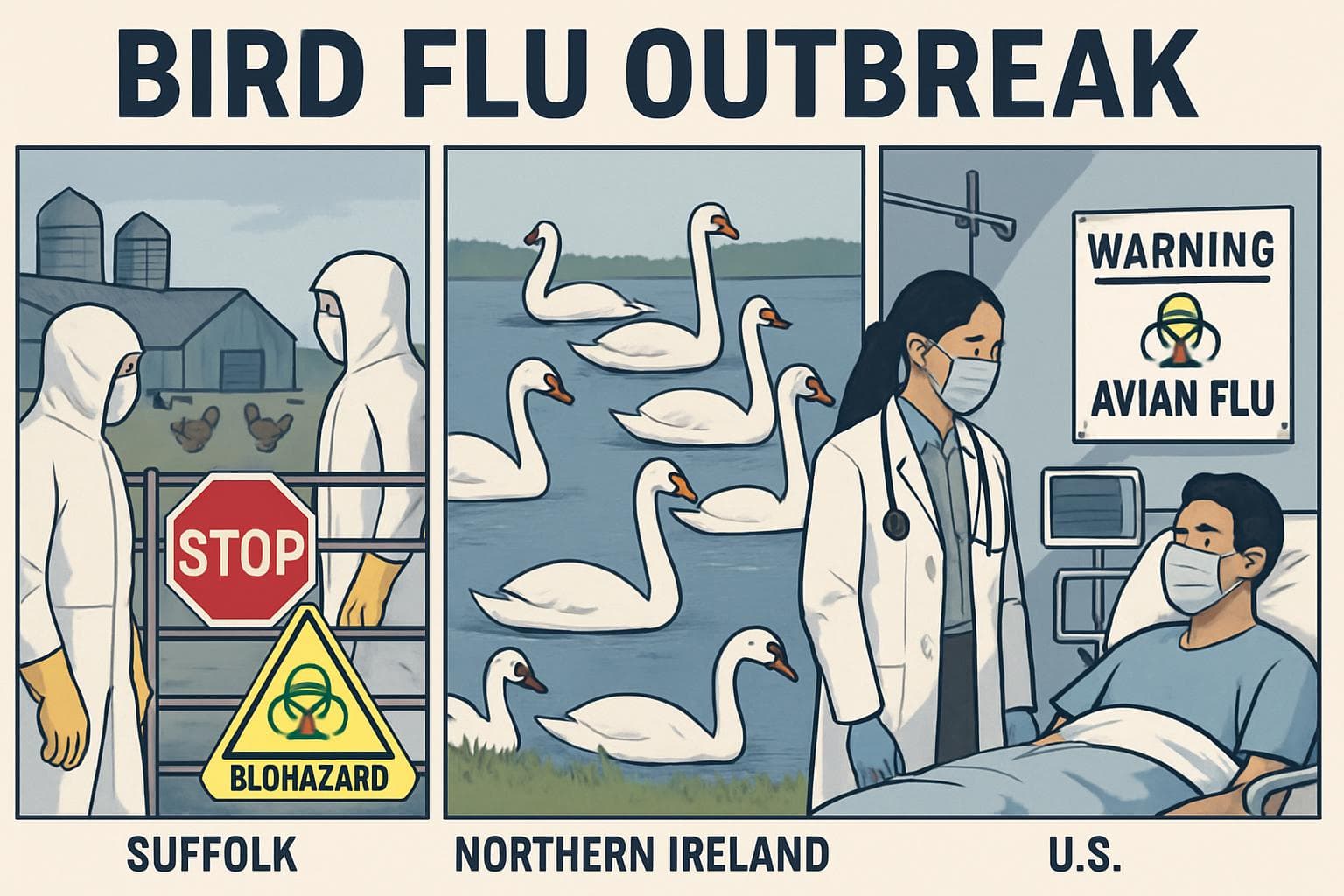
Suffolk has confirmed its sixth bird flu case within a month, with the H5N1 virus detected near Claydon. The Department for Environment, Food and Rural Affairs (Defra) has implemented a 3km protection zone and a 10km surveillance zone around the site, necessitating the euthanization of all poultry within the area. Since late October, the county has seen cases in Lawshall, Woodbridge, Honington, Elveden, and Lakenheath, contributing to the 39 confirmed cases in England this year. An avian influenza prevention zone was established on November 6, affecting poultry sellers and keepers with over 50 birds. Defra reassures the public that the risk remains low but advises against contact with dead or sick wild birds.
Northern Ireland's Swans Affected
In Northern Ireland, bird flu has been detected in swans at five locations, including Belfast and Newtownards. The Department of Agriculture, Environment and Rural Affairs (Daera) confirmed the presence of Highly Pathogenic Avian Influenza (HPAI) and has issued a mandatory housing order for flock keepers. Daera continues to collect dead wild birds for surveillance, though further testing is not always required once HPAI is confirmed in an area. The Public Health Agency (PHA) emphasizes that human infections are rare, with minimal risk to public health. The Food Standards Agency assures that properly cooked poultry remains safe for consumption.
First Human Death from H5N5 in the US
In the United States, a person in Washington state has become the first known human to die from the rare H5N5 bird flu strain. The individual, an older adult with underlying health conditions, was hospitalized with symptoms including high fever and respiratory issues. Despite this case, health officials maintain that the risk to the public is low, with no evidence of human-to-human transmission. The Centers for Disease Control and Prevention (CDC) has stated that the case does not increase the public health risk.
WHAT THIS MIGHT MEAN
The recent bird flu outbreaks underscore the need for continued vigilance and monitoring by health authorities. In Suffolk and Northern Ireland, the implementation of protection zones and housing orders aims to contain the spread among poultry and wild birds. The US case of H5N5 highlights the importance of monitoring new strains and their potential impact on human health. While the risk to humans remains low, experts continue to study the virus's evolution to prevent any future pandemic potential. Public health agencies stress the importance of avoiding contact with sick or dead birds and maintaining good hygiene practices to minimize risk.
Related Articles

UK Faces Dilemmas Amid Iran Conflict and China Spying Allegations

Tragedy Strikes County Armagh: Three Dead in Multi-Vehicle Collision

Iran Postpones Khamenei Funeral Amid Escalating US-Israeli Strikes

Saharan Dust to Illuminate UK Skies with Vivid Sunrises and Sunsets

Government Announces £4 Billion Overhaul of SEND Support in England

China Sets Lowest GDP Growth Target in Decades Amid Economic Challenges
Bird Flu Outbreaks Raise Concerns Across Regions
In This Article
 Ethan Brooks| Published
 HIGHLIGHTS
- Suffolk confirms its sixth bird flu case in a month, with a protection zone established around Claydon.
- Northern Ireland reports bird flu in swans across five locations, prompting a mandatory housing order for flock keepers.
- The first human death from the rare H5N5 bird flu strain is recorded in the US, though public health risk remains low.
- Health agencies advise against contact with sick or dead birds, emphasizing low risk of human infection.
- Bird flu, primarily affecting birds, occasionally infects other animals and rarely humans, with no sustained human-to-human transmission.
Recent developments in bird flu cases have sparked concern across Suffolk, Northern Ireland, and the United States, highlighting the ongoing challenges posed by avian influenza.
Suffolk's Sixth Case in a Month
Suffolk has confirmed its sixth bird flu case within a month, with the H5N1 virus detected near Claydon. The Department for Environment, Food and Rural Affairs (Defra) has implemented a 3km protection zone and a 10km surveillance zone around the site, necessitating the euthanization of all poultry within the area. Since late October, the county has seen cases in Lawshall, Woodbridge, Honington, Elveden, and Lakenheath, contributing to the 39 confirmed cases in England this year. An avian influenza prevention zone was established on November 6, affecting poultry sellers and keepers with over 50 birds. Defra reassures the public that the risk remains low but advises against contact with dead or sick wild birds.
Northern Ireland's Swans Affected
In Northern Ireland, bird flu has been detected in swans at five locations, including Belfast and Newtownards. The Department of Agriculture, Environment and Rural Affairs (Daera) confirmed the presence of Highly Pathogenic Avian Influenza (HPAI) and has issued a mandatory housing order for flock keepers. Daera continues to collect dead wild birds for surveillance, though further testing is not always required once HPAI is confirmed in an area. The Public Health Agency (PHA) emphasizes that human infections are rare, with minimal risk to public health. The Food Standards Agency assures that properly cooked poultry remains safe for consumption.
First Human Death from H5N5 in the US
In the United States, a person in Washington state has become the first known human to die from the rare H5N5 bird flu strain. The individual, an older adult with underlying health conditions, was hospitalized with symptoms including high fever and respiratory issues. Despite this case, health officials maintain that the risk to the public is low, with no evidence of human-to-human transmission. The Centers for Disease Control and Prevention (CDC) has stated that the case does not increase the public health risk.
WHAT THIS MIGHT MEAN
The recent bird flu outbreaks underscore the need for continued vigilance and monitoring by health authorities. In Suffolk and Northern Ireland, the implementation of protection zones and housing orders aims to contain the spread among poultry and wild birds. The US case of H5N5 highlights the importance of monitoring new strains and their potential impact on human health. While the risk to humans remains low, experts continue to study the virus's evolution to prevent any future pandemic potential. Public health agencies stress the importance of avoiding contact with sick or dead birds and maintaining good hygiene practices to minimize risk.
Related Articles
UK Faces Dilemmas Amid Iran Conflict and China Spying Allegations
Tragedy Strikes County Armagh: Three Dead in Multi-Vehicle Collision
Iran Postpones Khamenei Funeral Amid Escalating US-Israeli Strikes
Saharan Dust to Illuminate UK Skies with Vivid Sunrises and Sunsets
Government Announces £4 Billion Overhaul of SEND Support in England
China Sets Lowest GDP Growth Target in Decades Amid Economic Challenges