
BMA and Government to Resume Talks Amid Ongoing Dispute Over Doctors' Pay and Conditions
In This Article
HIGHLIGHTS
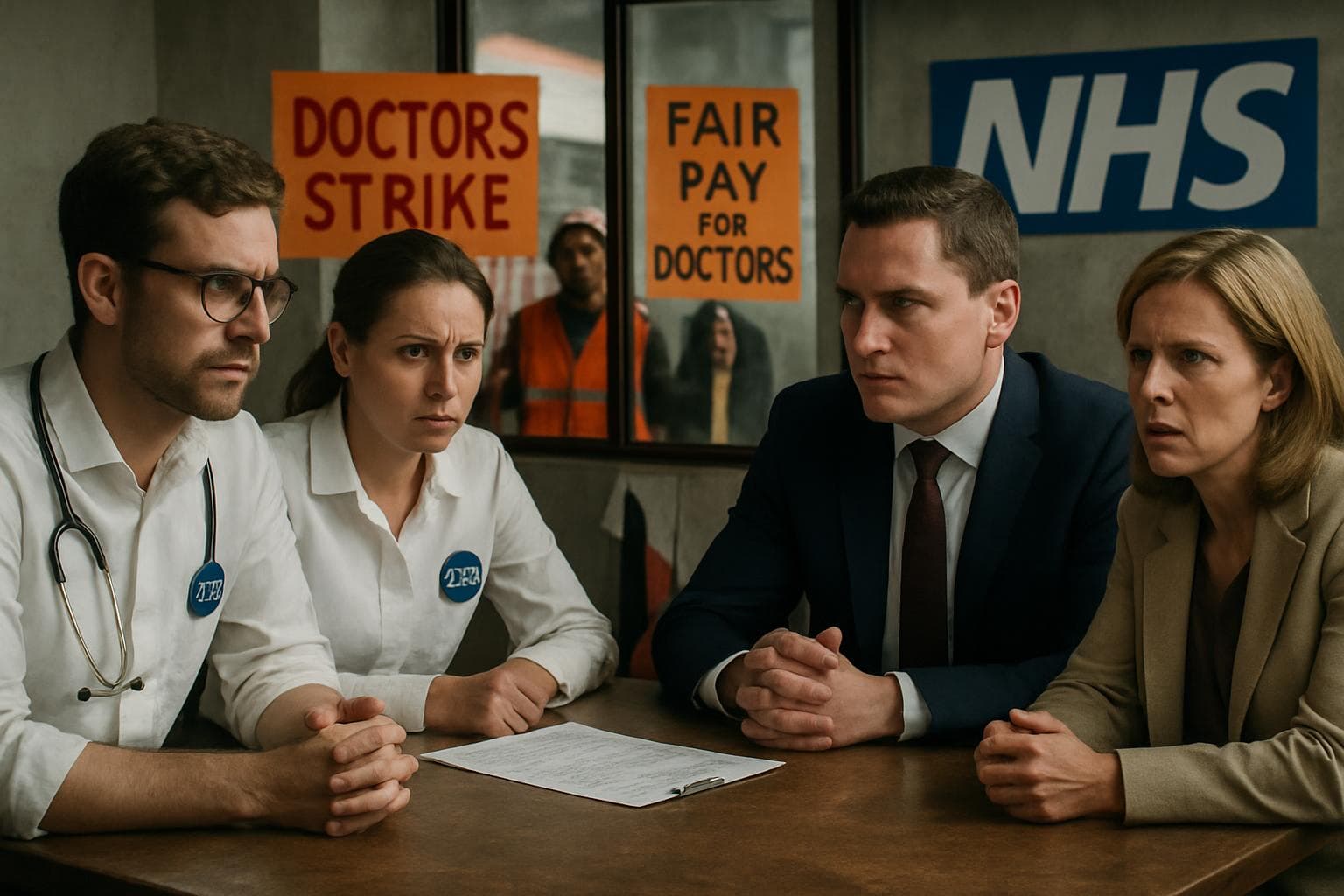
- The British Medical Association (BMA) and Health Secretary Wes Streeting have agreed to resume talks after a five-day strike by resident doctors in England.
- Streeting is firm on not negotiating pay but is open to discussing working conditions, despite the BMA's demand for a 29% pay rise.
- The BMA argues that doctors' pay is still a fifth lower than in 2008, despite recent increases, and insists on further hikes for full pay restoration.
- The strike, the 12th since spring 2023, has caused significant disruption to NHS services, including cancer care.
- Both sides show willingness to negotiate, but tensions remain high, with the BMA accusing the government of neglecting doctors' needs.
The British Medical Association (BMA) and Health Secretary Wes Streeting are set to resume negotiations following a five-day strike by resident doctors in England. The strike, which concluded on Wednesday morning, marked the 12th walkout since spring 2023, highlighting the ongoing tensions between the BMA and the government over pay and working conditions.
Background of the Dispute
The BMA has been vocal about the need for a 29% pay increase to restore doctors' salaries to 2008 levels, arguing that recent pay rises are insufficient. Despite a 22% pay increase over the past two years and an additional 5.4% rise this year, the BMA maintains that doctors' pay remains significantly lower in real terms compared to 15 years ago. The union's co-chairs, Dr. Melissa Ryan and Dr. Ross Nieuwoudt, emphasize the importance of addressing both pay and non-pay issues, such as career progression and exam fees.
Government's Stance
Health Secretary Wes Streeting has expressed a willingness to discuss non-pay issues but remains firm on not revisiting the pay increase for this year. In a recent letter, Streeting criticized the BMA's decision to strike, describing it as "deeply disappointing" and "entirely unnecessary." He warned that the strike had eroded the government's goodwill, yet he remains open to dialogue, urging the BMA to drop further strike actions.
Impact on NHS Services
The strike has significantly disrupted NHS services, affecting non-urgent procedures and cancer care. While some hospitals managed to maintain over 80% of their normal activity, the strike's impact on patient care has been a point of contention. The BMA has accused the NHS of risking patient safety by overburdening senior doctors during the strike, while the NHS criticized the union's "hardline" approach.
Path Forward
As talks are set to resume, both sides appear to be softening their stances. Streeting has called for a resolution that addresses doctors' frustrations beyond pay, while the BMA insists on a credible offer for pay restoration. The outcome of these negotiations remains uncertain, with both parties acknowledging the need for compromise.
WHAT THIS MIGHT MEAN
The upcoming negotiations between the BMA and the government could lead to a breakthrough if both sides are willing to compromise on key issues. Should the talks focus on non-pay aspects, such as working conditions and career progression, there is potential for progress. However, if the BMA remains steadfast in its demand for a significant pay increase, the risk of further industrial action looms.
Politically, the outcome of these negotiations could impact the Labour government's standing with healthcare professionals and the public. A resolution that balances the needs of doctors with the financial constraints of the NHS could bolster the government's credibility. Conversely, a failure to reach an agreement may lead to prolonged unrest within the healthcare sector, affecting patient care and public perception.
Related Articles
UK Government to Reform Asylum Seeker Support and Employment Policies
Persistent Safety Concerns in Nottingham Maternity Services Amidst Calls for Systemic Reform
Nottingham Attacks Inquiry: Families Demand Accountability and Truth

Birmingham's Proactive Approach to Measles Outbreak Offers Lessons for North London

NHS Faces Joint Surgery Delays Amid Bone Cement Shortage

Supreme Court Ruling Expands Compensation for Children Injured at Birth
BMA and Government to Resume Talks Amid Ongoing Dispute Over Doctors' Pay and Conditions
In This Article
 Ethan Brooks| Published
 HIGHLIGHTS
- The British Medical Association (BMA) and Health Secretary Wes Streeting have agreed to resume talks after a five-day strike by resident doctors in England.
- Streeting is firm on not negotiating pay but is open to discussing working conditions, despite the BMA's demand for a 29% pay rise.
- The BMA argues that doctors' pay is still a fifth lower than in 2008, despite recent increases, and insists on further hikes for full pay restoration.
- The strike, the 12th since spring 2023, has caused significant disruption to NHS services, including cancer care.
- Both sides show willingness to negotiate, but tensions remain high, with the BMA accusing the government of neglecting doctors' needs.
The British Medical Association (BMA) and Health Secretary Wes Streeting are set to resume negotiations following a five-day strike by resident doctors in England. The strike, which concluded on Wednesday morning, marked the 12th walkout since spring 2023, highlighting the ongoing tensions between the BMA and the government over pay and working conditions.
Background of the Dispute
The BMA has been vocal about the need for a 29% pay increase to restore doctors' salaries to 2008 levels, arguing that recent pay rises are insufficient. Despite a 22% pay increase over the past two years and an additional 5.4% rise this year, the BMA maintains that doctors' pay remains significantly lower in real terms compared to 15 years ago. The union's co-chairs, Dr. Melissa Ryan and Dr. Ross Nieuwoudt, emphasize the importance of addressing both pay and non-pay issues, such as career progression and exam fees.
Government's Stance
Health Secretary Wes Streeting has expressed a willingness to discuss non-pay issues but remains firm on not revisiting the pay increase for this year. In a recent letter, Streeting criticized the BMA's decision to strike, describing it as "deeply disappointing" and "entirely unnecessary." He warned that the strike had eroded the government's goodwill, yet he remains open to dialogue, urging the BMA to drop further strike actions.
Impact on NHS Services
The strike has significantly disrupted NHS services, affecting non-urgent procedures and cancer care. While some hospitals managed to maintain over 80% of their normal activity, the strike's impact on patient care has been a point of contention. The BMA has accused the NHS of risking patient safety by overburdening senior doctors during the strike, while the NHS criticized the union's "hardline" approach.
Path Forward
As talks are set to resume, both sides appear to be softening their stances. Streeting has called for a resolution that addresses doctors' frustrations beyond pay, while the BMA insists on a credible offer for pay restoration. The outcome of these negotiations remains uncertain, with both parties acknowledging the need for compromise.
WHAT THIS MIGHT MEAN
The upcoming negotiations between the BMA and the government could lead to a breakthrough if both sides are willing to compromise on key issues. Should the talks focus on non-pay aspects, such as working conditions and career progression, there is potential for progress. However, if the BMA remains steadfast in its demand for a significant pay increase, the risk of further industrial action looms.
Politically, the outcome of these negotiations could impact the Labour government's standing with healthcare professionals and the public. A resolution that balances the needs of doctors with the financial constraints of the NHS could bolster the government's credibility. Conversely, a failure to reach an agreement may lead to prolonged unrest within the healthcare sector, affecting patient care and public perception.
Related Articles
UK Government to Reform Asylum Seeker Support and Employment Policies
Persistent Safety Concerns in Nottingham Maternity Services Amidst Calls for Systemic Reform
Nottingham Attacks Inquiry: Families Demand Accountability and Truth
Birmingham's Proactive Approach to Measles Outbreak Offers Lessons for North London
NHS Faces Joint Surgery Delays Amid Bone Cement Shortage
Supreme Court Ruling Expands Compensation for Children Injured at Birth