
Caesarean Sections Surpass Natural Births in England for the First Time
In This Article
HIGHLIGHTS
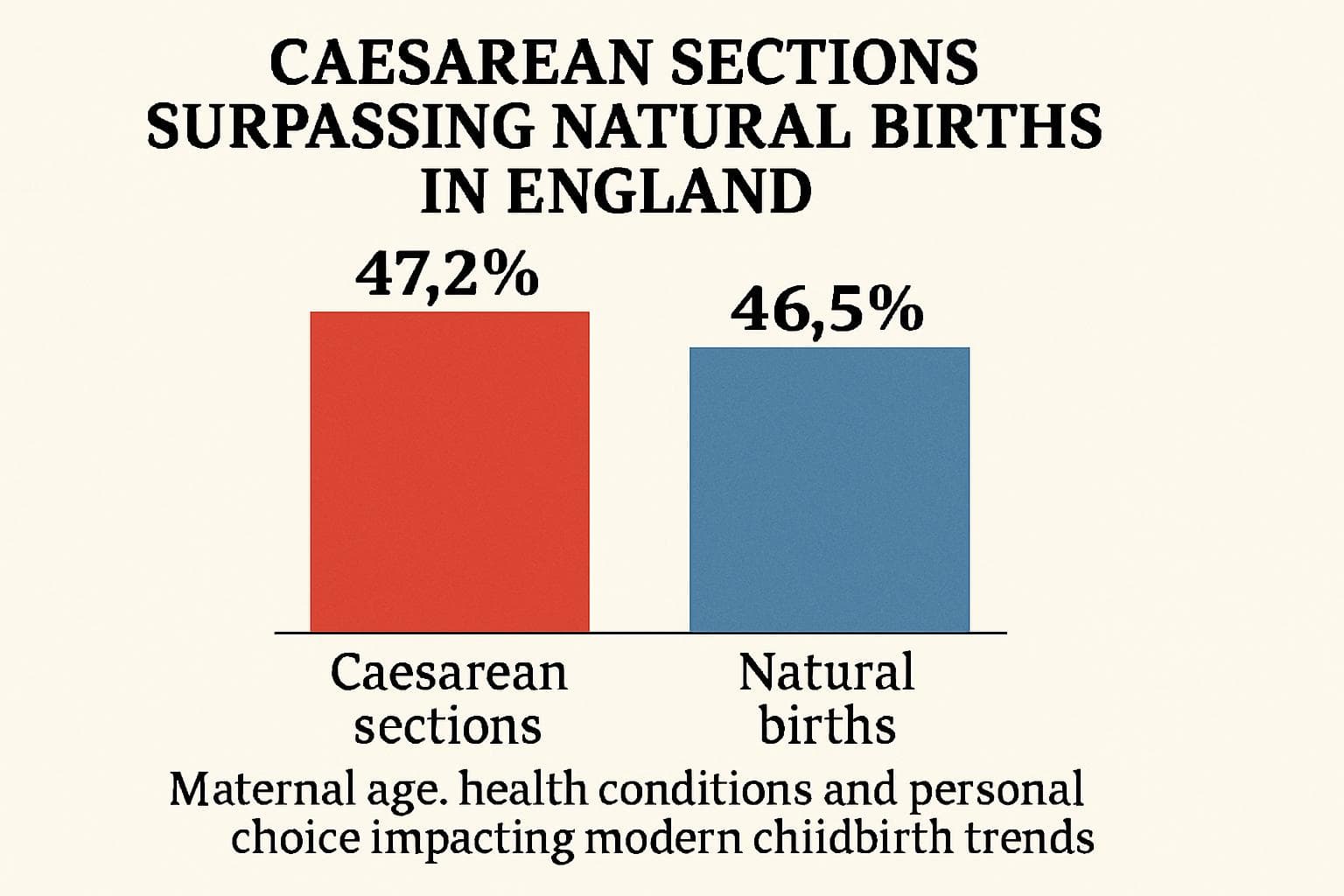
- For the first time, caesarean sections have surpassed natural vaginal births in England, with 45% of births via C-section in 2024-25.
- The rise in C-sections is attributed to factors like increased maternal age, pre-existing health conditions, and personal choice.
- NHS data shows 20% of births were planned caesareans, while 25.1% were emergency, marking a record high.
- Experts highlight the complexity of the issue, noting societal factors and the need for safe, personalized maternity care.
- The total number of deliveries in NHS England hospitals has decreased over the past decade, reflecting broader demographic trends.
In a historic shift, caesarean sections have overtaken natural vaginal births in England, according to the latest NHS data for 2024-25. The figures reveal that 45% of births were delivered via C-section, compared to 44% through spontaneous vaginal delivery, marking a significant change in childbirth trends.
Rising Trend in Caesarean Sections
The increase in caesarean births is influenced by a variety of factors, including a rise in maternal age and pre-existing health conditions such as diabetes and obesity. Nearly half of these procedures were elective, planned in advance, reflecting a growing preference among women for this method of delivery. Dr. Donna Ockenden, leading an independent review into maternity services, describes the trend as an "evolving picture over time," noting that previous birth experiences and concerns about birth trauma may influence women's decisions.
Demographic and Health Factors
The data, covering April 2024 to March 2025, also highlights that for women aged 30 and over, C-sections were the most common delivery method, with 59% of births for women aged 40 and above being caesareans. The total number of deliveries in NHS England hospitals has decreased from 636,643 in 2014-15 to 542,235, with one in four births now to mothers over 35 years old. This demographic shift, alongside rising obesity rates, contributes to the complexity of modern obstetric care.
Expert Insights and Maternity Care Challenges
Experts emphasize the need for safe, personalized maternity care. Dr. Alison Wright of the Royal College of Obstetricians and Gynaecologists attributes part of the rise to improved detection of fetal distress during labor. Meanwhile, Soo Downe, a professor of midwifery, suggests that some women opt for caesareans due to concerns about insufficient support for a "safe straightforward positive labour."
An NHS spokesperson reiterated the importance of informed discussions between women and healthcare providers to ensure the safest approach for each birth, aligning with best practice guidance and clinical evidence.
WHAT THIS MIGHT MEAN
The increasing preference for caesarean sections raises important questions about the future of maternity care in England. As the trend continues, healthcare providers may need to adapt resources and training to accommodate the growing demand for surgical births. Additionally, the emphasis on personalized care could lead to more comprehensive pre-pregnancy health optimization programs, addressing underlying health issues before conception.
Politically, the shift may prompt further scrutiny of NHS maternity services, especially in light of ongoing reviews into care quality at various trusts. As societal factors like maternal age and health conditions continue to evolve, the healthcare system will need to balance the complexities of modern childbirth with the imperative of ensuring safe and positive outcomes for mothers and babies alike.
Related Articles
NHS Faces Joint Surgery Delays Amid Bone Cement Shortage

UK Government to Reform Asylum Seeker Support and Employment Policies
Persistent Safety Concerns in Nottingham Maternity Services Amidst Calls for Systemic Reform

Nottingham Attacks Inquiry: Families Demand Accountability and Truth

Birmingham's Proactive Approach to Measles Outbreak Offers Lessons for North London

Supreme Court Ruling Expands Compensation for Children Injured at Birth
Caesarean Sections Surpass Natural Births in England for the First Time
In This Article
 Ethan Brooks| Published
 HIGHLIGHTS
- For the first time, caesarean sections have surpassed natural vaginal births in England, with 45% of births via C-section in 2024-25.
- The rise in C-sections is attributed to factors like increased maternal age, pre-existing health conditions, and personal choice.
- NHS data shows 20% of births were planned caesareans, while 25.1% were emergency, marking a record high.
- Experts highlight the complexity of the issue, noting societal factors and the need for safe, personalized maternity care.
- The total number of deliveries in NHS England hospitals has decreased over the past decade, reflecting broader demographic trends.
In a historic shift, caesarean sections have overtaken natural vaginal births in England, according to the latest NHS data for 2024-25. The figures reveal that 45% of births were delivered via C-section, compared to 44% through spontaneous vaginal delivery, marking a significant change in childbirth trends.
Rising Trend in Caesarean Sections
The increase in caesarean births is influenced by a variety of factors, including a rise in maternal age and pre-existing health conditions such as diabetes and obesity. Nearly half of these procedures were elective, planned in advance, reflecting a growing preference among women for this method of delivery. Dr. Donna Ockenden, leading an independent review into maternity services, describes the trend as an "evolving picture over time," noting that previous birth experiences and concerns about birth trauma may influence women's decisions.
Demographic and Health Factors
The data, covering April 2024 to March 2025, also highlights that for women aged 30 and over, C-sections were the most common delivery method, with 59% of births for women aged 40 and above being caesareans. The total number of deliveries in NHS England hospitals has decreased from 636,643 in 2014-15 to 542,235, with one in four births now to mothers over 35 years old. This demographic shift, alongside rising obesity rates, contributes to the complexity of modern obstetric care.
Expert Insights and Maternity Care Challenges
Experts emphasize the need for safe, personalized maternity care. Dr. Alison Wright of the Royal College of Obstetricians and Gynaecologists attributes part of the rise to improved detection of fetal distress during labor. Meanwhile, Soo Downe, a professor of midwifery, suggests that some women opt for caesareans due to concerns about insufficient support for a "safe straightforward positive labour."
An NHS spokesperson reiterated the importance of informed discussions between women and healthcare providers to ensure the safest approach for each birth, aligning with best practice guidance and clinical evidence.
WHAT THIS MIGHT MEAN
The increasing preference for caesarean sections raises important questions about the future of maternity care in England. As the trend continues, healthcare providers may need to adapt resources and training to accommodate the growing demand for surgical births. Additionally, the emphasis on personalized care could lead to more comprehensive pre-pregnancy health optimization programs, addressing underlying health issues before conception.
Politically, the shift may prompt further scrutiny of NHS maternity services, especially in light of ongoing reviews into care quality at various trusts. As societal factors like maternal age and health conditions continue to evolve, the healthcare system will need to balance the complexities of modern childbirth with the imperative of ensuring safe and positive outcomes for mothers and babies alike.
Related Articles
NHS Faces Joint Surgery Delays Amid Bone Cement Shortage
UK Government to Reform Asylum Seeker Support and Employment Policies
Persistent Safety Concerns in Nottingham Maternity Services Amidst Calls for Systemic Reform
Nottingham Attacks Inquiry: Families Demand Accountability and Truth
Birmingham's Proactive Approach to Measles Outbreak Offers Lessons for North London
Supreme Court Ruling Expands Compensation for Children Injured at Birth