
Controversy Surrounds Repeal of Northern Ireland Legacy Act Amidst Veterans' Protests
In This Article
HIGHLIGHTS
- Hilary Benn defends Labour's plan to repeal the Northern Ireland Legacy Act, citing its incompatibility with human rights law.
- The Legacy Act halted 202 investigations into Troubles-related killings of British soldiers, sparking controversy and protests.
- A petition with over 170,000 signatures calls for Labour to maintain protections for veterans against prosecutions.
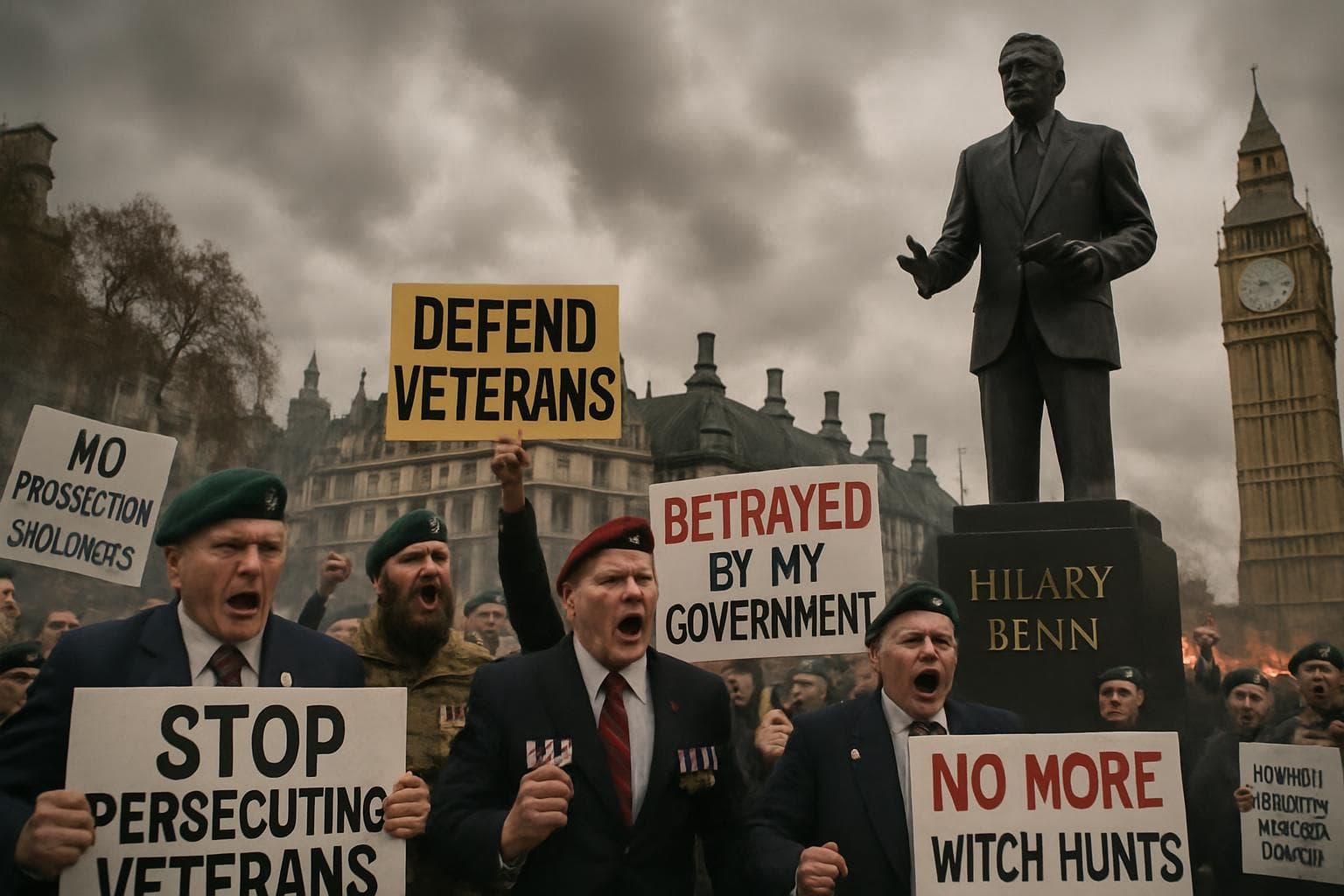
- Veterans fear the repeal will lead to renewed investigations and prosecutions, with protests staged in Parliament Square.
- Critics argue the Legacy Act creates a "two-tier justice system," while supporters claim it prevents vexatious prosecutions.
In a heated debate in Westminster, Northern Ireland Secretary Hilary Benn defended Labour's decision to repeal the Northern Ireland Legacy Act, a move that has ignited protests among military veterans. The Act, introduced by the Conservatives, halted investigations into 202 Troubles-related killings of British soldiers and offered conditional amnesty for those cooperating with a new information recovery body. However, it was deemed incompatible with human rights law, prompting Labour's repeal efforts.
Legacy Act and Its Impact
The Legacy Act, passed in 2023, aimed to end what the previous government described as vexatious prosecutions against British army veterans. It halted all but the most serious allegations related to the Troubles, including killings by paramilitaries. However, the Act faced opposition from both nationalist and unionist parties in Northern Ireland, as well as families of victims, who argued it denied justice for unresolved cases.
Veterans' Concerns and Protests
The repeal has sparked significant concern among veterans, who fear it will lead to renewed investigations and prosecutions. A petition signed by over 170,000 people demands Labour maintain protections for veterans, reflecting widespread frustration. Veterans staged protests in Parliament Square, expressing fears of long, drawn-out legal battles. David Holmes, an RAF veteran, warned that even slim chances of prosecution could mean years of legal uncertainty for those involved.
Political and Public Reactions
The debate has highlighted deep divisions, with Conservative MP Mark Francois criticizing Labour's plans as "selling veterans down the river." Meanwhile, DUP leader Gavin Robinson accused the government of attempting to "rewrite history." Emma Norton from the Centre for Military Justice argued that concerns about prosecutions are exaggerated, noting only one conviction of a veteran since the Good Friday Agreement in 1998.
WHAT THIS MIGHT MEAN
The repeal of the Northern Ireland Legacy Act could lead to renewed investigations into historical cases, potentially reopening old wounds for veterans and victims' families alike. Legal experts suggest that while the repeal may align with human rights standards, it could also result in prolonged legal processes for those involved. Politically, the issue may influence voter sentiment, particularly in areas with strong military ties, as parties navigate the complex legacy of the Troubles. As the debate continues, the government faces the challenge of balancing justice for victims with protections for veterans.
Related Articles
Government U-turn Forces Local Elections in Lancashire and Essex Amid Reorganisation Plans
Government U-turn on Local Election Delays Sparks Political Fallout
Government U-turn on Election Delays Sparks Local Council Turmoil
Reform UK to Reinstate Two-Child Benefit Cap Amidst Political Controversy

Saharan Dust to Illuminate UK Skies with Vivid Sunrises and Sunsets
Tragedy Strikes County Armagh: Three Dead in Multi-Vehicle Collision
Controversy Surrounds Repeal of Northern Ireland Legacy Act Amidst Veterans' Protests
In This Article
 Alex Carter| Published
 HIGHLIGHTS
- Hilary Benn defends Labour's plan to repeal the Northern Ireland Legacy Act, citing its incompatibility with human rights law.
- The Legacy Act halted 202 investigations into Troubles-related killings of British soldiers, sparking controversy and protests.
- A petition with over 170,000 signatures calls for Labour to maintain protections for veterans against prosecutions.
- Veterans fear the repeal will lead to renewed investigations and prosecutions, with protests staged in Parliament Square.
- Critics argue the Legacy Act creates a "two-tier justice system," while supporters claim it prevents vexatious prosecutions.
In a heated debate in Westminster, Northern Ireland Secretary Hilary Benn defended Labour's decision to repeal the Northern Ireland Legacy Act, a move that has ignited protests among military veterans. The Act, introduced by the Conservatives, halted investigations into 202 Troubles-related killings of British soldiers and offered conditional amnesty for those cooperating with a new information recovery body. However, it was deemed incompatible with human rights law, prompting Labour's repeal efforts.
Legacy Act and Its Impact
The Legacy Act, passed in 2023, aimed to end what the previous government described as vexatious prosecutions against British army veterans. It halted all but the most serious allegations related to the Troubles, including killings by paramilitaries. However, the Act faced opposition from both nationalist and unionist parties in Northern Ireland, as well as families of victims, who argued it denied justice for unresolved cases.
Veterans' Concerns and Protests
The repeal has sparked significant concern among veterans, who fear it will lead to renewed investigations and prosecutions. A petition signed by over 170,000 people demands Labour maintain protections for veterans, reflecting widespread frustration. Veterans staged protests in Parliament Square, expressing fears of long, drawn-out legal battles. David Holmes, an RAF veteran, warned that even slim chances of prosecution could mean years of legal uncertainty for those involved.
Political and Public Reactions
The debate has highlighted deep divisions, with Conservative MP Mark Francois criticizing Labour's plans as "selling veterans down the river." Meanwhile, DUP leader Gavin Robinson accused the government of attempting to "rewrite history." Emma Norton from the Centre for Military Justice argued that concerns about prosecutions are exaggerated, noting only one conviction of a veteran since the Good Friday Agreement in 1998.
WHAT THIS MIGHT MEAN
The repeal of the Northern Ireland Legacy Act could lead to renewed investigations into historical cases, potentially reopening old wounds for veterans and victims' families alike. Legal experts suggest that while the repeal may align with human rights standards, it could also result in prolonged legal processes for those involved. Politically, the issue may influence voter sentiment, particularly in areas with strong military ties, as parties navigate the complex legacy of the Troubles. As the debate continues, the government faces the challenge of balancing justice for victims with protections for veterans.
Related Articles
Government U-turn Forces Local Elections in Lancashire and Essex Amid Reorganisation Plans
Government U-turn on Local Election Delays Sparks Political Fallout
Government U-turn on Election Delays Sparks Local Council Turmoil
Reform UK to Reinstate Two-Child Benefit Cap Amidst Political Controversy
Saharan Dust to Illuminate UK Skies with Vivid Sunrises and Sunsets
Tragedy Strikes County Armagh: Three Dead in Multi-Vehicle Collision