
Court Dismisses Legal Challenge to Two-Child Benefit Cap's 'Rape Clause'
In This Article
HIGHLIGHTS
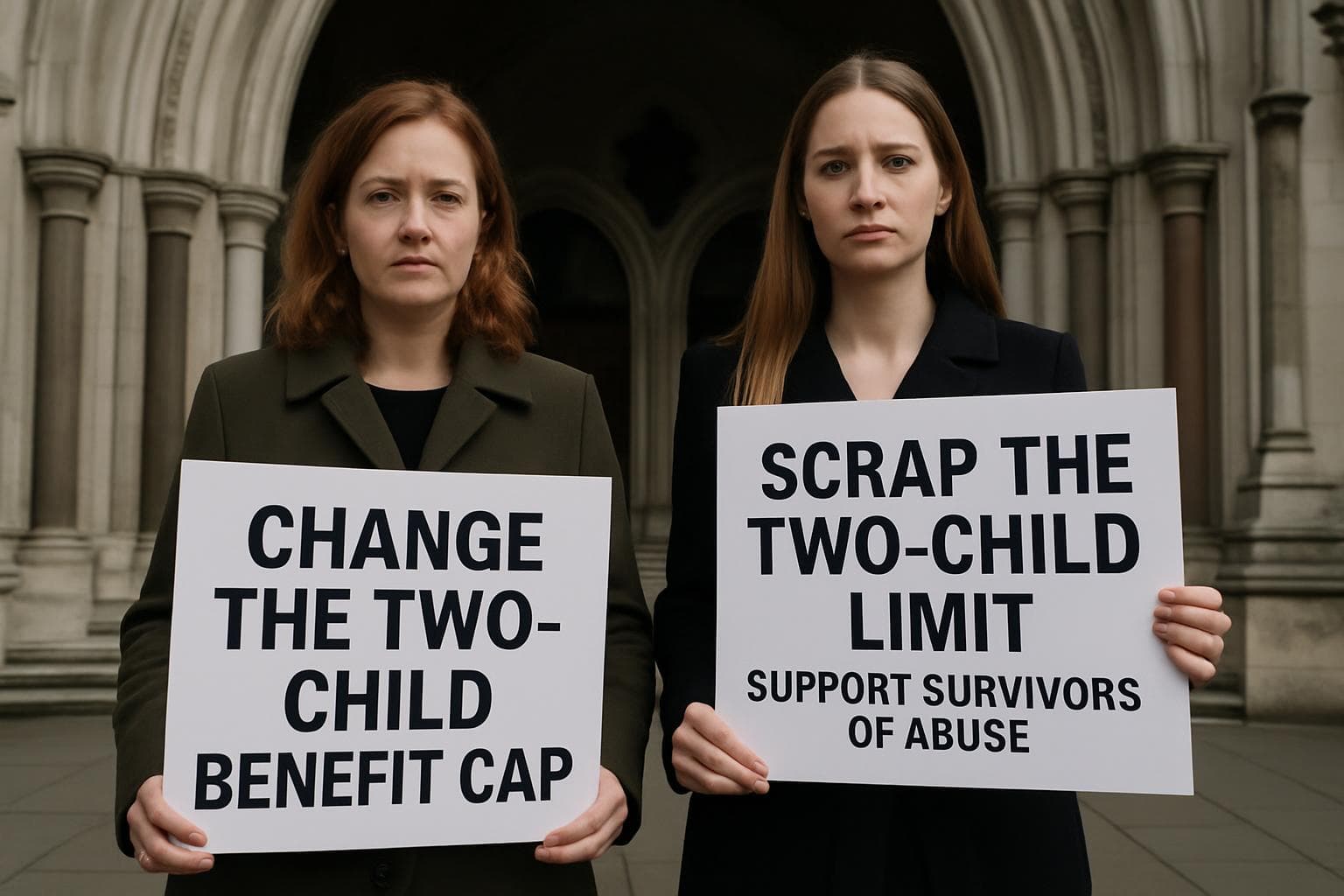
- Two women lost a legal challenge against the "rape clause" in the two-child benefit cap, which affects universal credit claims.
- The court ruled that the issue is a political matter, not a legal one, and should be addressed by politicians.
- The women, supported by the Child Poverty Action Group, argued the rules are "inhumane" and fail to protect domestic abuse survivors.
- Justice Collins Rice acknowledged the women's experiences of abuse but emphasized the need for political resolution.
- The ruling has sparked calls for policy reform to better support vulnerable families.
Two women who conceived their eldest children in abusive relationships have lost a legal battle challenging the "rape clause" in the UK's two-child benefit cap. The high court's decision, delivered by Justice Collins Rice, underscores the ongoing debate over universal credit rules and their impact on domestic abuse survivors.
Background and Legal Challenge
The two-child benefit cap, a policy affecting universal credit claims, includes exceptions for children conceived non-consensually. However, this exception only applies to third or subsequent children, leaving women who had their first two children through rape unable to claim additional benefits if they have more children in consensual relationships. The women, identified as LMN and EFG, argued that this policy violates their human rights.
Supported by the Child Poverty Action Group (CPAG), the women presented their case at the Leeds Administrative Court. Karon Monaghan KC, representing them, highlighted the severe abuse they endured, describing them as "vulnerable girls barely out of childhood" trapped in violent relationships. Despite the compelling accounts, the court ruled that the matter is a political issue rather than a legal one.
Court's Decision and Reactions
Justice Collins Rice acknowledged the "chilling" nature of the women's experiences, noting their significant contributions as mothers despite their vulnerability. However, she emphasized that the resolution lies within the political arena. "The law does not compel a government, or a parliament, to provide the answer the claimants seek," she stated.
The ruling has been met with disappointment from the women and their supporters. EFG expressed her frustration, stating, "The government says that the exceptions are to protect people who – like me – didn’t have a choice about the number of kids in their family, but the rape clause doesn’t do that." The CPAG has indicated plans to appeal the decision, advocating for policy changes to better support families affected by domestic abuse.
WHAT THIS MIGHT MEAN
The court's decision to dismiss the legal challenge against the two-child benefit cap's "rape clause" shifts the focus to the political realm. As the debate continues, there is potential for increased pressure on lawmakers to reconsider the policy. Advocacy groups like the CPAG are likely to intensify their efforts, potentially leading to legislative reviews or amendments.
Politically, the case highlights the broader discussion on social welfare policies and their adequacy in addressing complex issues like domestic abuse. The outcome may influence future policy considerations, prompting a reevaluation of how benefits are structured to support the most vulnerable members of society.
Related Articles

Police Federation Chief Arrested Amid Fraud Investigation

Canada and Australia Forge Strategic Partnership Amid Global Uncertainty
UK Government to Reform Asylum Seeker Support and Employment Policies
Middle East Conflict Drives UK Energy Prices to New Highs

UK Faces Dilemmas Amid Iran Conflict and China Spying Allegations

UK Reinforces Military Presence in Cyprus Amid Middle East Tensions
Court Dismisses Legal Challenge to Two-Child Benefit Cap's 'Rape Clause'
In This Article
 Sofia Romano| Published
 HIGHLIGHTS
- Two women lost a legal challenge against the "rape clause" in the two-child benefit cap, which affects universal credit claims.
- The court ruled that the issue is a political matter, not a legal one, and should be addressed by politicians.
- The women, supported by the Child Poverty Action Group, argued the rules are "inhumane" and fail to protect domestic abuse survivors.
- Justice Collins Rice acknowledged the women's experiences of abuse but emphasized the need for political resolution.
- The ruling has sparked calls for policy reform to better support vulnerable families.
Two women who conceived their eldest children in abusive relationships have lost a legal battle challenging the "rape clause" in the UK's two-child benefit cap. The high court's decision, delivered by Justice Collins Rice, underscores the ongoing debate over universal credit rules and their impact on domestic abuse survivors.
Background and Legal Challenge
The two-child benefit cap, a policy affecting universal credit claims, includes exceptions for children conceived non-consensually. However, this exception only applies to third or subsequent children, leaving women who had their first two children through rape unable to claim additional benefits if they have more children in consensual relationships. The women, identified as LMN and EFG, argued that this policy violates their human rights.
Supported by the Child Poverty Action Group (CPAG), the women presented their case at the Leeds Administrative Court. Karon Monaghan KC, representing them, highlighted the severe abuse they endured, describing them as "vulnerable girls barely out of childhood" trapped in violent relationships. Despite the compelling accounts, the court ruled that the matter is a political issue rather than a legal one.
Court's Decision and Reactions
Justice Collins Rice acknowledged the "chilling" nature of the women's experiences, noting their significant contributions as mothers despite their vulnerability. However, she emphasized that the resolution lies within the political arena. "The law does not compel a government, or a parliament, to provide the answer the claimants seek," she stated.
The ruling has been met with disappointment from the women and their supporters. EFG expressed her frustration, stating, "The government says that the exceptions are to protect people who – like me – didn’t have a choice about the number of kids in their family, but the rape clause doesn’t do that." The CPAG has indicated plans to appeal the decision, advocating for policy changes to better support families affected by domestic abuse.
WHAT THIS MIGHT MEAN
The court's decision to dismiss the legal challenge against the two-child benefit cap's "rape clause" shifts the focus to the political realm. As the debate continues, there is potential for increased pressure on lawmakers to reconsider the policy. Advocacy groups like the CPAG are likely to intensify their efforts, potentially leading to legislative reviews or amendments.
Politically, the case highlights the broader discussion on social welfare policies and their adequacy in addressing complex issues like domestic abuse. The outcome may influence future policy considerations, prompting a reevaluation of how benefits are structured to support the most vulnerable members of society.
Related Articles
Police Federation Chief Arrested Amid Fraud Investigation
Canada and Australia Forge Strategic Partnership Amid Global Uncertainty
UK Government to Reform Asylum Seeker Support and Employment Policies
Middle East Conflict Drives UK Energy Prices to New Highs
UK Faces Dilemmas Amid Iran Conflict and China Spying Allegations
UK Reinforces Military Presence in Cyprus Amid Middle East Tensions