
Covid Inquiry Report Sparks Calls for Accountability and Reform
In This Article
HIGHLIGHTS
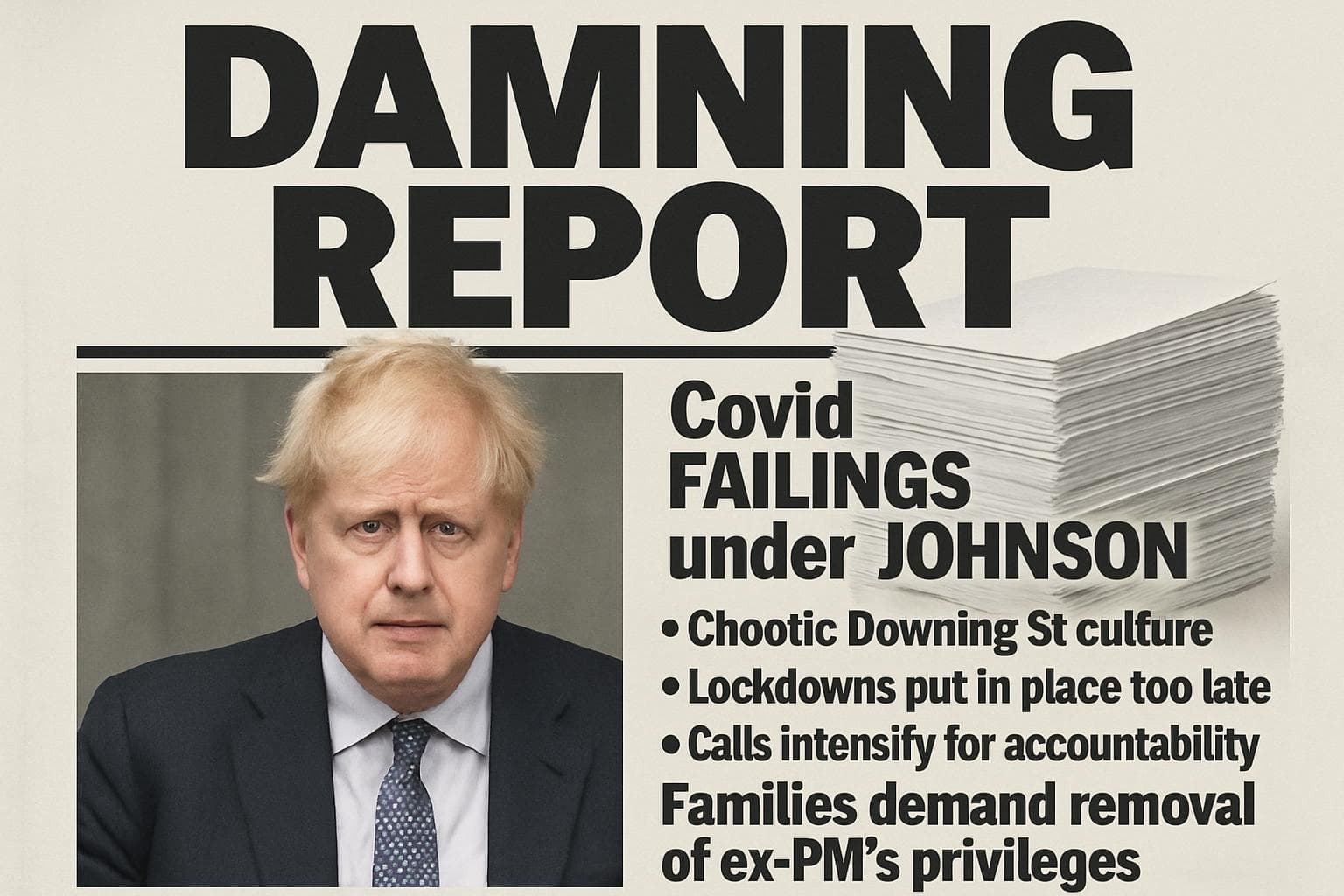
- A report by Baroness Hallett criticizes Boris Johnson's government for a "toxic and chaotic" culture during the Covid pandemic.
- The inquiry suggests that an earlier lockdown could have saved 23,000 lives, highlighting failures in decision-making.
- Covid-bereaved families demand Boris Johnson lose his ex-PM benefits and seek legal accountability for his pandemic response.
- Michael Gove apologizes for government mistakes, acknowledging the need for lessons to be learned.
- The report criticizes Dominic Cummings for contributing to a "culture of fear" within Downing Street.
The release of a comprehensive report by Baroness Hallett has cast a critical spotlight on the UK government's handling of the Covid-19 pandemic, particularly under the leadership of former Prime Minister Boris Johnson. The report, which spans 800 pages, accuses Johnson of fostering a "toxic and chaotic" culture within Downing Street, which significantly hampered effective decision-making during the crisis.
Government Criticized for Pandemic Response
The inquiry highlights that an earlier implementation of lockdown measures could have potentially saved 23,000 lives during the first wave of the pandemic in England. It criticizes the government's delayed response and failure to introduce restrictions such as social distancing sooner, which made lockdowns inevitable. February 2020 is described as a "lost month," with the report condemning the lack of urgency as "inexcusable."
Calls for Accountability
In response to the damning findings, Covid-bereaved families have called for Boris Johnson to be stripped of his privileges as a former prime minister, including his ministerial pension and access to public funds. The group, Covid-19 Bereaved Families for Justice UK, argues that Johnson's decisions during the pandemic represent a grave betrayal of the British public, demanding consequences rather than apologies.
Government's Response and Apologies
Michael Gove, a former cabinet minister, has publicly apologized for the government's mistakes during the pandemic, acknowledging that certain attitudes in Downing Street were "far from ideal." He emphasized the importance of learning lessons from the report to better prepare for future crises. Prime Minister Sir Keir Starmer echoed this sentiment, stating that measures are being taken to ensure the government and NHS are ready for any eventualities.
Criticism of Key Figures
The report also singles out Dominic Cummings, a senior aide at the time, for his "destabilizing behavior" and contribution to a "culture of fear" within the government. While acknowledging his role as a catalyst for action, the report criticizes his influence on the workplace environment.
WHAT THIS MIGHT MEAN
The release of the Covid inquiry report has intensified calls for accountability and reform within the UK government. As bereaved families pursue legal options, there could be significant political and legal ramifications for Boris Johnson and other key figures involved. The demand for stripping Johnson of his ex-PM benefits may gain traction, potentially influencing public opinion and future policy decisions.
Moving forward, the government faces the challenge of restoring public trust and implementing the lessons learned from the pandemic. This may involve revisiting emergency preparedness plans and ensuring more transparent and decisive leadership in future crises. The report's findings could also prompt broader discussions on government accountability and the ethical responsibilities of public officials.
Related Articles
UK Government to Reform Asylum Seeker Support and Employment Policies
Persistent Safety Concerns in Nottingham Maternity Services Amidst Calls for Systemic Reform
Diplomatic Tensions Rise as Trump Criticizes Starmer's Iran Policy

Government Announces £4 Billion Overhaul of SEND Support in England
Nottingham Attacks Inquiry: Families Demand Accountability and Truth
Prince Andrew's Ties to Epstein Under Scrutiny Amid Calls for Inquiry
Covid Inquiry Report Sparks Calls for Accountability and Reform
In This Article
 Ethan Brooks| Published
 HIGHLIGHTS
- A report by Baroness Hallett criticizes Boris Johnson's government for a "toxic and chaotic" culture during the Covid pandemic.
- The inquiry suggests that an earlier lockdown could have saved 23,000 lives, highlighting failures in decision-making.
- Covid-bereaved families demand Boris Johnson lose his ex-PM benefits and seek legal accountability for his pandemic response.
- Michael Gove apologizes for government mistakes, acknowledging the need for lessons to be learned.
- The report criticizes Dominic Cummings for contributing to a "culture of fear" within Downing Street.
The release of a comprehensive report by Baroness Hallett has cast a critical spotlight on the UK government's handling of the Covid-19 pandemic, particularly under the leadership of former Prime Minister Boris Johnson. The report, which spans 800 pages, accuses Johnson of fostering a "toxic and chaotic" culture within Downing Street, which significantly hampered effective decision-making during the crisis.
Government Criticized for Pandemic Response
The inquiry highlights that an earlier implementation of lockdown measures could have potentially saved 23,000 lives during the first wave of the pandemic in England. It criticizes the government's delayed response and failure to introduce restrictions such as social distancing sooner, which made lockdowns inevitable. February 2020 is described as a "lost month," with the report condemning the lack of urgency as "inexcusable."
Calls for Accountability
In response to the damning findings, Covid-bereaved families have called for Boris Johnson to be stripped of his privileges as a former prime minister, including his ministerial pension and access to public funds. The group, Covid-19 Bereaved Families for Justice UK, argues that Johnson's decisions during the pandemic represent a grave betrayal of the British public, demanding consequences rather than apologies.
Government's Response and Apologies
Michael Gove, a former cabinet minister, has publicly apologized for the government's mistakes during the pandemic, acknowledging that certain attitudes in Downing Street were "far from ideal." He emphasized the importance of learning lessons from the report to better prepare for future crises. Prime Minister Sir Keir Starmer echoed this sentiment, stating that measures are being taken to ensure the government and NHS are ready for any eventualities.
Criticism of Key Figures
The report also singles out Dominic Cummings, a senior aide at the time, for his "destabilizing behavior" and contribution to a "culture of fear" within the government. While acknowledging his role as a catalyst for action, the report criticizes his influence on the workplace environment.
WHAT THIS MIGHT MEAN
The release of the Covid inquiry report has intensified calls for accountability and reform within the UK government. As bereaved families pursue legal options, there could be significant political and legal ramifications for Boris Johnson and other key figures involved. The demand for stripping Johnson of his ex-PM benefits may gain traction, potentially influencing public opinion and future policy decisions.
Moving forward, the government faces the challenge of restoring public trust and implementing the lessons learned from the pandemic. This may involve revisiting emergency preparedness plans and ensuring more transparent and decisive leadership in future crises. The report's findings could also prompt broader discussions on government accountability and the ethical responsibilities of public officials.
Related Articles
UK Government to Reform Asylum Seeker Support and Employment Policies
Persistent Safety Concerns in Nottingham Maternity Services Amidst Calls for Systemic Reform
Diplomatic Tensions Rise as Trump Criticizes Starmer's Iran Policy
Government Announces £4 Billion Overhaul of SEND Support in England
Nottingham Attacks Inquiry: Families Demand Accountability and Truth
Prince Andrew's Ties to Epstein Under Scrutiny Amid Calls for Inquiry