
Denmark Abolishes Book Tax to Combat Reading Crisis
In This Article
HIGHLIGHTS
- Denmark will abolish its 25% VAT on books to address a national "reading crisis."
- The measure is expected to cost 330 million kroner annually and aims to boost book accessibility.
- Culture Minister Jakob Engel-Schmidt emphasizes the importance of investing in Danish culture.
- OECD data reveals that a quarter of Danish 15-year-olds struggle with reading comprehension.
- The government will monitor book prices to ensure the tax removal benefits consumers.
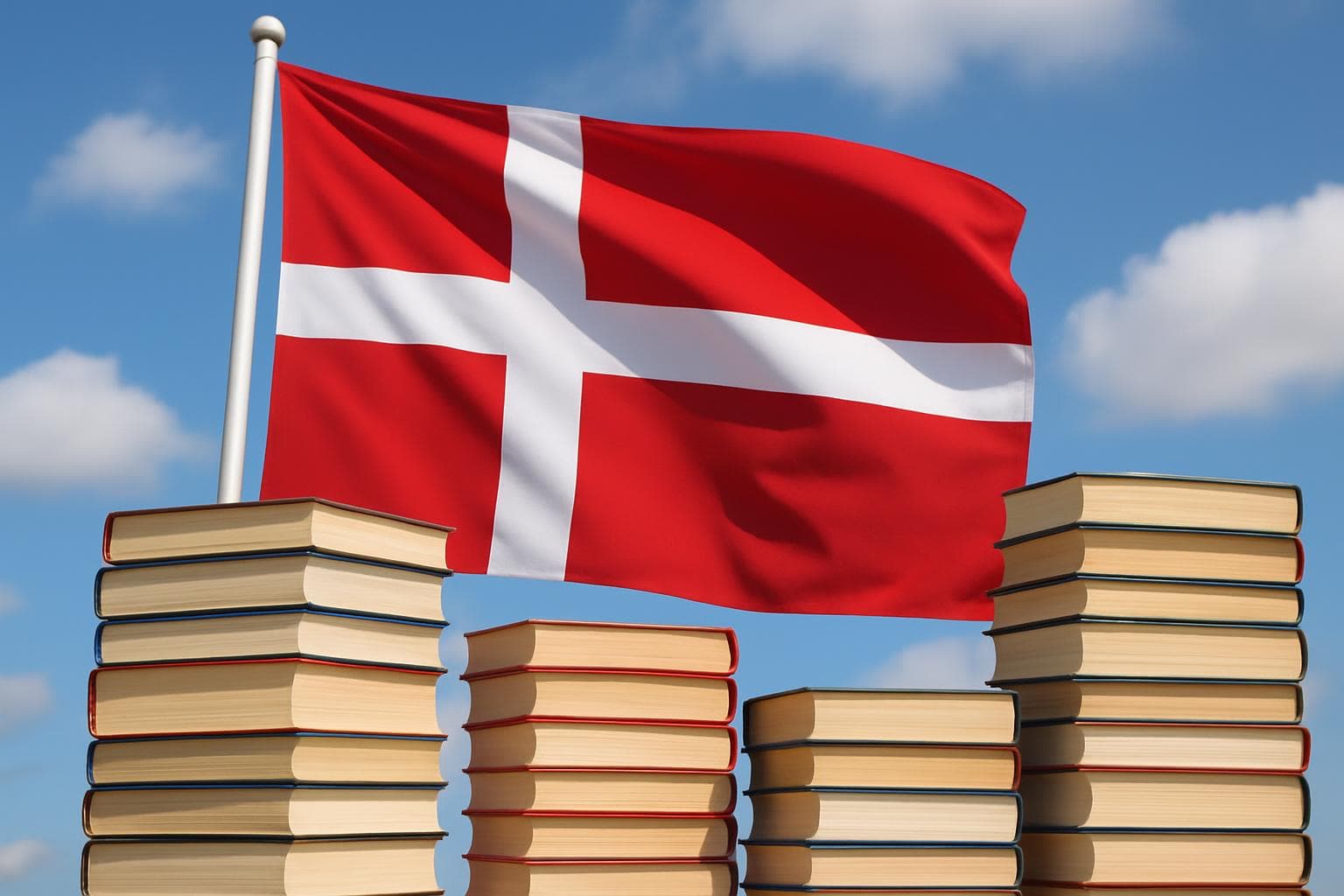
In a bold move to tackle a growing "reading crisis," Denmark has announced the abolition of its 25% Value Added Tax (VAT) on books, one of the highest such taxes globally. The Danish government hopes this initiative will make books more accessible and encourage reading among its citizens. The measure, expected to cost approximately 330 million kroner ($50 million, £38 million) annually, was announced by Culture Minister Jakob Engel-Schmidt.
Engel-Schmidt expressed pride in the decision, stating, "We must put everything at stake if we are to end the reading crisis that has unfortunately been spreading in recent years." He emphasized the need for substantial investment in the consumption and culture of the Danish people.
According to OECD data, a significant portion of Danish teenagers, about 25%, struggle with reading comprehension. Mads Rosendahl Thomsen, vice-chair of the government's working group on literature, described these findings as "pretty shocking." He noted that while younger children can improve their reading skills, comprehension becomes crucial by age 15.
Comparative VAT Rates in Nordic Countries
Denmark's decision aligns with practices in other Nordic countries, where VAT on books is significantly lower. In Finland, the VAT is 14%, in Sweden 6%, and in Norway, books are VAT-free. Sweden's reduction in book VAT in 2001 led to increased book sales, although primarily among existing readers.
Ensuring Consumer Benefits
Engel-Schmidt has pledged to monitor book prices closely following the tax removal. "If it turns out that abolishing VAT only means that publishers’ profits grow and prices do not fall, then we must consider whether it was the right thing to do," he stated. The government has also allocated funds to enhance cooperation between public libraries and schools, aiming to introduce more children to literature.
In 2023, Denmark, with a population of just over 6 million, saw the sale of 8.3 million books, with children's books and crime novels being the most popular genres.
WHAT THIS MIGHT MEAN
The abolition of the VAT on books in Denmark could set a precedent for other countries grappling with similar literacy challenges. If successful, this initiative might lead to increased book sales and improved reading skills among Danish youth. However, the government must ensure that the tax removal translates into lower book prices for consumers, rather than merely boosting publisher profits. As Denmark monitors the impact of this policy, other nations may look to its outcomes as a model for addressing their own reading crises.
Related Articles

UK to Double Troop Presence in Norway Amid Rising Arctic Tensions

UK Government to Reform Asylum Seeker Support and Employment Policies

Greenland Politely Declines Trump's Hospital Ship Offer Amid Healthcare Debate

UK and Allies Accuse Russia of Killing Navalny with Dart Frog Toxin

Oatly Loses UK Supreme Court Battle Over 'Milk' Trademark
Norwegian Diplomats Under Investigation for Epstein Connections
Denmark Abolishes Book Tax to Combat Reading Crisis
In This Article
 Aya Nakamura| Published
 HIGHLIGHTS
- Denmark will abolish its 25% VAT on books to address a national "reading crisis."
- The measure is expected to cost 330 million kroner annually and aims to boost book accessibility.
- Culture Minister Jakob Engel-Schmidt emphasizes the importance of investing in Danish culture.
- OECD data reveals that a quarter of Danish 15-year-olds struggle with reading comprehension.
- The government will monitor book prices to ensure the tax removal benefits consumers.
In a bold move to tackle a growing "reading crisis," Denmark has announced the abolition of its 25% Value Added Tax (VAT) on books, one of the highest such taxes globally. The Danish government hopes this initiative will make books more accessible and encourage reading among its citizens. The measure, expected to cost approximately 330 million kroner ($50 million, £38 million) annually, was announced by Culture Minister Jakob Engel-Schmidt.
Engel-Schmidt expressed pride in the decision, stating, "We must put everything at stake if we are to end the reading crisis that has unfortunately been spreading in recent years." He emphasized the need for substantial investment in the consumption and culture of the Danish people.
According to OECD data, a significant portion of Danish teenagers, about 25%, struggle with reading comprehension. Mads Rosendahl Thomsen, vice-chair of the government's working group on literature, described these findings as "pretty shocking." He noted that while younger children can improve their reading skills, comprehension becomes crucial by age 15.
Comparative VAT Rates in Nordic Countries
Denmark's decision aligns with practices in other Nordic countries, where VAT on books is significantly lower. In Finland, the VAT is 14%, in Sweden 6%, and in Norway, books are VAT-free. Sweden's reduction in book VAT in 2001 led to increased book sales, although primarily among existing readers.
Ensuring Consumer Benefits
Engel-Schmidt has pledged to monitor book prices closely following the tax removal. "If it turns out that abolishing VAT only means that publishers’ profits grow and prices do not fall, then we must consider whether it was the right thing to do," he stated. The government has also allocated funds to enhance cooperation between public libraries and schools, aiming to introduce more children to literature.
In 2023, Denmark, with a population of just over 6 million, saw the sale of 8.3 million books, with children's books and crime novels being the most popular genres.
WHAT THIS MIGHT MEAN
The abolition of the VAT on books in Denmark could set a precedent for other countries grappling with similar literacy challenges. If successful, this initiative might lead to increased book sales and improved reading skills among Danish youth. However, the government must ensure that the tax removal translates into lower book prices for consumers, rather than merely boosting publisher profits. As Denmark monitors the impact of this policy, other nations may look to its outcomes as a model for addressing their own reading crises.
Related Articles
UK to Double Troop Presence in Norway Amid Rising Arctic Tensions
UK Government to Reform Asylum Seeker Support and Employment Policies
Greenland Politely Declines Trump's Hospital Ship Offer Amid Healthcare Debate
UK and Allies Accuse Russia of Killing Navalny with Dart Frog Toxin
Oatly Loses UK Supreme Court Battle Over 'Milk' Trademark
Norwegian Diplomats Under Investigation for Epstein Connections