
Drone-Delivered Drugs Destabilize UK Prisons, Watchdog Warns
In This Article
HIGHLIGHTS
- A watchdog report highlights that drug smuggling via drones is destabilizing prisons in England and Wales, posing a national security threat.
- Overcrowding and staff shortages are exacerbating the issue, with 39% of prisoners reporting easy access to drugs.
- The report criticizes inadequate security measures and calls for government intervention at the highest levels.
- Prisons Minister James Timpson acknowledges the crisis and outlines plans to add 14,000 new prison places by 2031.
- The lack of purposeful activities for inmates is fueling drug demand, undermining rehabilitation efforts.
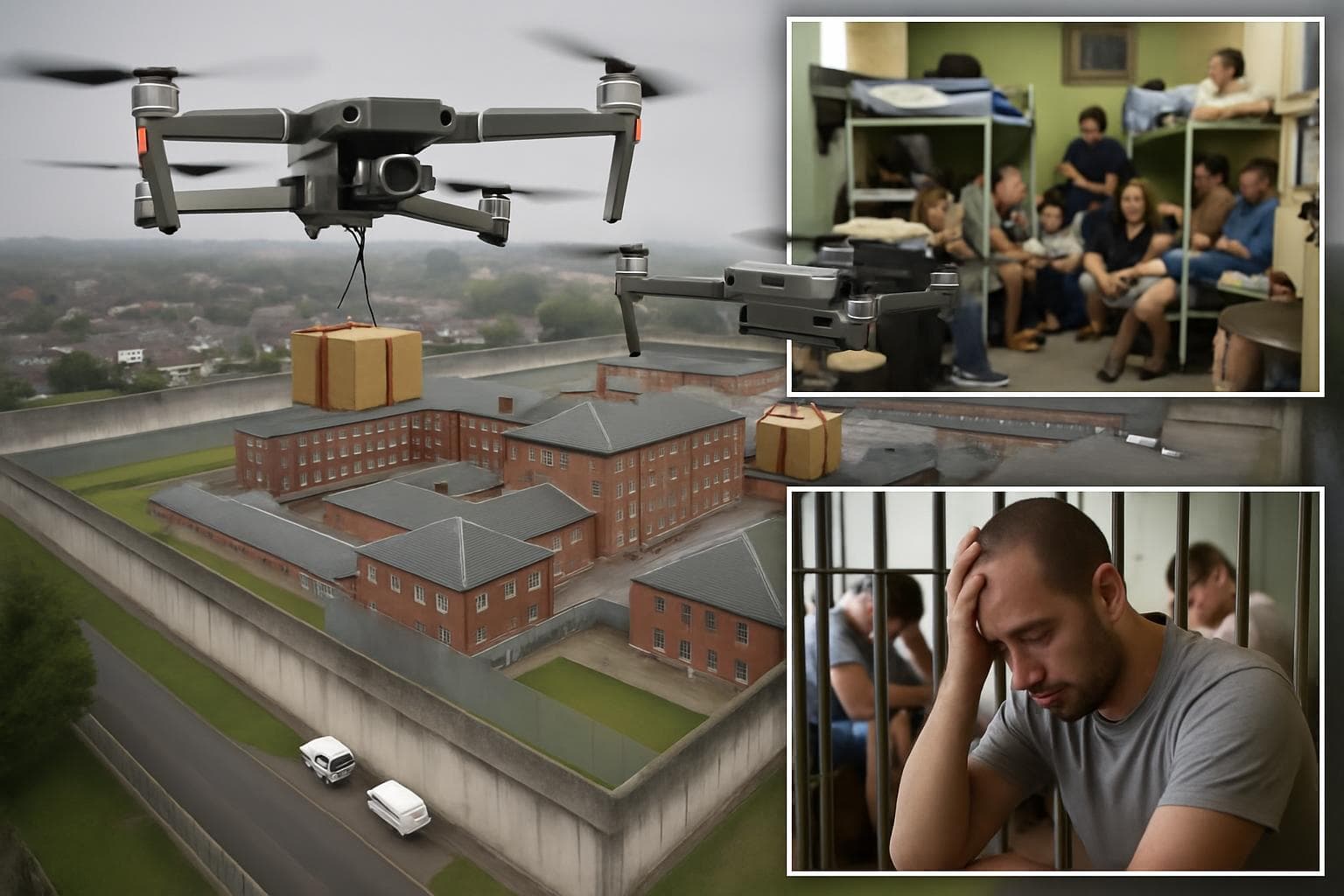
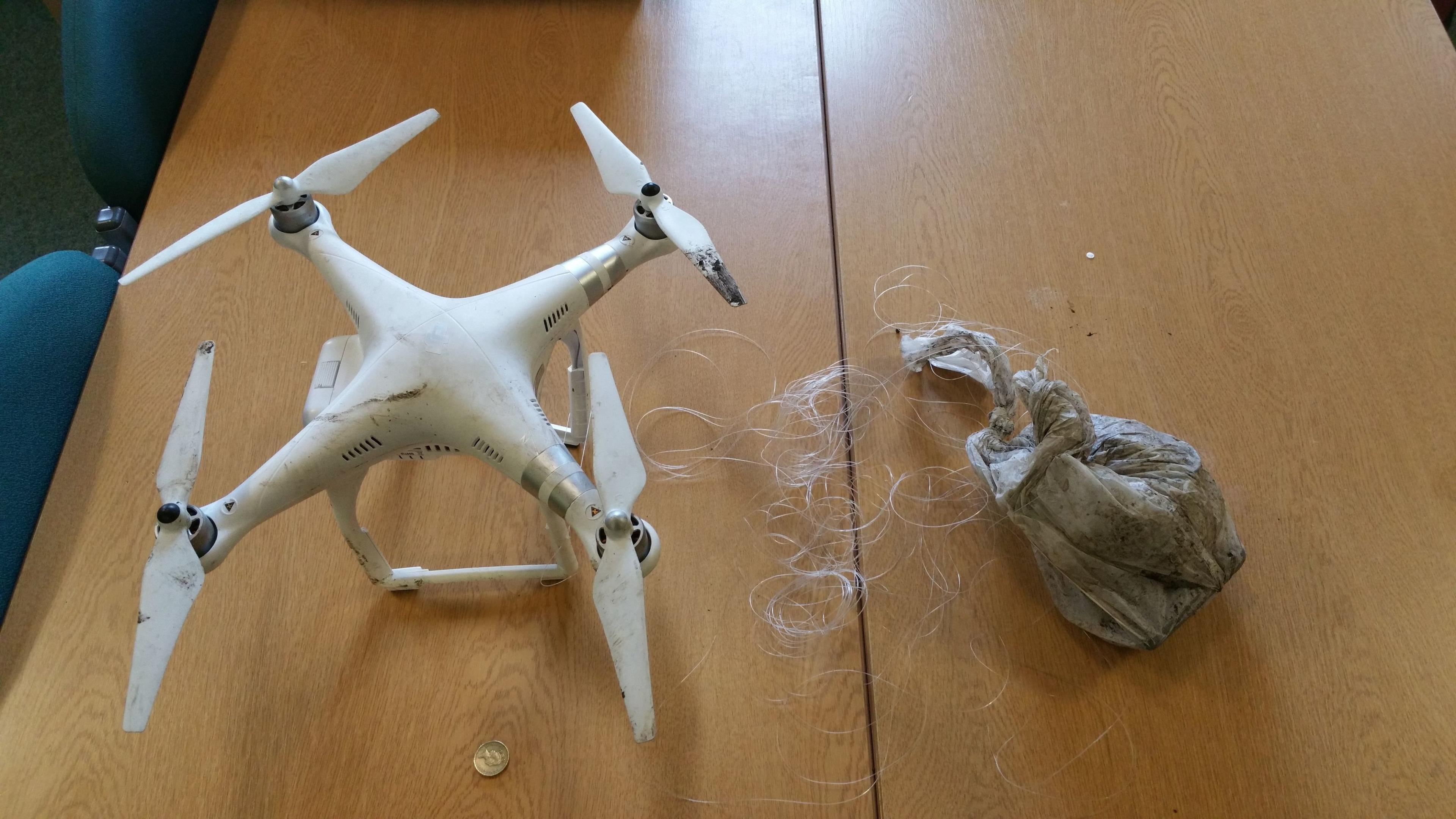
A recent watchdog report has raised alarms over the increasing use of drones to smuggle drugs into prisons across England and Wales, severely undermining rehabilitation efforts and posing a national security threat. The annual report by the chief inspector of prisons, Charlie Taylor, highlights the challenges faced by the prison system, including overcrowding, staff shortages, and rampant drug smuggling facilitated by criminal gangs.
A Growing Crisis
The report reveals that nearly 39% of surveyed prisoners find it easy to obtain drugs, with some prisons reporting positive drug test rates exceeding 30%. In particular, high-security facilities like HMP Manchester and HMP Long Lartin have been identified as hotspots for drone-delivered contraband. Taylor emphasizes the need for urgent government action, stating, "This is a threat that needs to be taken seriously at the highest levels of government."
Impact on Rehabilitation
The influx of drugs is not only destabilizing prisons but also hindering rehabilitation efforts. Overcrowding and a lack of purposeful activities leave inmates idle, increasing the demand for drugs. The report notes that many prisoners are confined to cramped, unsanitary cells for most of the day, with limited opportunities for work or education. This environment fuels frustration and criminality, making it difficult for prisons to fulfill their rehabilitative role.
Government Response
Prisons Minister James Timpson acknowledges the severity of the crisis, attributing it to inherited systemic issues. He outlines the government's commitment to addressing these challenges by creating 14,000 new prison places by 2031, with 2,400 already delivered. Additionally, the government plans to implement sentencing reforms to alleviate overcrowding and improve prison conditions.
Security and Staffing Concerns
The report also highlights inadequate security measures and inexperienced staff as significant contributors to the problem. In some prisons, staff are reportedly manipulated or ignored by inmates, further complicating efforts to maintain order. The government has approved the use of protective body armor for staff in high-security areas following recent attacks on officers.
WHAT THIS MIGHT MEAN
Moving forward, the effectiveness of the government's plans to expand prison capacity and reform sentencing will be crucial in addressing the current crisis. Experts suggest that without significant improvements in security measures and staffing, the problem of drug smuggling and its impact on rehabilitation will persist. The collaboration between the prison service, police, and security agencies will be essential to manage inmates linked to organized crime effectively. As the government implements these changes, ongoing monitoring and adaptation will be necessary to ensure that prisons can transition from mere containment facilities to environments conducive to rehabilitation.
Images from the Web
Related Articles

Police Federation Chief Arrested Amid Fraud Investigation

Crackdown on Waste Crime: £1.2 Million Fine and New Drone Unit to Combat Illegal Dumping

Saharan Dust to Illuminate UK Skies with Vivid Sunrises and Sunsets
Prince William Calls for Action on UK Male Suicide Rates

Sisters Tragically Drown at Eryri National Park's Watkin Path

Labour MP's Husband Arrested in UK-China Espionage Probe
Drone-Delivered Drugs Destabilize UK Prisons, Watchdog Warns
In This Article
 Sofia Romano| Published
 HIGHLIGHTS
- A watchdog report highlights that drug smuggling via drones is destabilizing prisons in England and Wales, posing a national security threat.
- Overcrowding and staff shortages are exacerbating the issue, with 39% of prisoners reporting easy access to drugs.
- The report criticizes inadequate security measures and calls for government intervention at the highest levels.
- Prisons Minister James Timpson acknowledges the crisis and outlines plans to add 14,000 new prison places by 2031.
- The lack of purposeful activities for inmates is fueling drug demand, undermining rehabilitation efforts.
A recent watchdog report has raised alarms over the increasing use of drones to smuggle drugs into prisons across England and Wales, severely undermining rehabilitation efforts and posing a national security threat. The annual report by the chief inspector of prisons, Charlie Taylor, highlights the challenges faced by the prison system, including overcrowding, staff shortages, and rampant drug smuggling facilitated by criminal gangs.
A Growing Crisis
The report reveals that nearly 39% of surveyed prisoners find it easy to obtain drugs, with some prisons reporting positive drug test rates exceeding 30%. In particular, high-security facilities like HMP Manchester and HMP Long Lartin have been identified as hotspots for drone-delivered contraband. Taylor emphasizes the need for urgent government action, stating, "This is a threat that needs to be taken seriously at the highest levels of government."
Impact on Rehabilitation
The influx of drugs is not only destabilizing prisons but also hindering rehabilitation efforts. Overcrowding and a lack of purposeful activities leave inmates idle, increasing the demand for drugs. The report notes that many prisoners are confined to cramped, unsanitary cells for most of the day, with limited opportunities for work or education. This environment fuels frustration and criminality, making it difficult for prisons to fulfill their rehabilitative role.
Government Response
Prisons Minister James Timpson acknowledges the severity of the crisis, attributing it to inherited systemic issues. He outlines the government's commitment to addressing these challenges by creating 14,000 new prison places by 2031, with 2,400 already delivered. Additionally, the government plans to implement sentencing reforms to alleviate overcrowding and improve prison conditions.
Security and Staffing Concerns
The report also highlights inadequate security measures and inexperienced staff as significant contributors to the problem. In some prisons, staff are reportedly manipulated or ignored by inmates, further complicating efforts to maintain order. The government has approved the use of protective body armor for staff in high-security areas following recent attacks on officers.
WHAT THIS MIGHT MEAN
Moving forward, the effectiveness of the government's plans to expand prison capacity and reform sentencing will be crucial in addressing the current crisis. Experts suggest that without significant improvements in security measures and staffing, the problem of drug smuggling and its impact on rehabilitation will persist. The collaboration between the prison service, police, and security agencies will be essential to manage inmates linked to organized crime effectively. As the government implements these changes, ongoing monitoring and adaptation will be necessary to ensure that prisons can transition from mere containment facilities to environments conducive to rehabilitation.
Images from the Web
Related Articles
Police Federation Chief Arrested Amid Fraud Investigation
Crackdown on Waste Crime: £1.2 Million Fine and New Drone Unit to Combat Illegal Dumping
Saharan Dust to Illuminate UK Skies with Vivid Sunrises and Sunsets
Prince William Calls for Action on UK Male Suicide Rates
Sisters Tragically Drown at Eryri National Park's Watkin Path
Labour MP's Husband Arrested in UK-China Espionage Probe