
Emma Reynolds to Address Oxford Farming Conference on Farming Resilience and Policy Changes
In This Article
HIGHLIGHTS
- Environment Secretary Emma Reynolds will address the Oxford Farming Conference, discussing changes to tax policies and nature funding.
- The Sustainable Farming Incentive (SFI) will prioritize smaller farms, with applications opening in June for them, and in September for larger farms.
- The government has adjusted the tax threshold on inherited farmland from £1m to £2.5m following protests.
- Concerns persist about the uncertainty of England's environmental farm payments and the impact on farming resilience.
- The conference, themed "Growing Resilience," will also feature industry leaders discussing future opportunities in agriculture.
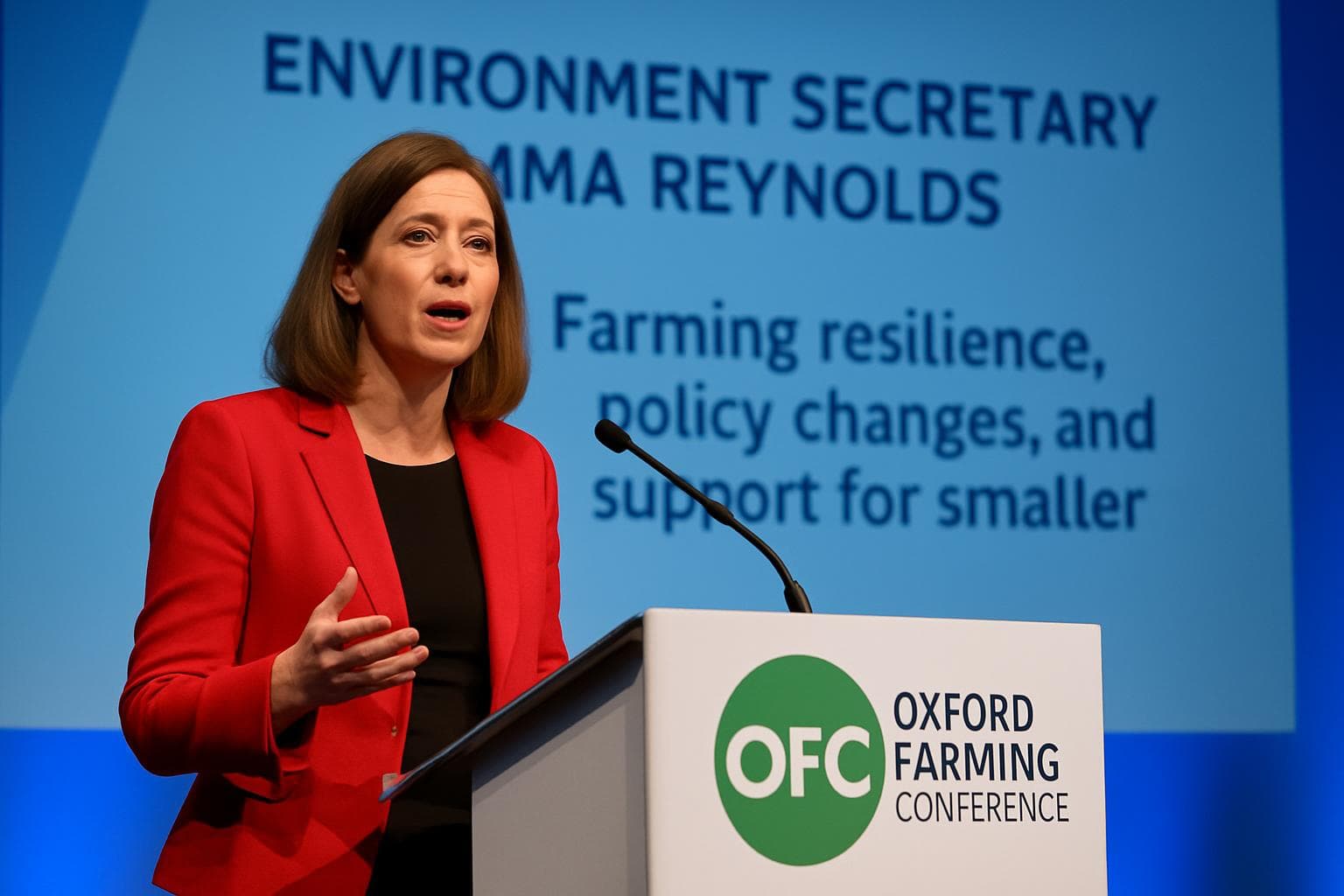
Environment Secretary Emma Reynolds is set to deliver a keynote speech at the 90th Oxford Farming Conference (OFC) on Thursday, where she will outline significant policy changes affecting the agricultural sector. The conference, themed "Growing Resilience," will focus on how the industry can adapt to future challenges while seizing new opportunities.
Tax and Funding Reforms
Reynolds will address the government's revised plans to impose a 20% tax on inherited agricultural assets, with the threshold now increased to £2.5 million from the initially proposed £1 million. This change comes after considerable backlash from farmers and some Labour backbenchers. The Environment Secretary is also expected to announce that the Sustainable Farming Incentive (SFI) will prioritize smaller farms, with applications opening in June for these farms, while larger farms can apply starting in September.
Focus on Smaller Farms
The SFI, part of the post-EU agricultural policy, aims to support farmers in managing land for environmental benefits rather than just production. This shift is intended to provide smaller farms with better access to funding, addressing past criticisms that larger, wealthier farms had an advantage in securing subsidies. Martin Lines, CEO of the Nature Friendly Farming Network, welcomed the prioritization of smaller farms, emphasizing the need for a system that reflects their public value.
Industry Concerns and Opportunities
Despite these policy shifts, concerns remain about the uncertainty surrounding England's environmental farm payments schemes. The conference will feature industry leaders like Stuart Armitage and Karl Franklin, who will discuss the realities and future opportunities in farming. Conference chair Jude McCann highlighted the importance of building strong relationships with political parties to ensure effective dialogue between policymakers and industry stakeholders.
Looking Ahead
The OFC will also see the return of its report, focusing on agriculture's future opportunities. As the sector faces economic pressures and environmental challenges, the conference aims to provide a platform for reflection and strategic planning.
WHAT THIS MIGHT MEAN
The policy changes announced by Emma Reynolds could significantly impact the agricultural landscape in England. By prioritizing smaller farms for the Sustainable Farming Incentive, the government aims to create a more equitable distribution of resources, potentially leading to increased sustainability and resilience in the sector. However, the success of these initiatives will depend on effective implementation and continued dialogue between the government and farming communities.
The increased tax threshold on inherited farmland may alleviate some financial pressures on farmers, but it remains to be seen how this will affect long-term investment in the sector. As the government navigates economic challenges, maintaining funding for environmental schemes will be crucial in supporting the transition to more sustainable farming practices. The outcomes of these policy changes will likely influence future agricultural strategies and the broader economic landscape in the UK.
Related Articles

UK Government Eases Deer Culling to Protect Woodlands and Farmland
Government U-turn Forces Local Elections in Lancashire and Essex Amid Reorganisation Plans
UK Government Reconsiders Youth Minimum Wage Policy Amid Rising Unemployment

Saharan Dust to Illuminate UK Skies with Vivid Sunrises and Sunsets

Government Announces £4 Billion Overhaul of SEND Support in England

UK Government Announces Major Overhaul of SEND System with £3.4 Billion Investment
Emma Reynolds to Address Oxford Farming Conference on Farming Resilience and Policy Changes
In This Article
 Leila Hassan| Published
 HIGHLIGHTS
- Environment Secretary Emma Reynolds will address the Oxford Farming Conference, discussing changes to tax policies and nature funding.
- The Sustainable Farming Incentive (SFI) will prioritize smaller farms, with applications opening in June for them, and in September for larger farms.
- The government has adjusted the tax threshold on inherited farmland from £1m to £2.5m following protests.
- Concerns persist about the uncertainty of England's environmental farm payments and the impact on farming resilience.
- The conference, themed "Growing Resilience," will also feature industry leaders discussing future opportunities in agriculture.
Environment Secretary Emma Reynolds is set to deliver a keynote speech at the 90th Oxford Farming Conference (OFC) on Thursday, where she will outline significant policy changes affecting the agricultural sector. The conference, themed "Growing Resilience," will focus on how the industry can adapt to future challenges while seizing new opportunities.
Tax and Funding Reforms
Reynolds will address the government's revised plans to impose a 20% tax on inherited agricultural assets, with the threshold now increased to £2.5 million from the initially proposed £1 million. This change comes after considerable backlash from farmers and some Labour backbenchers. The Environment Secretary is also expected to announce that the Sustainable Farming Incentive (SFI) will prioritize smaller farms, with applications opening in June for these farms, while larger farms can apply starting in September.
Focus on Smaller Farms
The SFI, part of the post-EU agricultural policy, aims to support farmers in managing land for environmental benefits rather than just production. This shift is intended to provide smaller farms with better access to funding, addressing past criticisms that larger, wealthier farms had an advantage in securing subsidies. Martin Lines, CEO of the Nature Friendly Farming Network, welcomed the prioritization of smaller farms, emphasizing the need for a system that reflects their public value.
Industry Concerns and Opportunities
Despite these policy shifts, concerns remain about the uncertainty surrounding England's environmental farm payments schemes. The conference will feature industry leaders like Stuart Armitage and Karl Franklin, who will discuss the realities and future opportunities in farming. Conference chair Jude McCann highlighted the importance of building strong relationships with political parties to ensure effective dialogue between policymakers and industry stakeholders.
Looking Ahead
The OFC will also see the return of its report, focusing on agriculture's future opportunities. As the sector faces economic pressures and environmental challenges, the conference aims to provide a platform for reflection and strategic planning.
WHAT THIS MIGHT MEAN
The policy changes announced by Emma Reynolds could significantly impact the agricultural landscape in England. By prioritizing smaller farms for the Sustainable Farming Incentive, the government aims to create a more equitable distribution of resources, potentially leading to increased sustainability and resilience in the sector. However, the success of these initiatives will depend on effective implementation and continued dialogue between the government and farming communities.
The increased tax threshold on inherited farmland may alleviate some financial pressures on farmers, but it remains to be seen how this will affect long-term investment in the sector. As the government navigates economic challenges, maintaining funding for environmental schemes will be crucial in supporting the transition to more sustainable farming practices. The outcomes of these policy changes will likely influence future agricultural strategies and the broader economic landscape in the UK.
Related Articles
UK Government Eases Deer Culling to Protect Woodlands and Farmland
Government U-turn Forces Local Elections in Lancashire and Essex Amid Reorganisation Plans
UK Government Reconsiders Youth Minimum Wage Policy Amid Rising Unemployment
Saharan Dust to Illuminate UK Skies with Vivid Sunrises and Sunsets
Government Announces £4 Billion Overhaul of SEND Support in England
UK Government Announces Major Overhaul of SEND System with £3.4 Billion Investment